4AIVN
Back to News

Cuốn sách giúp xây dựng ứng dụng với mô hình nền tảng của Huyền Chip

Published on 24 January, 2026
Cuốn sách giúp xây dựng ứng dụng với mô hình nền tảng của Huyền Chip

Quick Summary

Cuốn sách 'Kỹ thuật AI: Xây dựng ứng dụng với mô hình nền tảng' của Huyền Chip là một giải pháp toàn diện cho việc triển khai AI từ phòng thí nghiệm ra thực tiễn doanh nghiệp. Tác phẩm này định nghĩa AI Engineering là quá trình xây dựng ứng dụng dựa trên các mô hình có sẵn, giúp các kỹ sư phần mềm dễ dàng chuyển đổi sang lĩnh vực AI. Cuốn sách hệ thống hóa 10 chương, từ nền tảng mô hình, đánh giá hệ thống, kỹ thuật nhắc lệnh, RAG & Agents, tinh chỉnh mô hình đến vận hành và kiến trúc. Với góc nhìn thực chiến từ Thung lũng Silicon và tư duy 'vượt thời gian', cuốn sách giải quyết các 'nỗi đau' của doanh nghiệp, thu hẹp khoảng cách giữa các bộ phận và nhận được đánh giá cao từ cộng đồng quốc tế lẫn Việt Nam, trở thành tài liệu không thể thiếu cho bất kỳ ai muốn xây dựng hệ thống AI chuyên nghiệp.

Trong bối cảnh trí tuệ nhân tạo (AI) đang dịch chuyển mạnh mẽ từ phòng thí nghiệm ra thực tiễn doanh nghiệp, bài toán đặt ra không còn là "AI có thể làm được gì?" mà là "Làm sao để đưa AI vào sản phẩm một cách hiệu quả?". Cuốn sách "Kỹ thuật AI: Xây dựng ứng dụng với mô hình nền tảng" (tựa gốc: AI Engineering: Building Applications with Foundation Models) của tác giả Huyền Chip (Chip Huyen) xuất hiện như một lời giải hoàn hảo, trở thành hiện tượng trong cộng đồng công nghệ toàn cầu và Việt Nam.

Sự trỗi dậy của AI Engineering: Khi AI không chỉ dành cho các tiến sĩ

Trước đây, nhắc đến AI, người ta thường nghĩ đến những phòng thí nghiệm với các Tiến sĩ toán học tập trung vào việc huấn luyện mô hình (Training). Tuy nhiên, kỷ nguyên của các mô hình nền tảng (Foundation Models) như GPT-4, Llama hay Claude đã thay đổi cuộc chơi.

Cuốn sách định nghĩa AI Engineering là quá trình xây dựng các ứng dụng dựa trên các mô hình có sẵn. Điểm khác biệt cốt lõi so với ML Engineering truyền thống là các kỹ sư không cần phải "phát minh lại cái bánh xe". Thay vào đó, họ đóng vai trò là những người kết nối (wiring), tối ưu hóa và vận hành các mô hình để giải quyết vấn đề thực tế. Theo Huyền Chip, AI giờ đây đã trở thành một thành phần phổ biến trong kỹ thuật phần mềm, tương tự như cách chúng ta sử dụng cơ sở dữ liệu hay thư viện JavaScript. Điều này mở ra cơ hội cực lớn cho các kỹ sư phần mềm (Software Engineers) muốn chuyển mình sang lĩnh vực AI mà không cần bằng cấp chuyên sâu về toán cao cấp.

Nội dung cốt lõi: Hệ thống hóa toàn bộ vòng đời ứng dụng AI

Với độ dày khoảng 750 trang trong bản tiếng Việt, cuốn sách không chỉ dừng lại ở lý thuyết suông. Tác giả đã hệ thống hóa một cách khoa học 10 chương nội dung, đi từ những khái niệm căn bản nhất đến những kỹ thuật vận hành thực chiến:

Chương 1 & 2 - Nền tảng mô hình

Hiểu rõ bản chất của LLMs (Mô hình ngôn ngữ lớn) và tại sao chúng lại có khả năng suy luận đáng kinh ngạc trong kỷ nguyên mới.

Chương 3 & 4 - Đánh giá hệ thống (Evaluation)

Đây là phần quan trọng nhất. Làm sao biết AI của bạn tốt hơn sau mỗi lần chỉnh sửa? Tác giả đi sâu vào các phương pháp đánh giá định lượng, một thách thức cực lớn trong AI tạo sinh do tính thiếu nhất quán của kết quả đầu ra.

Chương 5 - Kỹ thuật nhắc lệnh (Prompt Engineering)

Không chỉ dừng lại ở các mẹo viết lệnh đơn giản, chương này cung cấp tư duy lập trình và tối ưu hóa tương tác với mô hình thông qua ngôn ngữ tự nhiên.

Chương 6 - RAG & Agents (Tác tử AI)

Giải mã kỹ thuật RAG (Retrieval Augmented Generation) giúp AI truy cập dữ liệu nội bộ doanh nghiệp và các Agents có khả năng tự thực hiện nhiệm vụ phức tạp một cách độc lập.

Chương 7 - Tinh chỉnh mô hình (Fine-tuning)

Xác định khi nào doanh nghiệp cần tinh chỉnh mô hình. Cuốn sách giải thích chi tiết về kỹ thuật LoRA, giúp việc tinh chỉnh trở nên rẻ hơn và nhanh hơn đáng kể.

Chương 8, 9 & 10 - Vận hành, Kiến trúc & Phản hồi

Tập trung vào kỹ thuật dữ liệu, tối ưu hóa suy luận (Inference Optimization) để giảm chi phí, giảm độ trễ và cách thiết lập một kiến trúc AI bền vững dựa trên phản hồi người dùng.

Tại sao cuốn sách này lại là "Vật bất ly thân" năm 2026?

1. Góc nhìn thực chiến từ Thung lũng Silicon

Huyền Chip không chỉ viết sách dựa trên nghiên cứu. Cô là chuyên gia từng kinh qua các vị trí quan trọng tại NVIDIA, Netflix và giảng dạy tại Đại học Stanford. Những trải nghiệm triển khai AI ở quy mô hàng triệu người dùng được đúc kết vào từng trang sách, giúp độc giả tránh được những cạm bẫy thực tế.

2. Tư duy vượt thời gian

Trong một ngành công nghiệp thay đổi theo từng tuần, cuốn sách tập trung vào các nguyên lý nền tảng. Thay vì chạy theo các công cụ nhất thời, sách dạy bạn tư duy hệ thống để có thể áp dụng cho bất kỳ công nghệ AI nào xuất hiện trong tương lai.

3. Giải quyết những "nỗi đau" của doanh nghiệp

Cuốn sách dành nhiều tâm huyết phân tích các rủi ro thực tế như hiện tượng "ảo giác" (hallucinations), bảo mật dữ liệu và đạo đức AI. Đây là những lộ trình cụ thể giúp doanh nghiệp tự tin đưa AI vào sản xuất thương mại.

Thu hẹp khoảng cách giữa các bộ phận trong tổ chức

Một giá trị gia tăng của cuốn sách là khả năng kết nối các vai trò trong doanh nghiệp. Tài liệu này cực kỳ hữu ích cho:

  • Quản lý sản phẩm (PM): Hiểu giới hạn kỹ thuật để thiết kế lộ trình sản phẩm AI khả thi.
  • Lãnh đạo công nghệ (CTO/Tech Lead): Có cái nhìn tổng thể về chi phí, nhân sự và hạ tầng hạ tầng cần thiết.

Đánh giá từ cộng đồng quốc tế và Việt Nam

Luke Metz, nhà đồng sáng tạo ChatGPT tại OpenAI, nhận xét đây là một "hướng dẫn toàn diện và tổng thể" cho việc triển khai AI tạo sinh. Tại Việt Nam, bản dịch của Lê Thanh Hưng được cộng đồng đánh giá rất cao nhờ sự tỉ mỉ trong việc chuyển ngữ các thuật ngữ chuyên môn một cách dễ hiểu.

Phiên bản tiếng Việt do Times liên kết cùng Nhà xuất bản Khoa học - công nghệ - truyền thông phát hành đã nhanh chóng trở thành tiêu điểm trên các hệ thống nhà sách lớn như Fahasa và NetaBooks.

Kết luận

"Kỹ thuật AI: Xây dựng ứng dụng với mô hình nền tảng" không chỉ là một cuốn sách kỹ thuật mà còn là một tấm bản đồ cho bất kỳ ai muốn định vị bản thân trong kỷ nguyên AI. Nếu bạn muốn chuyển từ người dùng AI sang người xây dựng hệ thống AI chuyên nghiệp, đây chính là điểm xuất phát không thể tốt hơn.

Discussion (0)

Log in to join the discussion.

No comments yet. Be the first!

Related Articles

Humans beat Figure AI's robot in a goods sorting race

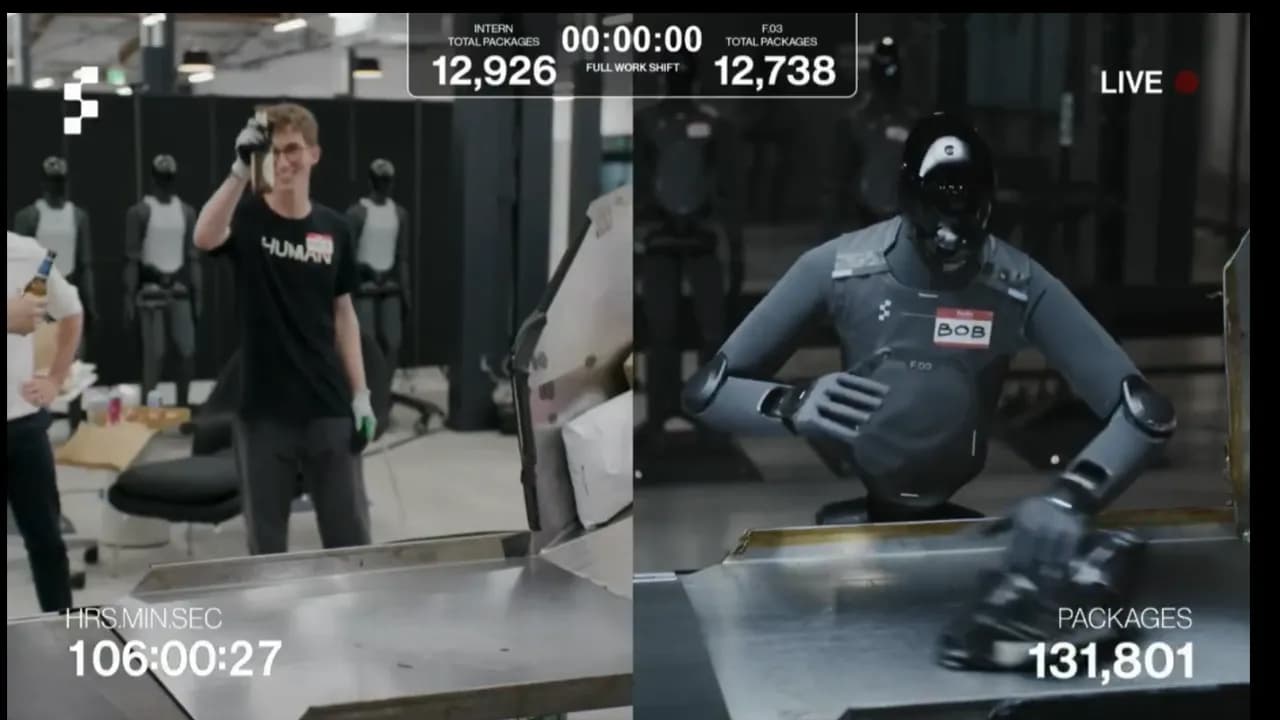
The human won. But his left arm was nearly broken, his fingers blistered, and he admitted he was about 30 minutes away from giving up during a live goods-sorting competition at Figure AI. The robot, of course, was still running — no fatigue, no pain, no need for a break. That's the story behind the human "victory" medal in this head-to-head sorting showdown. A 10-hour showdown between human and machine Figure AI — the humanoid robotics company valued at $39 billion — staged a live test called "Man vs. Machine": robot F.03 (Figure 03) versus an intern named Aime in a 10-hour goods-sorting shift. The task was repetitive to the point of monotony: scan a barcode, pick up a package, place it barcode-down onto the conveyor belt — over and over, without stopping. End-of-shift results: Aime (human): 12,924 packages — averaging 2.79 seconds per item F.03 (robot): 12,732 packages — averaging 2.83 seconds per item The margin: 192 packages and 0.04 seconds per cycle. By the literal scoreboard, the human won. But what does "winning" actually mean here? CEO Brett Adcock wrote on X after the match: "Congrats Aime! He said his left arm is basically broken 😂 This is the last time a human will ever win." During the competition, F.03 briefly overtook Aime around the fifth hour — exactly when he stood up to use the bathroom. The robot doesn't need that. It just needs a power supply. [VIDEO:CvkcPKlnQY4|Livestream of the human vs. robot sorting match|Livestream of the human vs. robot sorting match] And that's precisely the point the 12,924 vs. 12,732 scoreline fails to capture. The robot doesn't high-five or crack open a beer After 10 hours, Aime sat down, rubbed his arm, and exhaled. He admitted another 30 minutes would have forced him to quit due to lower back pain and forearm strain. F.03 kept running — no celebration, no rest, no one needed to pat it on the back. And almost certainly, while Aime slept that night, the robot was still sorting the next shift. Under California labor law, Aime is entitled to a paid lunch break and rest periods during his shift. The robot falls outside the scope of any labor code. This isn't an injustice — it's the nature of the problem: humans and machines are playing by two entirely different sets of rules. One shift versus a full work week Performance comparisons typically focus on an 8–10 hour window. But extend the measurement to a full work week and the picture changes entirely. Figure AI had previously demonstrated that F.03 can run continuously for 24 hours, processing over 30,000 packages without a single downtime error. Humans work five days a week; the robot can run seven days, across three shifts. An expert at Ohio State University noted that during the livestream, F.03 still made errors — misplacing packages and dropping items off the conveyor. Humanoid robots remain a "science project" for many real-world deployment environments. What kind of robot is Figure 03? F.03 was unveiled by Figure AI in October 2025. The robot stands 5'8" (about 173 cm), weighs 61 kg, can carry up to 20 kg, and charges wirelessly through a pad integrated into the sole of its foot. A standout feature is its tactile fingertips, which can sense forces as light as 3 grams — sensitive enough to handle fragile objects without breaking them. At BMW's Spartanburg plant, the previous generation (F.02) assembled over 30,000 vehicles with 99% accuracy. Figure is now building a factory called BotQ with an initial capacity of 12,000 robots per year, targeting 100,000 robots per year within a few years. Why does this result matter — even though the human won? Not because robots are about to take every warehouse job tomorrow, but because the performance gap between humans and machines in repetitive physical labor is narrowing at a concerning pace. A year ago, F.03 likely would have lost by a much wider margin — today the gap is just 0.04 seconds per package. Adcock has already announced improvements to both hardware and AI software for next year, and according to him, next time humans won't have a chance. Worth noting: this competition wasn't designed for the robot to win immediately. It was designed to prove the robot is close enough to keep pace with a human — and from there, create both psychological and commercial pressure across the logistics market. Microsoft AI CEO Mustafa Suleyman has forecast that AI will automate most office work within 12–18 months. For physical labor, this competition suggests the boundary is thinning fast — and "the last time a human will ever win," in the most literal sense, may not be far off. What remains after the race The trial's results have sparked lively debate about the future of the logistics labor market. Now that humanoid robots have reached near-human performance levels, scaling their deployment is largely a question of time and manufacturing cost. Businesses will increasingly shift repetitive, physically demanding tasks to machines. That said, this doesn't mean humans will be entirely replaced in smart warehouses. Rather, human workers and intelligent AI systems will migrate toward roles in system supervision, handling complex edge cases, and managing supply chains at a higher level. The right combination of robotic endurance and human judgment will define the next generation of high-efficiency warehouse operations.

Nam
19 May, 2026
Building a second brain with Karpathy's LLM Wiki

Andrej Karpathy, co-founder of OpenAI, former Director of AI at Tesla, and the person who coined the term "vibe coding," shared on X how he uses AI, and the answer isn't writing code faster. It's building a self-maintaining, self-linking, self-updating knowledge system for a second brain, which he calls LLM Wiki. His research wiki on a single topic has reached 100 articles and 400,000 words, and notably, every word was written by AI without him typing a single character. The problem with how we currently use AI to organize knowledge Does RAG accumulate knowledge over time the way our brains do? Most current AI tools process documents using a RAG model: you upload a document, ask a question, the system finds relevant passages, and the AI synthesizes an answer. Google's NotebookLM, ChatGPT with file uploads, and most AI workflows use this approach because it's simple and easy to deploy. But Karpathy points to a core problem that few people notice: RAG does not accumulate knowledge. Every time you ask a question, the system starts from scratch, reading the documents again, finding relevant passages, assembling an answer. Ask the same question the next day and it repeats the entire process as if nothing happened before. A document from March and a document from October don't connect to each other on their own. Nothing accumulates and nothing is learned from the previous session, which is nothing like how our brains actually work. Karpathy describes the shift in his own thinking with one short sentence that says a lot: most of the tokens he now consumes are no longer going into manipulating code but into manipulating knowledge. How does LLM Wiki work? LLM Wiki is not software, it's an Obsidian thinking architecture Karpathy's idea is not a new piece of software or library. He published it as an "idea file" to create an Obsidian-like architecture. He created a GitHub Gist designed to be copy-pasted directly into an AI agent like Claude Code or OpenAI Codex, then let the agent build the system according to that architecture together with the user. This means you install nothing. Instead, you describe the architecture to the AI and the AI implements it for you. Three core architectural layers of the Wiki The system is organized into three distinct layers, each playing an irreplaceable role: Raw source folder (raw/): Where you drop any document, whether PDF, article, transcript, note, or tweet, and AI reads it but never modifies this folder. The design principle here is important: collect first, organize later. You don't need to sort or prepare documents before adding them. Wiki folder (wiki/): This holds all the Markdown files that AI creates and maintains. It's where knowledge is compiled, linked, and synthesized. Every document in raw/ gets read by AI and integrated into the wiki, updating existing pages, noting contradictions, and creating backlinks to related concepts. Configuration file (CLAUDE.md or equivalent): A ruleset that tells the AI how to organize the wiki, format articles, handle contradictions, and maintain consistency across the entire system. Karpathy describes the relationship between components with one vivid sentence: "Obsidian is the IDE. The LLM is the programmer. The wiki is the codebase." You don't write the wiki yourself. Instead, you ask questions and explore while AI handles the tedious work of maintaining and updating the knowledge base. The self-maintaining loop is the real differentiator Three operations running continuously without intervention What makes LLM Wiki different from ordinary AI note-taking tools is the active loop that runs after the wiki is built. AI doesn't just summarize documents once and stop. It runs three continuous operations: Ingest: When you drop a new document into the source folder, AI reads it, extracts key information, and integrates it into the wiki by updating existing pages, creating new ones where needed, and flagging where new information contradicts old information rather than arbitrarily deleting either. Query: You ask in natural language, and because the wiki has already been compiled and structured, AI answers with high accuracy and can cite specific pages rather than assembling an answer from scattered passages the way standard RAG does. Lint: AI periodically scans the entire wiki to detect broken links, isolated pages with no connections to the rest, contradictions between pages, and knowledge gaps not yet covered. Karpathy calls this "CI/CD for the knowledge base," meaning the system audits its own quality continuously. Karpathy explains why this system is more sustainable than human-maintained wikis with one simple but precise observation: "People give up on wikis because the maintenance burden grows faster than the value they deliver. LLMs don't get tired, don't forget to update cross-references, and can edit 15 files in a single run." Why RAG isn't needed at personal scale Context windows are now large enough to replace vector databases The most debated argument in Karpathy's proposal is that RAG is unnecessary at personal scale. His logic is this: a comprehensive second brain covering an entire research domain typically compiles to somewhere between 500,000 and 2 million tokens in Markdown. With the long context windows available in current models, that entire wiki can fit into a single query context without needing any complex vector search infrastructure. Karpathy reports that at around 100 articles and 400,000 words, the system handles complex questions well without any vector database or RAG infrastructure, because AI builds and maintains its own index and summary files and navigates the full text collection efficiently through that self-built structure. One important caveat: this limit is real. When a wiki grows past a certain threshold, perhaps a few million tokens, the context window does become a genuine bottleneck, and at that point search tools like qmd (a hybrid BM25/vector search tool for Markdown) will need to be integrated to maintain performance. How to get started in 15 minutes The first steps to building your first wiki Karpathy designed this system so that anyone with Claude Code or an equivalent AI agent tool can deploy it immediately without deep technical knowledge. The basic process has four steps: Create a new Obsidian vault. This is simply a folder on your computer where all Markdown files will be stored. Obsidian is just the interface you use to read and navigate. Create two subfolders: raw/ for source documents and wiki/ for AI to write and maintain. These two folders are all you need to set up manually. Copy Karpathy's GitHub Gist at GitHub and paste it into Claude Code or whichever AI agent you're using. The Gist is written as a set of instructions for the agent, letting the agent build the detailed implementation together with you rather than you doing everything yourself. Drop a few initial documents into raw/ and let the agent begin compiling the wiki. From here everything runs on its own. The entire system runs locally with just two dependencies: Obsidian for viewing and navigation, and an AI agent for writing and maintenance. This means no vendor lock-in, no data sent to the cloud if you use a local model, and no subscription fees beyond the API costs of whichever model you choose. LLM Wiki compared to MemPalace, Mem0, and Zep Four different philosophies for the same problem Around the same time Karpathy's LLM Wiki gained attention, the AI community was also discussing MemPalace, an open-source memory system built by actress Milla Jovovich and engineer Ben Sigman that scored 96.6% on the LongMemEval benchmark. All four systems, LLM Wiki, MemPalace, Mem0, and Zep, address the problem of AI not remembering context between sessions, but they do so through four very different philosophies suited to four different needs. The easiest way to understand the differences is through a concrete scenario: you have six months of AI conversations about a research project, covering every decision, every argument, every discarded option. You open a new session and ask: "Why did we choose direction A over B back then?" Each system answers in a completely different way. Mem0 works like a secretary who takes meeting notes. It uses AI to read conversations, extract important facts such as preferences and decisions made, and stores them in a vector database. When you ask again, it finds the fact closest to your question and returns it. Fast, easy to integrate, and well suited to commercial chatbots, but the reasoning behind a decision and the chain of logic that led there is usually gone because the AI already decided that part wasn't important. Zep goes one step further with a time-aware knowledge graph. It doesn't just remember "you preferred X" but "in January you thought X, in March you switched to Y because of Z." Its strength is understanding change over time and it suits applications that need to track user progress, but Zep still uses AI to decide what enters the graph, so there's still a risk of losing important context, especially complex reasoning the AI judged as unnecessary. MemPalace takes the opposite philosophy entirely: store everything, then make it findable. Instead of letting AI decide what's worth remembering, MemPalace stores the full verbatim text of every conversation into ChromaDB and organizes it in a hierarchical structure inspired by the ancient Greek memory palace technique: Wing, Hall, Room, Closet, Drawer. Nothing is filtered out but everything has a clear address for retrieval, and the system runs entirely locally without sending data anywhere. Karpathy's LLM Wiki solves a fundamentally different problem from the other three. Instead of remembering conversations, it compiles documents into structured knowledge. You don't feed it chat history but rather articles, transcripts, and research notes, and AI builds a linked, summarized, queryable Markdown wiki. Each new document isn't just stored but integrated into existing knowledge, creating new connections between concepts and enriching what is already known. Comparison table to choose the right tool for the right need table { width: 100%; border-collapse: collapse; margin: 20px 0; font-family: Arial, sans-serif; } th, td { border: 1px solid #ddd; padding: 12px; text-align: left; } th { background-color: #f4f4f4; font-weight: bold; } tr:nth-child(even) { background-color: #fafafa; } tr:hover { background-color: #f1f1f1; } Criteria LLM Wiki MemPalace Mem0 Zep Data source Research documents, articles, transcripts AI conversation history Conversation history Conversation history Storage method Structured Markdown, AI compiled Full verbatim text, spatial hierarchy Facts extracted by AI Time-aware knowledge graph Does AI filter information? Yes, AI decides how to organize No, everything is stored Yes, AI selects important facts Yes, AI selects entities and relations Runs locally? Yes, only Obsidian and a model needed Yes, ChromaDB and SQLite on device No, cloud service No, cloud service Best suited for Research, learning, document synthesis Long-term AI context memory Chatbots, commercial applications Apps tracking user progress over time Weaknesses Doesn't remember conversations, requires initial setup Storage-heavy, no visual UI yet Loses complex reasoning Cloud dependency, still risks losing context The most important thing to remember when choosing: LLM Wiki and MemPalace solve two different problems and can be used together rather than choosing one over the other. MemPalace remembers the history of your conversations with AI, meaning it knows what you said, what you decided, and how your thinking changed. LLM Wiki organizes knowledge from the outside world, the articles you read, the videos you watched, the documents you collected. Combining both lets AI understand both who you are and what field you're researching, and together they form a more complete second brain. The most thought-provoking insight from LLM Wiki Most of us use AI as a tool for generating temporary answers. Each session starts from scratch and nothing accumulates. Karpathy's LLM Wiki suggests a different direction: using AI as a knowledge compiler, where each new document isn't just stored but integrated into an existing structure, creating new connections and enriching what is already known. If you're researching a specific domain, whether AI, technology, finance, or anything else, this is worth trying today. Create a folder, drop in five articles you've read recently, and let Claude Code begin building the first wiki. After one week of adding documents consistently, you'll see the difference between an archive and an actual knowledge base.

Nam
11 Apr, 2026
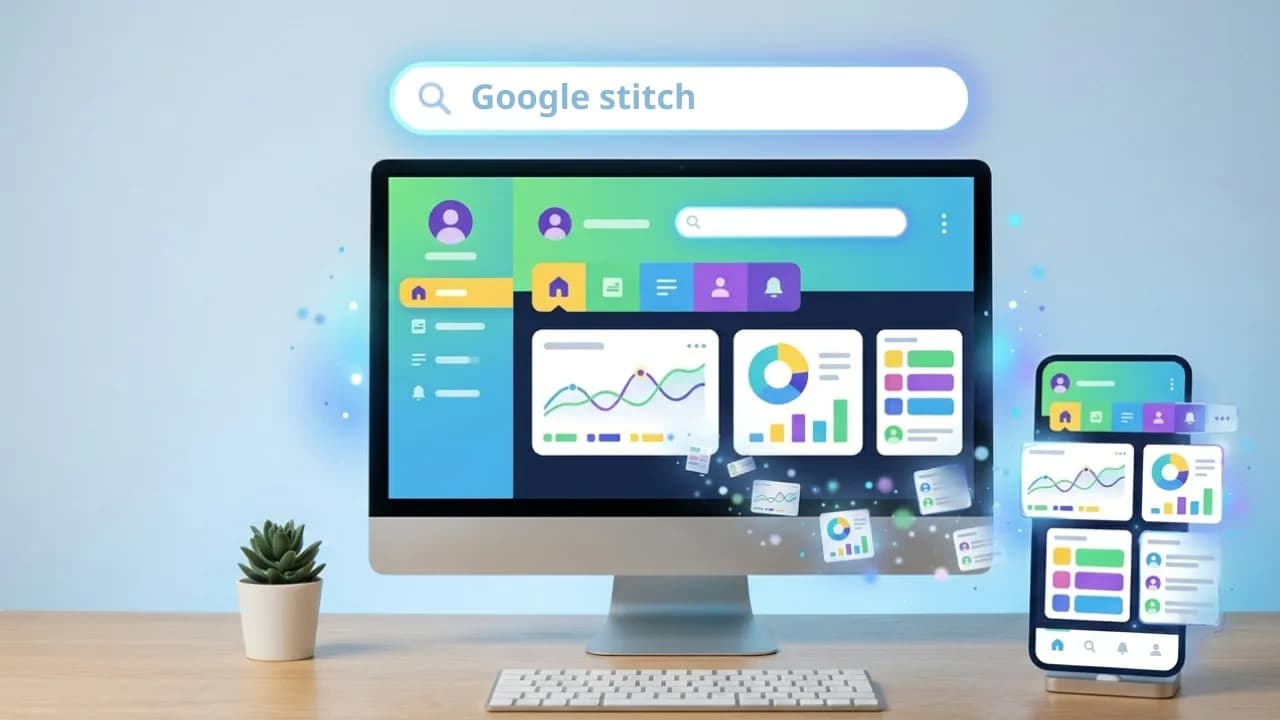
What is Google Stitch AI? A beginner's guide to UI design

You have an idea for an app or website in your head but don't know Figma, don't know how to code, and don't want to spend weeks learning either. Google Stitch was built for exactly that situation: you describe an interface in plain English and AI generates a complete screen in under a minute. What is Google Stitch? Google Stitch is a free AI UI design tool developed by Google Labs, launched at Google I/O 2025 and currently powered by Gemini. You access it entirely through a browser at stitch.withgoogle.com with no installation required, just sign in with a Google account. What sets it apart from Figma or Canva is that Stitch doesn't ask you to drag, drop, or select individual components. You simply describe what you want, for example "a landing page for a space technology app using purple as the primary color," and Stitch generates a complete interface with colors, fonts, and layout already in place. The output is real HTML and CSS, not a screenshot. Getting started with vibe design in Google Stitch in 3 steps Step 1: Write an effective prompt The quality of your vibe design depends heavily on how you describe your prompt. A good prompt needs three elements: the type of screen, the target user, and the emotion or style you want to convey. Weak prompt example: "Create a homepage for an app." Strong prompt example: "Design a modern landing page for a SaaS product from a space technology startup called LaunchPad. Use a deep navy and neon purple color palette. Include a hero section with a 'Get Started' button, a 3-column feature grid, and a pricing section with a frosted glass effect." Here is what that produced: Stitch also supports uploading hand-drawn sketches, reference screenshots, or even voice input so AI can better understand the direction you have in mind. Step 2: Flash or Pro mode? Google Stitch currently offers two generation modes. Flash uses Gemini Flash, produces results faster, and works well for simple screens or when you want to explore multiple ideas quickly. Pro uses Gemini Pro, delivers more detailed and complex interfaces but consumes more quota. With a free account you currently get 350 standard generations and 50 experimental generations per month. For beginners this is more than enough to experiment freely, though if you are working on a real project it is worth saving Pro quota for your most important screens. Step 3: Where to export? Once you have a design you are happy with, Stitch gives you four export options. Paste into Figma: Stitch generates a code snippet you copy and paste directly into Figma. Best if you are working with a team that has designers or need more detailed editing in a familiar environment. Download as ZIP: You receive the complete HTML, CSS, and image files packaged together, ready to open locally or drop into any development environment. Export via MCP to Antigravity: This is the best option if you want to go from design to a working product. Antigravity shares Google's ecosystem so connecting to Stitch via MCP requires minimal setup, and from there an AI agent reads the full design directly and generates complete React or Flutter code without you copying or pasting any files. A detailed guide on this workflow is coming soon. Copy prompt for an AI agent: Because Google Stitch supports MCP, any platform that supports MCP can pull the full design description from Stitch directly, including Claude Code, ChatGPT, and Grok. What Google Stitch does well and where it still falls short The clearest strength is the speed and quality of the output. A complex screen with multiple components can appear in 30 to 60 seconds, with clean and immediately usable HTML and CSS. It also does a good job of maintaining consistent colors, fonts, and spacing within the same project, making multiple screens feel like they belong to the same design system. There are a few practical caveats worth knowing. Layouts can sometimes shift or components overlap, especially on screens with many layers of information, so reviewing carefully before going to production is important. The output is plain HTML and Tailwind CSS rather than React components or Vue, so if your project uses a specific framework you will need an additional conversion step unless you use Antigravity to handle that automatically. Image upload for incorporating into designs is also still fairly limited compared to Figma. Where to start with Google Stitch Don't try to design an entire app in one session. Start with the simplest screen in your idea, whether that is a login page, a homepage, or a product detail view. Write a detailed prompt following the guidance above, run both Flash and Pro to compare results, then refine by continuing to chat with AI inside the same Stitch interface. Once you have a screen you are satisfied with, that is the right moment to try exporting to an AI agent platform and turning that design into something real. The full journey from prompt to working demo can be completed in around three to four hours once you are familiar with the workflow. The refinement work afterward still takes time, but it is significantly faster than the traditional approach.

An
24 Mar, 2026
Đầu năm Google tiếp tục dội bom thị trường với việc ra mắt Gemini 3.1 Pro

Khi Gemini 3 Pro còn chưa nguội thì Google đã liên tục làm nóng thị trường AI bằng Gemini 3.1 Pro, đánh dấu bản cập nhật đầu tiên trong hệ thống Gemini 3. Được xây dựng dựa trên nền tảng của Gemini 3 Pro (ra mắt tháng 11/2025), phiên bản 3.1 Pro không chỉ là một bản nâng cấp nhẹ khi tích hợp các kỹ thuật suy luận Deep Think và tiếp tục cuộc đua với các ông lớn khác khi mà Claude Opus 4.6, Claude 4.6 Sonnet cứ ra mắt liên tục.Trên bảng điểm benchmark Gemini 3.1 Pro đứng ở đâu?Như thường lệ Gemini 3.1 Pro lại tiếp tục càn quét nhiều bảng xếp hạng. Sức mạnh của nó không thể nào xem thường được và vẫn tiếp tục đứng đầu:ARC-AGI-2 (Suy luận trừu tượng): Đạt 77,1%, cao hơn gấp đôi so với 31,1% của Gemini 3 Pro. Con số này vượt xa các đối thủ hàng đầu như Claude Opus 4.6 (68,8%) và GPT-5.2 (52,9%).GPQA Diamond (Khoa học cấp độ sau đại học): Đạt 94,3%, dẫn đầu thị trường AI hiện nay.SWE-bench Verified (Lập trình): Đạt 80,6%, chính thức thu hẹp khoảng cách và cạnh tranh trực tiếp với các mô hình chuyên mã nguồn của Anthropic.Khả năng đa phương thức: Dẫn đầu trên 13/16 bài kiểm tra benchmark mà Google đánh giá.Những cải tiến so với Gemini 3 như thế nàoTích hợp Deep Think nhưng tốc độ vượt trộiGemini 3.1 Pro đưa kỹ thuật suy luận Deep Think trực tiếp vào mô hình tiêu chuẩn. Điều này cho phép người dùng nhận được khả năng suy luận mà không phải chịu độ trễ lớn như các phiên bản chuyên sâu trước đây.Tối ưu cho quy trình làm việc của Agent (Agentic Workflows)Mô hình mới được tinh chỉnh để thực hiện các tác vụ đa bước, sử dụng công cụ chính xác và có khả năng tự sửa lỗi tốt hơn. Google cũng ra mắt một endpoint chuyên dụng là gemini-3.1-pro-preview-customtools để tối ưu hóa việc gọi hàm (function calling) cho các nhà phát triển xây dựng agent.Sáng tạo với mã nguồn và hình ảnh độngGemini 3.1 Pro có khả năng dịch các chủ đề văn học thành mã chức năng, ví dụ như tạo website mang phong cách của một cuốn tiểu thuyết. Ngoài ra, nó có thể tạo các hình ảnh động svg trực tiếp từ văn bản, những tệp này cực kỳ nhẹ và sắc nét ở mọi quy mô vì được xây dựng bằng mã thay vì pixel truyền thống.Google cũng cho ra mắt luôn Veo 3.1 cùng với Gemini 3.1Cùng với sự ra mắt của Gemini 3.1 Pro, mô hình tạo video Veo 3.1 cũng được Google cho ra mắt luôn, đúng là sau tết các ông lớn đồng loạt nổ bom tấn, Veo 3.1 có thể cho phép:Tạo video chất lượng cao dài 8 giây kèm âm thanh.Hỗ trợ tạo video theo chiều dọc cho mạng xã hội.Cho phép tải lên nhiều ảnh tham chiếu để điều khiển nhân vật, đối tượng và phong cách của cảnh quay.Cách cách trải nghiệm Gemini 3.1 Pro như thế nàoNgười dùng có thể tiếp cận mô hình quyền năng này qua nhiều kênh khác nhau:Google Gemini: Truy cập Gemini hoặc ứng dụng di động, chọn chế độ "Pro" (giới hạn một số tin nhắn mỗi ngày cho bản miễn phí)là chúng ta có thể test ngay Gemini 3.1 ProĐặc biệt là giá API vẫn rất rẻ cho mọi người test với đầu vào: $2 / 1 triệu token (với prompt ≤ 200K) và đầu ra: $12 / 1 triệu token.

Nam
23 Feb, 2026