4AIVN
Back to News

Siêu lợi nhuận cho Nvidia với máy chủ AI Nvidia GB200 NVL72 lên tới 77.6%
Published on 5 October, 2025
Siêu lợi nhuận cho Nvidia với máy chủ AI Nvidia GB200 NVL72 lên tới 77.6%

Quick Summary

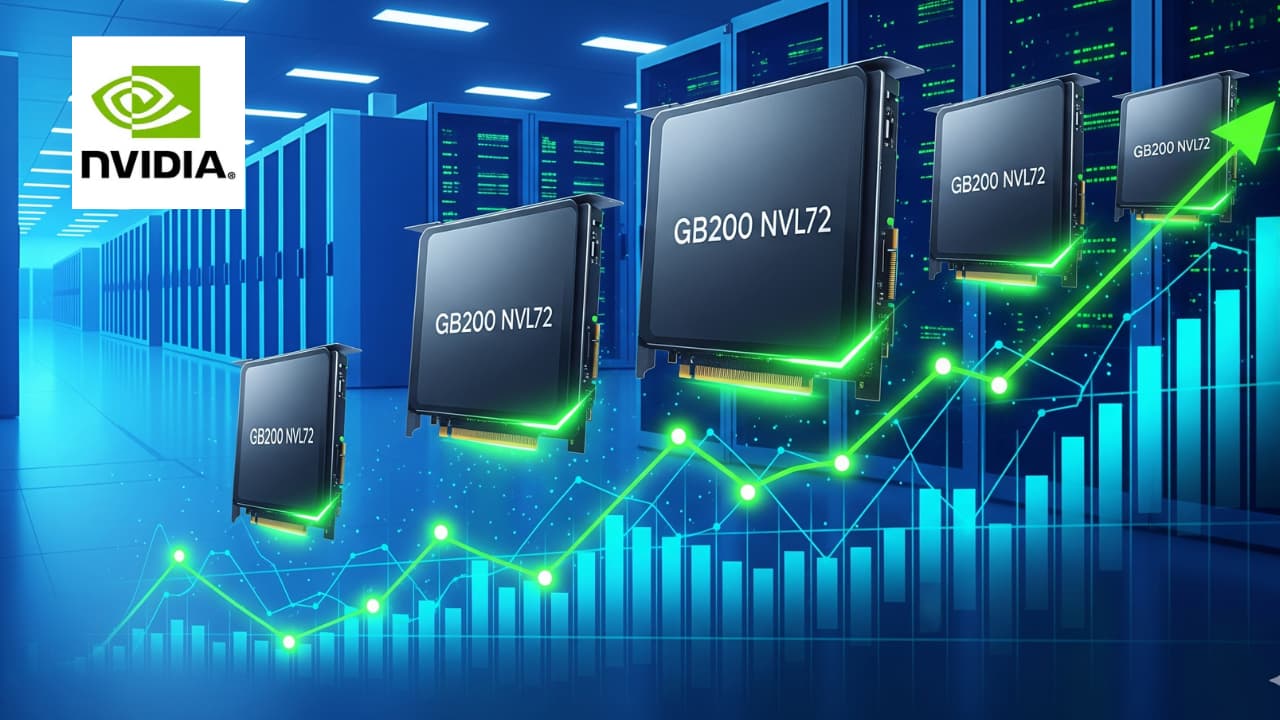
Morgan Stanley phân tích rằng GPU NVIDIA GB200 NVL72 mang lại lợi thế hiệu quả kinh tế vượt trội cho các trung tâm dữ liệu AI quy mô lớn, với tỷ suất lợi nhuận đạt 77,6% cho trung tâm 100MW, vượt xa Google TPU v6e và cho thấy AMD đang thua kém với tỷ suất âm. Mặc dù có tổng chi phí sở hữu (TCO) cao nhất, giải pháp của NVIDIA vẫn được đánh giá là hiệu quả về mặt kinh tế.

Hiện nay, khi nền kinh tế GPU đang gây ra nhiều lo lắng trong giới tài chính, Morgan Stanley đã đưa ra một phân tích khá thuyết phục về lợi thế hiệu quả vượt trội khi sử dụng GPU NVIDIA GB200 NVL72 cho các trung tâm dữ liệu AI quy mô lớn.

Để những ai chưa biết, mỗi máy chủ AI NVL72 chứa 72 GPU NVIDIA B200 cùng với 36 CPU Grace, tất cả được kết nối qua công nghệ liên kết băng thông cao, độ trễ thấp NVLink 5. Cần lưu ý rằng mỗi máy chủ NVL72 này hiện có giá khoảng 3,1 triệu đô la gấp hơn 16 lần so với 190.000 đô la cho một máy chủ H100.

Morgan Stanley tin rằng việc sử dụng giải pháp mới nhất của NVIDIA có ý nghĩa kinh tế.

Hiệu quả kinh tế của các hệ thống AI

Theo tính toán của Morgan Stanley, các hệ thống NVIDIA GB200 NVL72 hiện đang dẫn đầu về khả năng tạo ra doanh thu và lợi nhuận, theo sau là Google TPU v6e.

Cụ thể, một trung tâm dữ liệu AI với công suất 100MW có thể đạt tỷ suất lợi nhuận 77,6% với các máy chủ NVIDIA GB200 NVL72, trong khi Google TPU v6e đứng thứ hai với tỷ suất lợi nhuận 74,9%. Điều này mang lại lợi nhuận khổng lồ và khẳng định vị thế dẫn đầu của Nvidia và Google.

Exhibit 12: Khả năng sinh lời của nhà máy AI 100MW

Bao gồm các máy chủ từ những nhà cung cấp khác nhau

Nguồn: Nghiên cứu của Morgan Stanley

Tuy nhiên, giá thuê các pod (cụm máy chủ AI) Google TPU v6e không được công bố, nhưng trung bình, chi phí thuê một pod thấp hơn khoảng 40-50% so với máy chủ NVL72.

Điều đáng chú ý là theo tính toán của Morgan Stanley, các trung tâm dữ liệu AI sử dụng nền tảng AMD MI300 và MI355 có tỷ suất lợi nhuận âm, lần lượt là -28,2% và -64%. Điều đó cho thấy AMD đang hoàn toàn tụt lại trong cuộc đua máy chủ AI.

Chi phí sở hữu tổng thể (TCO)

Theo Morgan Stanley giả định một trung tâm dữ liệu AI 100MW sẽ có chi phí cơ sở hạ tầng là 660 triệu đô la, khấu hao trong 10 năm còn chi phí GPU có thể dao động từ 367 triệu đô la đến 2,273 tỷ đô la, khấu hao trong 4 năm. Cuối cùng, chi phí vận hành được tính dựa trên hiệu suất năng lượng của các hệ thống làm mát khác nhau và giá điện trung bình toàn cầu.

Theo đó, các hệ thống NVIDIA GB200 NVL72 có tổng chi phí sở hữu (TCO) cao nhất là 806,58 triệu đô la, tiếp theo là nền tảng MI355X với 774,11 triệu đô la.
Discussion (0)

Log in to join the discussion.

No comments yet. Be the first!

Related Articles

Anthropic Increases Claude Usage Limits After SpaceX Partnership

Anthropic has just announced a partnership with SpaceX to access over 220,000 NVIDIA GPUs and will immediately use this new computing power to increase usage limits for both Claude Code and API. Here's what's changing and why it matters to users. Why Did Anthropic Partner with SpaceX? In recent months, Anthropic has continuously signed large-scale computing agreements with Amazon, Google, Microsoft, and NVIDIA. This time, the company has added another unexpected name: SpaceX. According to the announcement on May 6, Anthropic signed an agreement to use the entire computing capacity at SpaceX's Colossus 1 data center, equivalent to over 300 megawatts of power and more than 220,000 NVIDIA GPUs. This entire capacity will be put into use within one month and will directly improve the experience for Claude Pro and Claude Max users. Colossus 1 is SpaceX's AI data center, currently one of the largest GPU clusters in the world. Anthropic is the sole tenant of its entire capacity. Specific Changes to Usage Limits Thanks to the new computing resources, Anthropic has implemented three changes effective immediately from the announcement date Doubling Hourly Claude Code Limits The 5-hour rate limit for Claude Code is doubled for Pro, Max, Team, and Enterprise plans. If you previously could only run 10 complex Claude Code commands, this is now doubled to 20, which will be significantly helpful. However, it's important to note that the weekly limit remains unchanged, so while increasing the 5-hour limit allows for more intensive work in a short period, it might cause you to hit the weekly cap faster. Removing Peak Hour Limits Previously, Claude Code automatically reduced usage limits during peak hours (typically from 9 AM to 3 PM) for Pro and Max accounts. This limit has been completely removed, so users can now use Claude Code at full speed regardless of the time of day. For users who often work in the evening (which coincides with US peak hours), this change is likely to have the most noticeable impact. Significantly Increasing API Limits for Claude Opus Models The API rate limit for Claude Opus models has been significantly increased. Details of the multiplier increase are published by Anthropic in the following table: This change is particularly important for developers building applications on the Claude Code platform Anthropic's Overall Computing Strategy The agreement with SpaceX is not an isolated move. In recent months, Anthropic has built a remarkable infrastructure portfolio: An agreement for up to 5 gigawatts with Amazon, with nearly 1 GW operational before the end of 2026 A 5 GW agreement with Google and Broadcom, expected to be operational from 2027 Strategic partnerships with Microsoft and NVIDIA, including $30 billion in Azure capacity A $50 billion investment in AI infrastructure in the US with Fluidstack And now, over 300 megawatts from SpaceX's Colossus 1 data center Anthropic runs Claude on various hardware platforms — AWS Trainium, Google TPUs, and NVIDIA GPUs — and states that it continues to seek additional computing power sources. Notably, within the framework of the agreement with SpaceX, both parties also expressed interest in developing orbital AI computing capabilities, i.e., placing GPUs on satellites. This is still a very early-stage idea, but if realized, it would be a major turning point for global AI infrastructure. Expanding to International Markets A portion of the expanded computing capacity will be used to serve international enterprise customers, especially in sectors requiring local data storage such as finance, healthcare, and government. The agreement with Amazon also includes additional inference capacity in Asia and Europe. Anthropic also emphasized that it only expands to countries with democratic legal frameworks and secure hardware supply chains, demonstrating a cautious stance amid increasingly fierce geopolitical competition in AI. What Does This Mean for Claude Users in Vietnam? From a practical perspective, the three changes to usage limits directly benefit those who use Claude Code daily — especially programmers and individuals who work continuously with Claude Code. The removal of peak hour limits also means that the experience for users in Vietnam (whose time zone often coincides with peak load periods in the US) will be more stable. In the long term, greater computing power often means the ability to deploy more powerful models at lower costs. This is the foundation for Anthropic to continue competing with OpenAI and Google in the 2026 AI race. Anthropic is Always Evolving Anthropic is seriously investing in infrastructure, and the partnership with SpaceX is the latest step in that strategy. The most immediate result users can feel is that Claude Code will be less restricted, and API speeds will certainly improve. In the long run, the computing race among major AI companies promises many more interesting developments in 2026.

Nam
8 May, 2026