4AIVN
Back to News

Google Antigravity công cụ AI thay đổi quy trình làm việc
Published on 30 March, 2026
Google Antigravity công cụ AI thay đổi quy trình làm việc

Quick Summary

Google Antigravity IDE là công cụ AI agent thế hệ mới từ Google, hoạt động bất đồng bộ để tự động hóa quy trình lập trình, điều phối nhiều agent chạy song song và tương tác trực tiếp với trình duyệt web giúp tối ưu hóa hiệu suất làm việc vượt trội.

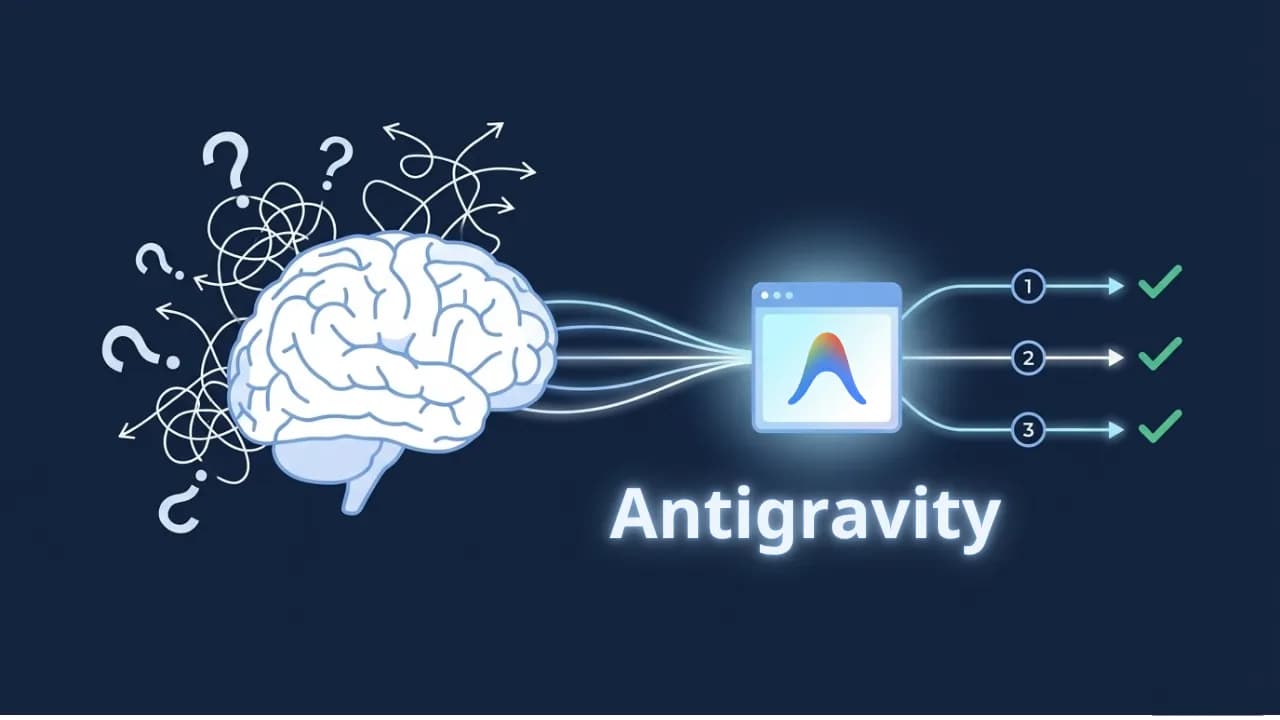
Bạn gõ một câu lệnh, AI tự lên kế hoạch, mở terminal, viết code, mở trình duyệt web kiểm tra rồi báo lại kết quả, Antigravity làm tất cả trong khi bạn đang uống cà phê. Đó không phải viễn cảnh tương lai, đó là cách Google Antigravity hoạt động và nó vừa thay đổi hoàn toàn cách mình tiếp cận việc xây dựng sản phẩm và quy trình tự động.

Google Antigravity là gì?

Antigravity là IDE thế hệ mới do Google ra mắt cuối tháng 11 năm 2025 cùng lúc với Gemini 3, được xây dựng trên nền VS Code nhưng với kiến trúc hoàn toàn khác: thay vì AI ngồi ở sidebar gợi ý từng dòng code, AI trong Antigravity làm việc như một agent thực sự một khi đã được cấp quyền thì chúng ta có thể giao task và Antigravity tự hoàn thành task đó để cho ra kết quả rất giống với Manus Flowith nhưng ở đây Antigravity thiên về màn hình làm việc với code hơn.
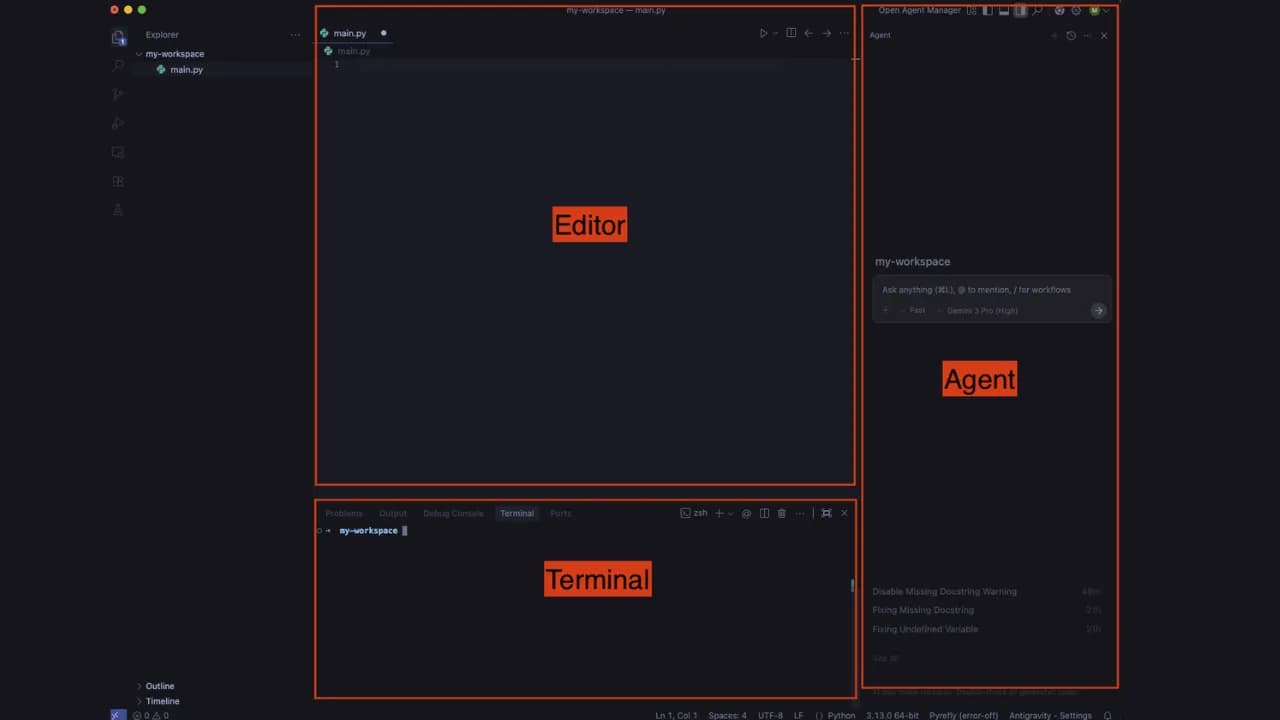
Màn hình làm việc của Antigravity

Điểm khác biệt lớn nhất so với Cursor hay GitHub Copilot là Antigravity không hỏi bạn từng bước mà hoạt động bất đồng bộ đó là khi bạn giao task, agent chạy ngầm trong nền trong khi bạn làm việc khác rồi quay lại xem kết quả. Antigravity hoàn thành một feature Next.js + Supabase điển hình trong 42 giây so với 68 giây của Cursor, và độ chính xác khi refactor đạt 94% so với 78% của Cursor.

Antigravity đã có phần mềm hỗ trợ macOS, Windows và Linux nên mọi người không lo về vấn dề phần mềm mà chỉ nên lo về chi phí gọi API. Ngoài sử dụng Gemini 3 và Gemini 3 pro mặc định, Antigravity còn hỗ trợ Claude Sonnet, Claude Opus và GPT-OSS thật tốt khi không bị khoá vào nền tảng của Google khi mà Claude Sonnet, Claude Opus đang dẫn đầu thị trường.

Các tính năng tiêu biểu của Antigravity IDE

Chỉnh sửa trực tiếp với sự hỗ trợ của AI

Với giao diện quen thuộc như VS Code, nơi các lập trình viên có thể chỉnh sửa code tay hoặc nhờ AI hỗ trợ từng đoạn cụ thể. Phù hợp khi bạn muốn kiểm soát từng bước hoặc xử lý những đoạn code cần sự chú ý cao.

Điều phối agent chạy song song

Đây là điểm khác biệt thực sự của Antigravity thực sự với "mission control" bạn không cần viết code ở đây mà điều phối nhiều agent chạy song song. Ví dụ một agent đang refactor module A, agent khác đang viết test cho module B, agent thứ ba đang debug lỗi UI trên trình duyệt web. Bạn theo dõi tiến độ, để lại comment như trên Google Docs và agent tự điều chỉnh mà không cần dừng lại chờ.
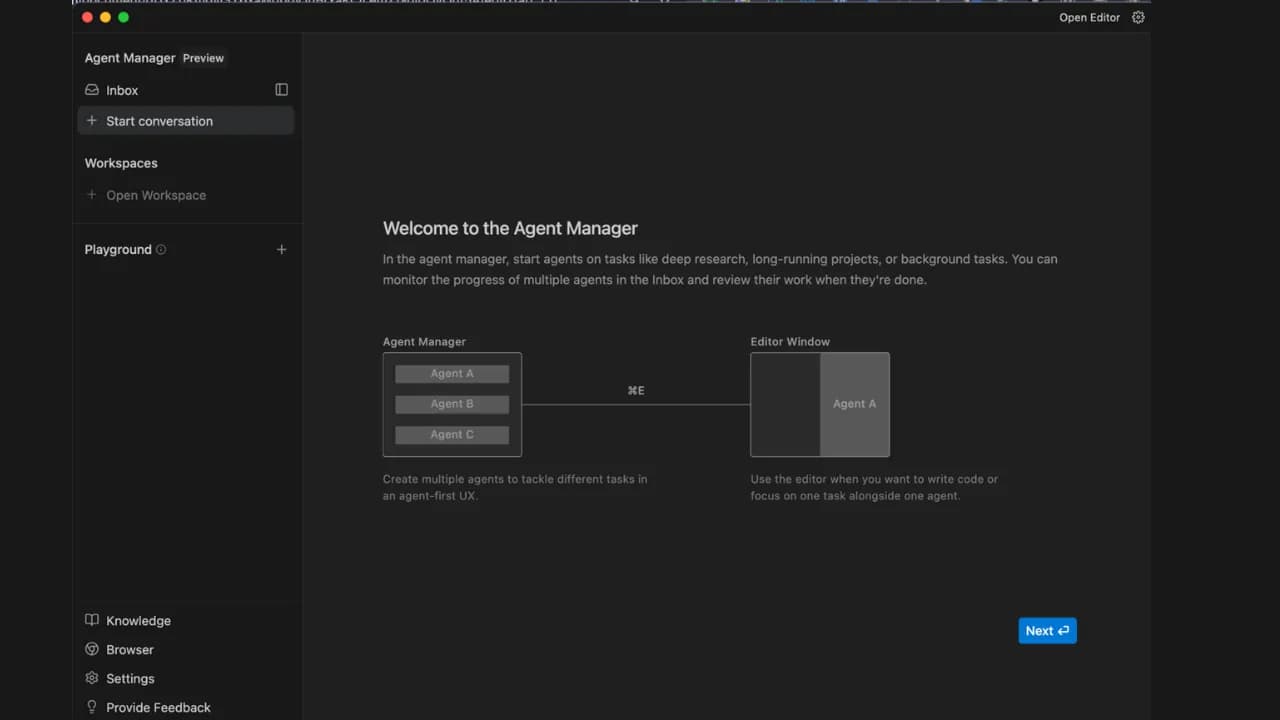
Mô tả điều phối nhiều Agent trong Antigravity

Truy cập và điều khiển trình duyệt web

Đây là tính năng mình thấy ấn tượng nhất khi mới dùng khi mà Antigravity có thể mở trình duyệt web như Chrome, Firefox,... khi được cấp quyền từ đó nó có thể điều hướng trang web, điền form và kiểm tra giao diện hoàn toàn tự động. Tuy nhiên cần lưu ý rằng Antigravity hoạt động giống hệt như Puppeteer nên chỉ tương tác được với các tác vụ trên trình duyệt và khi cần có thể xử lý ảnh và chụp ảnh màn hình và tất nhiên chưa hoạt động được với những trang web đã cài đặt chặn bot truy cập.

Logic của Antigravity rất rõ ràng

Đây là tính năng mình thích nhất khi làm việc với Antigravity đó là thay vì đổ raw code ra màn hình, agent tạo ra các deliverable có thể đọc được như task list, implementation plan, screenshot màn hình app đang chạy để bạn kiểm tra logic của agent cả trước và sau khi hoàn thành task, điều này giúp bạn luôn nắm được agent đang làm gì để đánh giá.

Antigravity đang được dùng để làm những gì trong thực tế?

Nhiều người nghe đến Antigravity và nghĩ ngay đây là công cụ dành riêng cho lập trình viên chuyên nghiệp. Thực tế thì không phải vậy vì phạm vi ứng dụng rộng hơn nhiều so với vẻ ngoài kỹ thuật của nó.

Xây dựng và triển khai website

Đây là use case phổ biến nhất. Bạn mô tả trang web muốn xây — stack kỹ thuật, tính năng, phong cách thiết kế — agent tự viết code, tự kiểm tra trên browser và tự sửa lỗi. Kết hợp với Google Stitch qua MCP, bạn có thể đi từ thiết kế UI đến sản phẩm chạy thực sự mà không cần chuyển qua lại giữa nhiều công cụ.

Ví dụ prompt dùng trong Antigravity: "Xây cho mình một landing page bằng Next.js và Tailwind CSS cho sản phẩm SaaS quản lý công việc nhóm. Có section hero, bảng giá 3 gói và form đăng ký email. Deploy lên localhost và chụp screenshot kết quả."

Tự động hóa quy trình lặp lại

Một trong những điểm mạnh thực tế nhất. Bạn có thể nhờ Antigravity tự động crawl dữ liệu từ nhiều nguồn, tổng hợp và gửi báo cáo theo lịch, hoặc tự động điền form và thực hiện các thao tác lặp đi lặp lại trên trình duyệt — những việc trước đây cần viết script riêng hoặc dùng công cụ automation phức tạp.

Ví dụ prompt: "Mỗi sáng 8 giờ, vào trang thống kê của website mình tại [URL], lấy số liệu pageview và top 5 bài viết và xem thông tin 5 bài viết của trang fanpage Facebook của mình ở trang [URL], tổng hợp thành file markdown và lưu vào thư mục /reports/daily."

Xây dựng hệ thống AI agent

Đây là use case mà Antigravity thực sự vượt trội so với các công cụ khác. Thay vì chỉ viết một đoạn code đơn lẻ, bạn có thể mô tả cả một pipeline — ví dụ "tạo hệ thống phân tích review sản phẩm từ nhiều nguồn, phân loại sentiment và tự động tag vào database" — rồi để Antigravity thiết kế kiến trúc agent, phân chia nhiệm vụ và triển khai từng bước.

Ví dụ prompt: "Tạo một hệ thống gồm 3 agent: agent 1 crawl review sản phẩm từ Shopee và Lazada mỗi ngày, agent 2 phân tích sentiment và phân loại theo chủ đề, agent 3 tổng hợp thành báo cáo tuần và lưu vào Google Sheets."

Refactor và cải thiện codebase có sẵn

Nếu bạn có một dự án cũ cần nâng cấp, Antigravity đặc biệt hữu ích khi cần refactor quy mô lớn có thể thay đổi toàn bộ cấu trúc file, cập nhật dependencies, viết test coverage cho code chưa có test. Agent đọc toàn bộ codebase, hiểu ngữ cảnh và thực hiện thay đổi nhất quán trên nhiều file cùng lúc thay vì sửa từng chỗ một.

Ví dụ prompt: "Đọc toàn bộ codebase trong thư mục /src, đóng vai chuyên gia bảo mật xem có dính lỗi SQL injection, các lỗ hổng owasp không đề xuất chỉnh sửa sao cho vẫn giữ nguyên logic và đảm bảo không có lỗi sau khi refactor."

Nghiên cứu và tổng hợp thông tin từ web

Vì Antigravity có thể điều khiển trình duyệt, bạn có thể dùng nó để tự động truy cập nhiều trang web, trích xuất thông tin theo cấu trúc bạn định sẵn và tổng hợp lại thành báo cáo hoặc database — phù hợp với các tác vụ research cần thu thập dữ liệu từ nhiều nguồn mà làm thủ công sẽ rất tốn thời gian.

Ví dụ prompt: "Vào 10 trang web tin tức AI này [danh sách URL] và các trang fanpage [danh sách URL] tìm các bài đăng trong 7 ngày qua, trích xuất tiêu đề, tóm tắt 2 câu và link gốc, lưu vào file CSV theo thứ tự mới nhất trước."

Các câu hỏi thường gặp khi sử dụng Antigravity

Antigravity có miễn phí không?

Có cả gói miễn phí và trả phí.
  • Gói miễn phí có quota reset theo tuần với rate limit hạn chế, đủ để thử nghiệm và làm project nhỏ.
  • Gói Pro/Ultra có quota reset mỗi 5 giờ và được ưu tiên cao nhất rất phù hợp nếu bạn dùng Antigravity hàng ngày cho công việc thực tế.

Antigravity có làm được việc với file Word, Excel, PDF không?

Antigravity cài Puppeteer nên hoạt động chủ yếu qua trình duyệt web và chưa thể tác động trực tiếp vào các loại file như Word, Excel hay PDF. Nếu cần xử lý những file này, bạn phải thêm vào workflow và mention trong phần cấu hình để agent biết cách tiếp cận đúng.

AI không phản hồi hoặc bị treo phải làm gì?

Đây là lỗi khá phổ biến, đặc biệt vào giờ cao điểm khi nhiều người dùng đồng thời. Trong hầu hết trường hợp, chỉ cần restart lại Antigravity là được hoàn toàn không cần lo mất dữ liệu hay phải thiết lập lại từ đầu. Ngoài ra, nên dùng git và commit thường xuyên trước khi giao task lớn để tránh mất code nếu agent bỏ dở giữa chừng.

Antigravity thực sự là công cụ quá mạnh mẽ vì sao chúng ta không thử ngay. Người dùng có thể tải về tại antigravity.google/download và bắt đầu với một project nhỏ — không phải để thử tính năng mà để hiểu tư duy làm việc mới này trước khi đưa vào dự án thực tế.
Discussion (0)

Log in to join the discussion.

No comments yet. Be the first!

Related Articles

Three Effective Ways to Delegate Tasks to Antigravity

Receiving a task and then staring at the screen for an hour not knowing where to start is something that happens to Antigravity users no less than regular workers. The problem isn't that you're incompetent or lazy, but that your brain doesn't fear difficult tasks; it fears unclear ones. And when you give AI a vague request, the results Antigravity produces will be equally vague. Why does delegating tasks to Antigravity still yield poor results? Antigravity is a true agent because it can plan, write code, execute commands, and self-verify results. But this is precisely why many people are disappointed on their first use: they immediately assign Antigravity a huge and vague task, and the agent runs for 30 minutes in the wrong direction, exhausting the quota with unusable results. Cognitive scientists call the state of freezing before a large task "cognitive overload." The brain doesn't know where to start processing, so it chooses the safest option: doing nothing, and the familiar loop looks like this: Brain fears making mistakes → freezes Cannot start → deadline approaches Becomes more fearful → freezes again With Antigravity, user cognitive overload directly leads to poor prompts, and poor prompts cause the agent to run in the wrong direction. This loop, of course, consumes more tokens and time than any technical error. There are three approaches to break that loop, depending on how well you understand the requirements and how much you've established the process. Three Effective Approaches to Working with Antigravity Method 1: Download Source Code from Experienced Users This is the fastest way to get started without spending time setting up from scratch, especially suitable when you don't yet know what your process should look like. Antigravity works best when it has sufficient project context, meaning it can see the rules, workflows, skills, and memory directories that record old knowledge. Instead of building everything yourself, you copy the source code from someone who has fully set it up, download it, and let the agent read the entire existing configuration, provided, of course, that person has agreed or made it public. Note: Many people have exploited this to spread malware, so only install source code officially from Anthropic, Google, xAI, OpenAI,... or reputable individuals. When you copy the code repository from someone who has fully set it up, download it, and let the agent read the entire existing configuration, you gain two benefits simultaneously: The agent immediately understands the writing style for skills, workflows, technical foundations, and project rules from day one without you needing to re-explain. You learn how experienced individuals set up processes — from organizing memory directories to writing rules for the agent — without having to figure it out from scratch. However, if you don't understand the author's intentions, you won't be able to fully utilize the functions of this source code, much like wearing an oversized shirt. Method 2: Solve Small Steps Yourself Before Delegating Large Tasks This is the most quota-saving method and also a lesson I learned after many instances of waste due to delegating overly large tasks from the start. The 4C framework — Clarify, Chunk, Consult, Commit — originally used for human task management, is extremely effective when applied to Antigravity for a simple reason: the clearer you are before delegating, the less the agent has to guess. Clarify Step: Before typing anything into Antigravity, answer these 4 questions yourself: What does the final result look like? Who will use this? What is the actual deadline? What constitutes successful completion of this task? Five minutes spent answering will completely change the quality of your command. Instead of "build me a login system," you'll be able to write "build a login system using Google OAuth for a Next.js application, save the session to Firestore, redirect to the main page after successful login, run it locally, and take a screenshot for me to review." Chunk Step: Based on the Zeigarnik effect, once you start even a small step, your brain automatically wants to complete the subsequent steps. Ask the agent "break the task into the smallest steps to begin?" and go through each step. Allocate a specific amount of time to understand the structure and check if the agent correctly understands the requirements before letting it run a large task. But remember to only allocate a specific amount of time, because many problems only truly emerge during execution, and that's when we find solutions. In this step, we can immediately use Fast Mode for the agent to execute without needing to create a framework or deep thinking, or even if there's nothing special, Gemini Flash can perfectly handle this part, saving significant tokens for Gemini Pro and Claude Opus. Consult Step: Don't make it hard on yourself when others have gone before you. Similar to Method 1 of downloading others' source code, this step involves actively finding and reading how they approach problems, how they break down tasks, how they write commands, and how they set up processes, then distilling suitable methods to apply to your own work. You don't need to copy verbatim; just learn from their thought structure. This is especially valuable for tasks you've never delegated to an agent before, as those who have done it often discover common pitfalls you might not be aware of. Commit Step: Instead of trying to plan the entire task perfectly before starting, commit just the first 10 to 15 minutes to understanding it. Ask the agent a small question, see how it responds, and always add the prompt: “If the problem is unclear, you can always ask again; do not make arbitrary decisions.” There will certainly be shortcomings, but we will feel that we have come a long way with Antigravity and the task, instead of spending hours writing perfect prompts without accomplishing anything, which would surely be very boring. Method 3: Delegate Large Tasks Immediately When a Process is Already Established This method only works when you have gone through the previous two methods — having clear processes, contextual memory skills, and the agent being familiar with the rules and workflows. This can be considered the Commit step in the 4C framework: instead of worrying about the entire task, you need to guide the agent towards a specific outcome and let the agent handle the rest. At this point, Plan Mode is a better choice than Fast Mode because the agent must create a detailed execution plan before performing the task, allowing you to review that plan and leave notes for adjustments before letting the agent run. This method combines the agent's speed with your strategic vision because the process is already in place, so the clarification step should be integrated into the rules, workflows, and skills, eliminating the need for you to re-explain the context each time. This is especially a favorite method for Pros who use Claude for excellent planning and then feed it to GLM for task execution to save tokens. Which Method Should We Choose for Our Work? These three methods used with Antigravity are not mutually exclusive but are ordered from less to more context: Vague tasks, don't know where to start: Copy others' source code or use the 4C framework to clarify first. Understood but large and complex tasks: Go through small steps, use Flash for simple steps, and reserve Pro for steps requiring deep thought. Tasks with clear processes: Delegate directly with Plan Mode, letting the agent handle it while you work on other things. The common thread among all three methods is that you must do one thing before opening Antigravity: think. Not long thinking — just 5 to 10 minutes to clarify the requirements before delegating to the agent. That amount of time saves more quota than any other prompt optimization technique.

Nam
3 Apr, 2026
Google I/O 2026: Antigravity 2.0 Major Improvements, but Interface Resembles Codex

At the Google I/O 2026 event, the search giant stunned the entire developer community by officially announcing Antigravity 2.0. No longer a conventional AI-integrated IDE, Antigravity has now transformed into a standalone desktop application powered by Gemini 3.5 Flash, accompanied by an AI Ultra subscription package priced at $100/month. However, the complete removal of the integrated source code editor in favor of a minimalist Codex-like interface is generating intense controversy. How Antigravity 2.0 Has Transformed The decision to completely separate the source code editor from Antigravity 2.0 marks a bold move by Google in reshaping the future of software development. Instead of attempting to integrate AI features into a traditional IDE, this new version functions as a dedicated AI agent orchestration hub. This means users will focus entirely on setting up tasks and monitoring workflows rather than directly editing individual lines of code. This change is most clearly demonstrated by the launch of the AI Ultra service package, priced at $100 per month. This premium subscription offers 5 times the usage limit compared to the current AI Pro package, targeting businesses and professional developers who need to operate a large number of autonomous agents simultaneously to solve complex problems. Power from Gemini 3.5 Flash and Asynchronous Execution Workflow At the heart of Antigravity 2.0 is the Gemini 3.5 Flash large language model, specially optimized for high-speed agentic tasks. Thanks to its superior processing capabilities, the new system supports highly complex multi-agent workflows, allowing multiple subagents to collaborate on a large project. More specifically, these subagents will run entirely asynchronously in the background. This mechanism ensures that the application's main interface never freezes or is interrupted during processing, helping developers maintain a smooth workflow. This is a significant improvement over its predecessor, which often experienced delays when processing large codebases. New Tool Duo: Antigravity CLI and SDK Antigravity CLI, written in Go, completely replaces the old Gemini CLI, delivering high performance and extremely fast response times in the terminal. Gemini CLI and Gemini Code Assist IDE extensions will cease service from June 18, 2026. Google AI Pro and Ultra users need to switch to Antigravity CLI before this deadline. Antigravity SDK, written in Python, allows developers to build, customize configurations, and deeply integrate autonomous agents into their projects. Minimalist Codex-like Interface and Community Controversy Despite boasting numerous powerful technological upgrades, Antigravity 2.0 is facing a wave of criticism from the user community due to radical interface changes. The new interface is now merely a minimalist console focused on a chat window for issuing commands to agents, completely eliminating the familiar IDE workspace. Many opinions suggest that this design looks exactly like a replica of the Codex or Claude Desktop application. This excessive minimalism has left many developers feeling disappointed and empty, as they no longer have the ability to quickly view and modify files directly as before. Having to switch back and forth between Antigravity and an external editor significantly reduces their actual work efficiency. How to Restore the Traditional IDE Experience for Users To appease the negative reactions from the community, Google has offered some temporary solutions for those not yet ready to adapt to the new interface. Users can visit the official Antigravity homepage to download a separate IDE version. This version will help restore the familiar integrated workspace with traditional source code editing features. However, Google also issued a warning that this is only a temporary solution. In future updates, the agent management interface will be completely removed from the IDE as the company focuses all development resources on the standalone 2.0 application. Therefore, familiarizing oneself with the new working model is inevitable for developers in the long term. The Rapid Evolution of Tools like Antigravity and Codex The separation between traditional code editors and agent control interfaces is clear evidence that AI is shifting from a supportive tool to an autonomous partner. Developers need to proactively familiarize themselves with new control tools like CLI and SDK to gradually transition their role from direct code writers to managers and orchestrators of intelligent agent ecosystems.

Nam
20 May, 2026
Con người đã thắng robot Figure AI trong cuộc đua phân loại hàng hóa

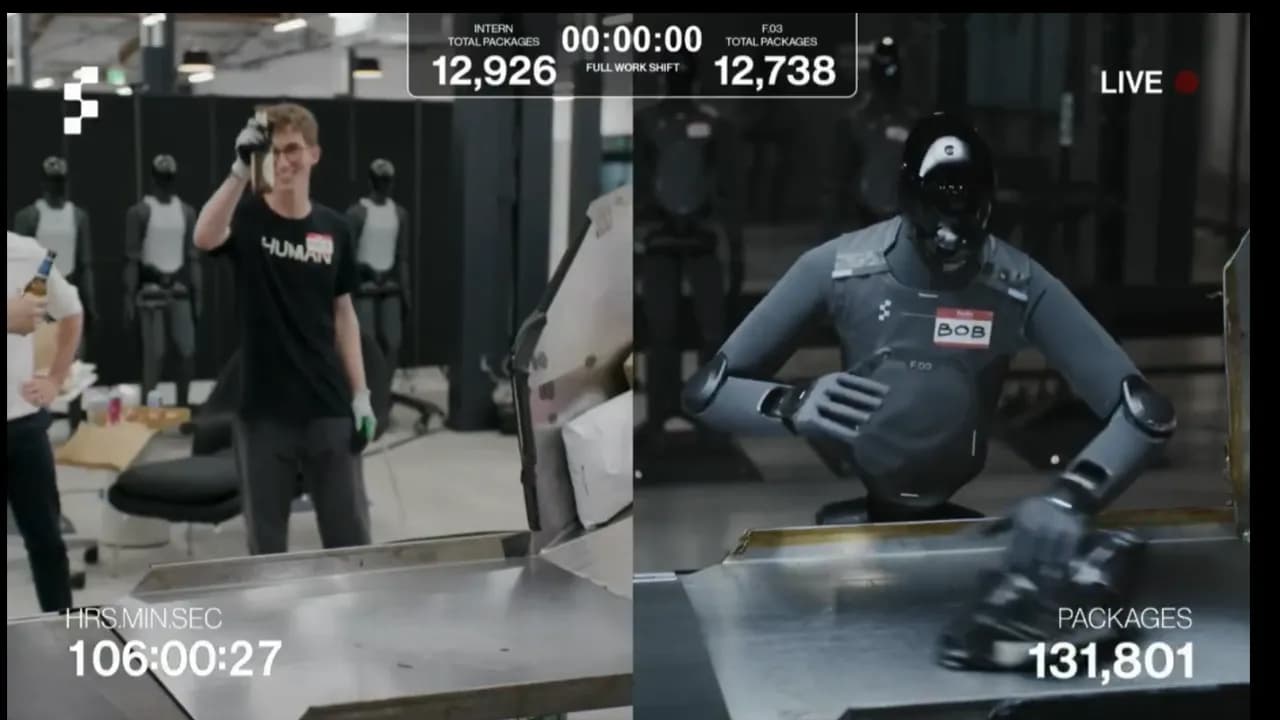
Con người đã thắng. Nhưng cánh tay trái của anh gần như gãy, ngón tay phồng rộp, và anh thú nhận chỉ cần thêm 30 phút nữa là phải bỏ cuộc sau cuộc thi phân loại hàng hóa. Robot thì vẫn đang chạy tất nhiên là không mệt, không đau, không cần nghỉ. Đó là câu chuyện đằng sau tấm huy chương "chiến thắng" của con người trong cuộc đối đầu phân loại hàng hóa diễn ra ở Figure AI . Cuộc đối đầu 10 tiếng giữa người và máy Figure AI công ty robot hình người được định giá 39 tỷ USD đã tổ chức một thử nghiệm trực tiếp mang tên "Man vs. Machine": robot F.03 (Figure 03) đối đầu với một thực tập sinh tên Aime trong ca phân loại hàng hóa kéo dài 10 tiếng. Nhiệm vụ đơn giản đến mức nhàm chán: nhận diện mã vạch, nhặt kiện hàng, đặt úp mã vạch xuống băng chuyền lặp đi lặp lại liên tục. Kết quả cuối ca: Aime (người): 12.924 kiện hàng — trung bình 2,79 giây/kiện F.03 (robot): 12.732 kiện hàng — trung bình 2,83 giây/kiện Chênh lệch: 192 kiện và 0,04 giây mỗi lần xử lý. Con người thắng — theo đúng nghĩa đen của bảng điểm. Nhưng "thắng" ở đây nghĩa là gì? CEO Brett Adcock viết trên X sau trận đấu: "Xin chúc mừng Aime! Anh ấy nói cánh tay trái mình gần như gãy rồi 😂 Đây là lần cuối cùng con người thắng được." Trong cuộc thi, F.03 từng vượt mặt Aime vào khoảng giờ thứ 5 đó đúng lúc anh đứng dậy đi vệ sinh và robot thì không cần điều đó nó chỉ cần nguồn điện cấp là đủ. [VIDEO:CvkcPKlnQY4|Video livestream về màn so tài giữa người và robot|Video livestream về màn so tài giữa người và robot] Và đó chính là điểm mấu chốt mà con số 12.924 vs 12.732 không thể hiện được. Robot không đập tay, không uống bia ăn mừng Sau 10 tiếng, Aime ngồi xuống, xoa cánh tay, thở phào. Anh thừa nhận chỉ cần thêm 30 phút nữa là đã phải bỏ cuộc vì đau lưng và cẳng tay. F.03 thì tiếp tục chạy không ăn mừng, không nghỉ ngơi, không cần ai vỗ vai khen ngợi chắc chắn trong khi Aime ngủ đêm đó, robot vẫn đang phân loại ca tiếp theo. Theo luật lao động California, Aime được nghỉ ăn trưa và các giờ nghỉ có lương trong ca. Robot không thuộc phạm vi điều chỉnh của bất kỳ bộ luật lao động nào. Đây không phải bất công mà đây là bản chất của vấn đề: con người và máy đang chơi theo hai bộ quy tắc hoàn toàn khác nhau. Một ca làm việc đối đầu với một tuần làm việc Người ta thường so sánh hiệu suất trong một ca 8 - 10 tiếng. Nhưng nếu kéo dài phép đo ra một tuần làm việc, bức tranh thay đổi hoàn toàn. Figure AI trước đó đã chứng minh F.03 có thể vận hành liên tục 24 giờ, xử lý hơn 30.000 kiện hàng mà không có một lỗi dừng máy nào. Con người làm 5 ngày/tuần nhưng robot có thể làm 7 ngày, 3 ca. Một chuyên gia tại Đại học Ohio State nhận xét: trong quá trình livestream, F.03 vẫn mắc lỗi khi đặt kiện nhầm vị trí hay làm rơi hàng khỏi băng chuyền. Humanoid robot hiện vẫn còn là "dự án khoa học" đối với nhiều môi trường triển khai thực tế. Figure 03 là robot như thế nào? F.03 được Figure AI ra mắt vào tháng 10/2025. Robot cao 5'8" (khoảng 173 cm), nặng 61 kg, có thể mang tải 20 kg và sạc không dây thông qua tấm sạc tích hợp ở lòng bàn chân. Điểm nổi bật là các đầu ngón tay xúc giác có thể cảm nhận lực từ 3 gram đủ nhạy để cầm nắm vật mỏng manh mà không làm vỡ. Tại nhà máy BMW ở Spartanburg, phiên bản trước đó (F.02) đã lắp ráp hơn 30.000 xe với độ chính xác 99%. Figure đang xây dựng nhà máy BotQ với công suất thiết kế ban đầu 12.000 robot/năm, hướng tới 100.000 robot/năm trong vài năm tới. Tại sao kết quả này lại quan trọng mặc dù con người đã thắng? Không phải vì robot sắp chiếm hết việc làm kho vận ngay ngày mai. Mà vì khoảng cách hiệu suất giữa người và máy trong lao động thể chất lặp đi lặp lại đang co lại với tốc độ đáng lo ngại. Năm ngoái, F.03 có thể còn thua cách biệt lớn hơn trong khi năm nay khoảng cách chỉ là 0.04s /1 kiện hàng. Năm tới, Adcock đã tuyên bố sẽ cải tiến cả phần cứng lẫn phần mềm AI và lần sau, theo lời ông con người sẽ không còn cơ hội thắng nữa. Điểm thú vị: cuộc thi này không được thiết kế để robot thắng ngay. Nó được thiết kế để chứng minh robot đã đủ gần để theo kịp con người và từ đó tạo áp lực tâm lý lẫn thương mại cho cả thị trường logistics. Microsoft AI CEO Mustafa Suleyman dự báo AI sẽ tự động hóa phần lớn công việc văn phòng trong 12–18 tháng tới. Còn với lao động thể chất, cuộc thi này cho thấy: ranh giới đang mỏng dần, và "lần cuối cùng con người thắng" theo đúng nghĩa đen có thể không còn xa. Điều còn lại sau cuộc đua Sự thành công của buổi thử nghiệm đã thổi bùng lên những cuộc thảo luận sôi nổi về tương lai của thị trường lao động trong ngành logictics. Khi robot hình người đã đạt đến hiệu suất xấp xỉ con người, việc áp dụng chúng trên quy mô lớn chỉ còn là vấn đề thời gian và chi phí sản xuất. Các doanh nghiệp sẽ có xu hướng chuyển giao những công việc lặp đi lặp lại và có tính chất nặng nhọc cho máy móc đảm nhận. Mặc dù vậy điều này không có nghĩa là con người sẽ hoàn toàn bị thay thế trong các nhà kho thông minh. Thay vào đó lao động con người và các AI thông minh khác sẽ chuyển dịch sang các vai trò giám sát hệ thống, xử lý các tình huống phức tạp hoặc quản lý chuỗi cung ứng ở cấp độ cao hơn. Sự kết hợp hài hòa giữa sức bền của robot và trí tuệ của con người sẽ tạo nên những mô hình nhà kho có hiệu quả vượt bậc.

Nam
19 May, 2026
Anthropic Increases Claude Usage Limits After SpaceX Partnership

Anthropic has just announced a partnership with SpaceX to access over 220,000 NVIDIA GPUs and will immediately use this new computing power to increase usage limits for both Claude Code and API. Here's what's changing and why it matters to users. Why Did Anthropic Partner with SpaceX? In recent months, Anthropic has continuously signed large-scale computing agreements with Amazon, Google, Microsoft, and NVIDIA. This time, the company has added another unexpected name: SpaceX. According to the announcement on May 6, Anthropic signed an agreement to use the entire computing capacity at SpaceX's Colossus 1 data center, equivalent to over 300 megawatts of power and more than 220,000 NVIDIA GPUs. This entire capacity will be put into use within one month and will directly improve the experience for Claude Pro and Claude Max users. Colossus 1 is SpaceX's AI data center, currently one of the largest GPU clusters in the world. Anthropic is the sole tenant of its entire capacity. Specific Changes to Usage Limits Thanks to the new computing resources, Anthropic has implemented three changes effective immediately from the announcement date Doubling Hourly Claude Code Limits The 5-hour rate limit for Claude Code is doubled for Pro, Max, Team, and Enterprise plans. If you previously could only run 10 complex Claude Code commands, this is now doubled to 20, which will be significantly helpful. However, it's important to note that the weekly limit remains unchanged, so while increasing the 5-hour limit allows for more intensive work in a short period, it might cause you to hit the weekly cap faster. Removing Peak Hour Limits Previously, Claude Code automatically reduced usage limits during peak hours (typically from 9 AM to 3 PM) for Pro and Max accounts. This limit has been completely removed, so users can now use Claude Code at full speed regardless of the time of day. For users who often work in the evening (which coincides with US peak hours), this change is likely to have the most noticeable impact. Significantly Increasing API Limits for Claude Opus Models The API rate limit for Claude Opus models has been significantly increased. Details of the multiplier increase are published by Anthropic in the following table: This change is particularly important for developers building applications on the Claude Code platform Anthropic's Overall Computing Strategy The agreement with SpaceX is not an isolated move. In recent months, Anthropic has built a remarkable infrastructure portfolio: An agreement for up to 5 gigawatts with Amazon, with nearly 1 GW operational before the end of 2026 A 5 GW agreement with Google and Broadcom, expected to be operational from 2027 Strategic partnerships with Microsoft and NVIDIA, including $30 billion in Azure capacity A $50 billion investment in AI infrastructure in the US with Fluidstack And now, over 300 megawatts from SpaceX's Colossus 1 data center Anthropic runs Claude on various hardware platforms — AWS Trainium, Google TPUs, and NVIDIA GPUs — and states that it continues to seek additional computing power sources. Notably, within the framework of the agreement with SpaceX, both parties also expressed interest in developing orbital AI computing capabilities, i.e., placing GPUs on satellites. This is still a very early-stage idea, but if realized, it would be a major turning point for global AI infrastructure. Expanding to International Markets A portion of the expanded computing capacity will be used to serve international enterprise customers, especially in sectors requiring local data storage such as finance, healthcare, and government. The agreement with Amazon also includes additional inference capacity in Asia and Europe. Anthropic also emphasized that it only expands to countries with democratic legal frameworks and secure hardware supply chains, demonstrating a cautious stance amid increasingly fierce geopolitical competition in AI. What Does This Mean for Claude Users in Vietnam? From a practical perspective, the three changes to usage limits directly benefit those who use Claude Code daily — especially programmers and individuals who work continuously with Claude Code. The removal of peak hour limits also means that the experience for users in Vietnam (whose time zone often coincides with peak load periods in the US) will be more stable. In the long term, greater computing power often means the ability to deploy more powerful models at lower costs. This is the foundation for Anthropic to continue competing with OpenAI and Google in the 2026 AI race. Anthropic is Always Evolving Anthropic is seriously investing in infrastructure, and the partnership with SpaceX is the latest step in that strategy. The most immediate result users can feel is that Claude Code will be less restricted, and API speeds will certainly improve. In the long run, the computing race among major AI companies promises many more interesting developments in 2026.

Nam
8 May, 2026