Google I/O 2026: Flow gets a major upgrade with Gemini Omni
Quick Summary
Google upgraded Flow at I/O 2026 with Gemini Omni (starting with Omni Flash), a new Flow Agent for multi-step creative reasoning, a Flow Tools system for building custom workflows in natural language, expanded Flow Music features including section-level editing and style covers, and mobile apps for both Flow and Flow Music.
Google isn't just adding a new model to Flow. At Google I/O 2026, the company is turning Flow into an agentic AI creative studio — complete with custom tools, conversational video editing, and a mobile app. For video creators, the signal is clear: the race is no longer about generating a beautiful clip from a single prompt, but about the ability to edit, iterate, and refine ideas like a real production pipeline.
Gemini Omni turns Flow into a conversational video editing studio
According to Google's announcement on May 19, 2026, Flow has been upgraded with Gemini Omni, with Omni Flash being the first model introduced to the experience. Google describes Omni Flash as a model capable of generating content from multiple input types — starting with video — while combining Gemini's intelligence with Google's generative media models.
The simplest way to understand it: think of Omni Flash as the video equivalent of what Nano Banana did for images. If Nano Banana made photo editing feel more natural and conversational, Omni Flash brings that same approach to video — where users can pull from real-world inspiration, existing footage, and iterative prompts to keep refining their work. Critically, Google says Omni Flash improves character consistency, meaning identity and voice can be preserved across multiple scenes.
Flow Agent and Tools bring AI into the entire creative workflow
The second major upgrade is Google Flow Agent. Rather than simply accepting a prompt and returning a result, this agent is designed as a creative collaborator capable of planning, reasoning through complex tasks, and supporting users at multiple stages of the process. Google gives examples like the agent suggesting dialogue for a specific scene or proposing story development directions.
As a project deepens, Flow Agent can generate multiple variations simultaneously to give users more options, and supports batch editing so changes are applied across many assets at once. Once enough material is gathered, the agent can also organize assets into collections and rename them in more intuitive ways. This feature is now available to all Flow users globally.
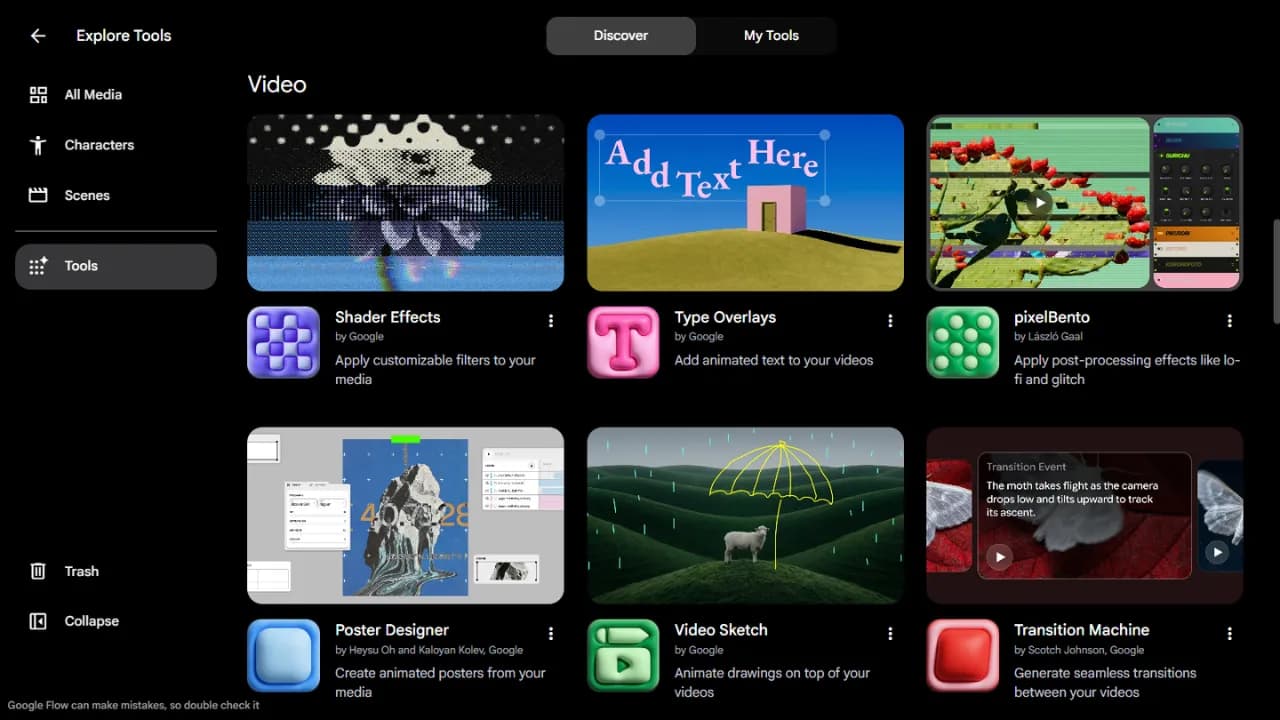
The more interesting part is Google Flow Tools, where users can build their own tools and workflows using natural language. If you want a custom image preset, a video resize tool, or a personalized shader, Flow Tools lets you describe what you need rather than writing code. In other words, the vibe coding concept is moving into the content creation environment — not just sitting inside a developer's IDE.
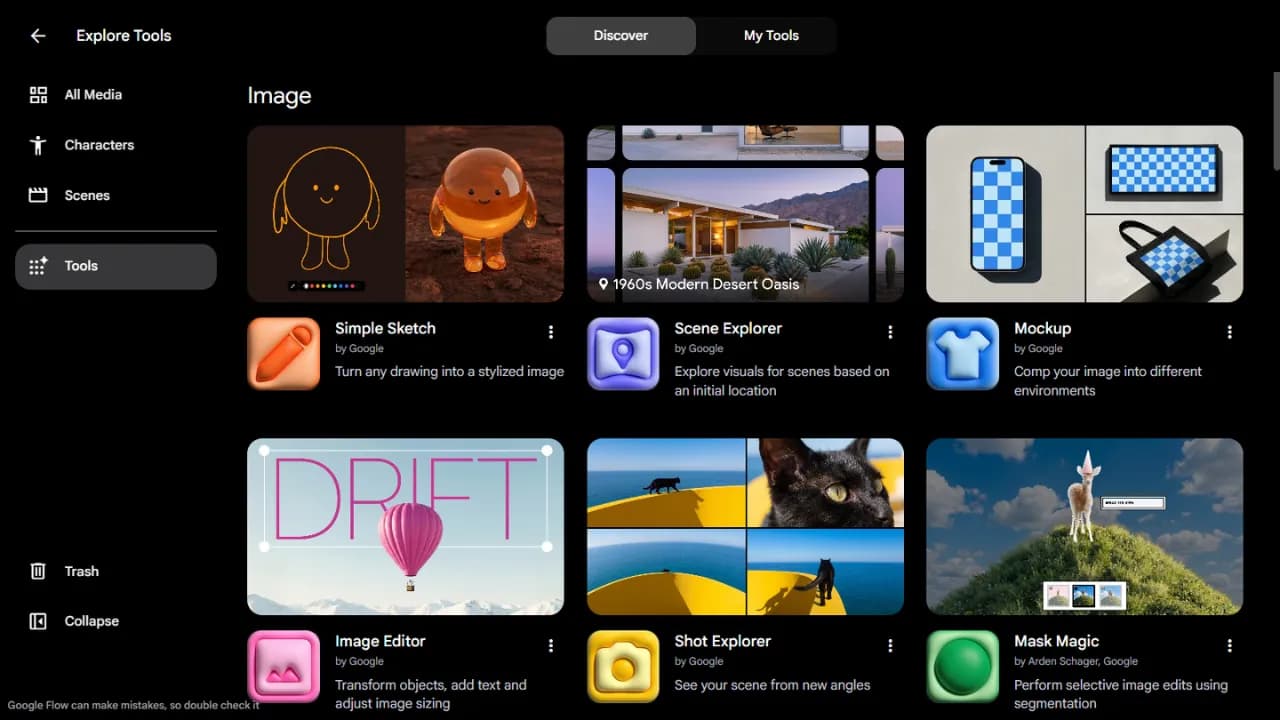
- All Flow users globally can access pre-built Tools
- Google AI users can create and remix their own Tools
- Custom tools can be shared for others to remix
Flow Music also gets meaningful upgrades for music creators
Google Flow Music received a set of new features as well, with the most significant being the ability to edit songs at the section level. Users can select a specific portion of a track to rewrite lyrics, translate them, change the beat drop, or sample a passage and develop it in a different direction — all without affecting the rest of the track.
The covers feature lets users transform the style of an entire song while preserving its original melody and structure. For example, a track could be shifted into a lo-fi study aesthetic for a study playlist or background content. For creators who are newer to AI music tools, this approach is far more accessible than having to regenerate from scratch every time they want to change the sonic character of a piece.
Gemini Omni also appears in Flow Music to support music video creation. Users can work conversationally with the agent, directing style, subjects, and shots to match the story and rhythm of the underlying track. This feature is available to Google AI users, and it signals Google's intent to connect three layers of creative work: audio, visuals, and narrative.
A mobile app takes Flow beyond the desktop
Google also announced mobile apps for both Flow and Flow Music. The web version remains the most capable environment, but the mobile app lets users capture ideas, run quick tests, or make fast edits when they're away from their computers.
Conclusion
The biggest takeaway from this round of upgrades isn't any single feature. Google is connecting Gemini Omni, Flow Agent, Tools, and Flow Music into a more complete end-to-end workflow — from ideation and asset creation, through batch editing and resource organization, to publishing both music and video content.
If you work with video, music, or short-form content, the most practical starting point is to bring in a real asset of your own and see how well Omni Flash holds character consistency, voice, and editing continuity across multiple rounds. If it handles that reliably, Flow will no longer be just an AI video generation tool — it becomes a content production environment worth watching closely through the rest of 2026.