4AIVN
Back to News

Gemini powers Argentina and Messi at World Cup 2026
Published on 17 June, 2026
Gemini powers Argentina and Messi at World Cup 2026

Quick Summary

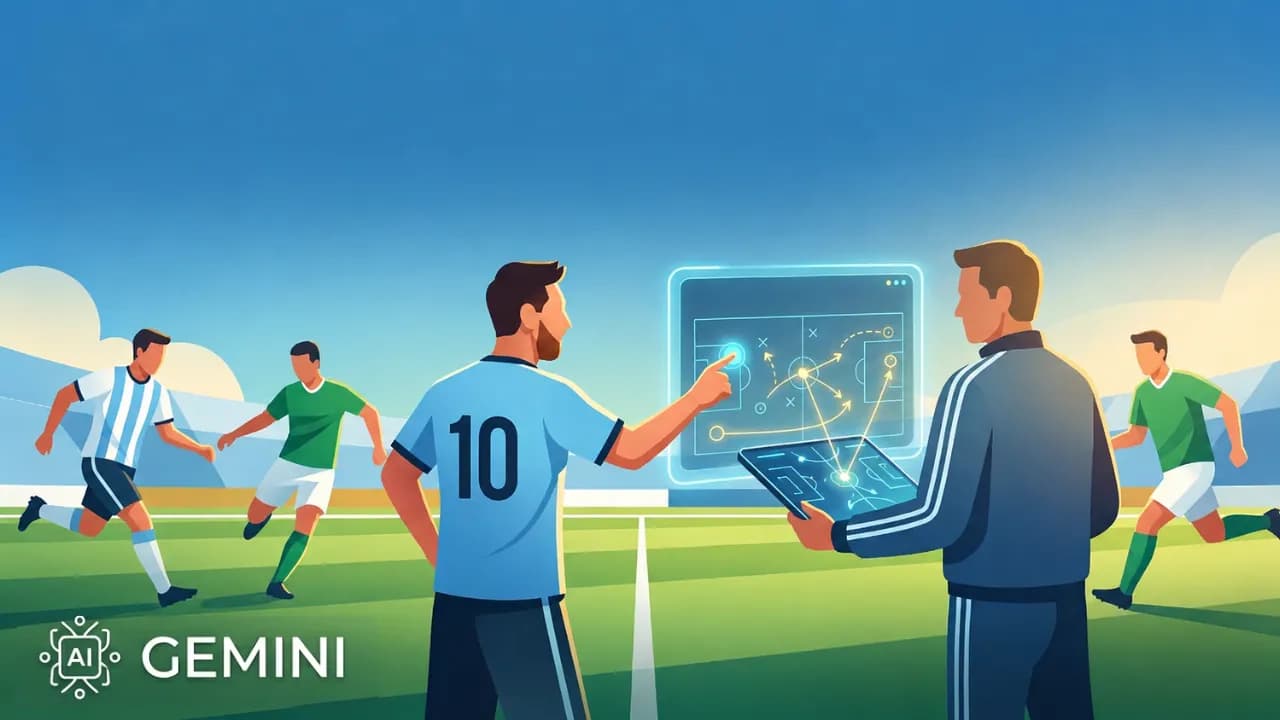
Google's strategic partnership with the Argentine Football Association AFA marks a new milestone as Gemini branding appears on the national team training kits. The collaboration extends far beyond typical commercial sponsorship since the AI model will actively assist the technical staff with play analysis and tactical decisions directly from the touchline. The reigning champions led by Lionel Messi will utilize Gemini for studying opponent patterns, monitoring player physical load, and optimizing recovery. Meanwhile, fans will enjoy conversational match queries and AI generated creative content throughout the World Cup 2026. This high profile deployment represents the ultimate stress test for AI accuracy and reliability in elite sports where errors cannot be hidden from public view.

Gemini has won big in the most literal sense, right as Messi scored his first hat-trick at the 2026 World Cup, leading Argentina to a crushing 3-0 victory over Algeria and equaling Miroslav Klose's record of 16 World Cup goals. That historic moment became the perfect launchpad for Gemini. Back in March 2026, Google and the Argentine Football Association (AFA) made a bold decision: rather than simply printing a logo on training kits, they signed a deal for the AI to actively support tactical preparation and professional decision-making. That bet has now proven to be the right call.

From training kit to the tactical meeting room

The agreement between AFA and Google was unveiled at Times Square, New York, a venue deliberately chosen to capture global media attention. The Gemini logo appears across all training apparel for Argentina's men's, women's and youth squads, sitting alongside Adidas and American Express in AFA's top sponsorship tier.

Gemini logo on Messi's Argentina training kit at the 2026 World Cup

But the interesting part isn't the jersey. According to Inside World Football, Argentina's coaching staff will use Gemini for three specific purposes: tactical analysis, injury prevention and decision support. In other words, Gemini now has a seat in meetings that previously belonged only to Scaloni and his assistants.

What is Gemini actually doing in the dressing room?

Argentina arrives at the 2026 World Cup as the reigning champion. Every decision Scaloni makes, from the squad list to the starting eleven, is scrutinized more closely than any other team, and that is precisely why Argentina has become the most ideal testing ground Google has ever had for Gemini in professional football, especially at a major tournament.

Tactical analysis

Gemini is used to process match data for both Argentina and their opponents, covering movement statistics, attacking patterns and defensive vulnerabilities. Instead of the coaching staff spending hours reviewing footage, AI synthesizes the data and generates tactical diagrams automatically, saving significant preparation time before each match.

Injury prevention

This is a problem every major team wants to solve, especially when Messi and several key players are at an age that requires careful management of training loads. Gemini analyzes biometric data and injury history to issue early warnings, helping the coaching staff adjust intensity before problems actually occur. That is part of the reason why, immediately after completing his hat-trick, Scaloni chose to substitute Messi off, prioritizing fitness and safety for the matches ahead.

For fans: create Messi content, follow scores without unlocking your screen

Alongside supporting the coaching staff, Gemini has also rolled out a range of features aimed at fans, and this is the side that hundreds of millions of people will actually experience.

Gemini lets you create content about players directly

Users can generate images, songs and digital content featuring Argentina players like Messi directly inside the Gemini app. The feature is designed to bring the World Cup experience closer to those who cannot attend matches in person.

Real-time scores and automated daily briefings

On Google Search, live match scores can be pinned to the lock screen and update in real time, with dedicated animations for goals and red cards, all without needing to unlock the phone. For paid Gemini users, the Scheduled Actions feature allows an automated daily football briefing to be set up, covering scores, news and fixtures, delivered at a chosen time without needing to prompt it each day.

Match-day infrastructure

Google has updated Street View at all 16 host stadiums and optimized routing on Waze for match days. Waze also surfaces live scores when the car is stopped at red lights, so drivers do not need to pick up their phones while on the move.

The 2026 World Cup is the real test for AI in sport

Google is not sponsoring Argentina alone. Gemini also appears on the kits of France, Morocco, Iraq, Turkey and the United States, while Pixel is the official phone of the French squad, which is also using Gemini for internal communications. This is clearly a comprehensive strategy from Google, not a one-off deal.

What makes the 2026 World Cup particularly significant is that it will answer a question no lab environment can: what do users actually do with AI when a World Cup runs for six weeks across 104 matches?

Google's communications director for Latin America, Flor Sabatini, stated that the 2026 World Cup will mark a before and after in the history of football because of AI. It sounds like marketing, but the reality is that this is the first time a major AI model has been integrated into the preparation of the reigning world champions, right in the middle of the most-watched sporting event on the planet.

The 2026 World Cup is Gemini's real test

The most significant part of this entire story is not the Gemini logo on Messi's jersey. It is the fact that Argentina, still the most expected to win and the most scrutinized team, carrying the pressure of defending the title, has committed part of its preparation process to AI.

If Argentina succeeds, Gemini will have a case study that no advertising budget can buy. If Argentina falls short and the coaching staff attributes any part of it to AI, the narrative will flip entirely. Either way, this is the first time AI has been held accountable on a stage that genuinely matters, not a benchmark, not a demo, but the World Cup.

For AI users, what is worth watching is not just whether Argentina wins, but whether Gemini actually changes how a football team operates, or whether it turns out to be nothing more than a logo on a training kit that looks better than previous years.
Discussion (0)

Log in to join the discussion.

No comments yet. Be the first!

Related Articles

Gemini 3.6 Flash Launches but Disappoints in Practice

Google announced Gemini 3.6 Flash on July 21, 2026, with sharp benchmark gains over 3.5 Flash: DeepSWE rose from 37% to 49%, MLE Bench from 49.7% to 63.9%, and OSWorld Verified reached 83%. Yet 4AIVN's hands-on experience tells a very different story. The model handles small jobs reasonably well, but a multi-step plan can make it forget the objective, skip steps, and drift halfway through the work. Stronger benchmarks do not reflect real-world use According to Google's official announcement, Gemini 3.6 Flash uses 17% fewer output tokens than 3.5 Flash on the Artificial Analysis Index, while tests such as DeepSWE show token reductions of up to 65%. Its input window reaches 1,048,576 tokens and its output limit is 65,536 tokens, impressive numbers on paper. The problem is that these figures come from designed tests with a fixed objective and a relatively contained run. That is not how a real plan operates. Production work changes continuously in response to feedback rather than ending after one self-contained attempt. Following a long plan is the critical weakness In hands-on use, Gemini 3.6 Flash performs poorly as soon as it moves beyond a single task. Give it a small job with explicit checks and it can work well with few unnecessary loops. Give it a multi-step plan and it may forget the original objective, skip previously agreed steps, or drift after several turns. When corrected, it sometimes apologizes and then repeats the same mistake instead of actually fixing it. A one million token window describes input capacity, not memory quality. The model may be able to “see” the full context and still miss details during execution; one overlooked constraint can push the entire plan off course. This is not a rare random failure but a repeated weakness that is difficult to ignore. Gemini 3.6 Flash is strong at completing one job quickly, but it is not yet dependable at completing a sequence of jobs correctly. That is the gap the benchmarks do not measure. A 17% price cut may not match the quality Gemini 3.6 Flash is priced at $1.50 per million input tokens and $7.50 per million output tokens, about 17% below the $9 output price of 3.5 Flash. On the surface, this is a sensible improvement: lower cost and higher benchmark scores. But if long tasks are executed poorly, the savings can quickly disappear through repeated reminders, corrections, and complete reruns of the plan. Gemini 3.5 Flash Lite is cheaper still at $0.30 per million input tokens and $2.50 per million output tokens, but it targets simple classification and data transformation workloads that do not require the model to preserve a long plan. What do you gain and lose with Gemini 3.6 Flash? Objectively, this is not a failed upgrade. Google has likely made careful tradeoffs among output quality, speed, and cost, even if real-world behavior does not fully meet the high expectations attached to its engineering team. The improvements are real rather than purely theoretical: responses are faster, output costs are lower, and the model is efficient on short, narrow tasks such as content classification, writing one code function, or answering a specific question. In those cases, it keeps unnecessary loops to a minimum. The cost becomes visible when work extends beyond a few steps. The more constraints and earlier decisions the model must preserve, the more likely it is to drift. For coding agents or long workflows already running reliably on Claude Fable 5 or GPT 5.6, there is not yet a convincing reason to switch to Gemini 3.6 Flash solely because of benchmarks or lower pricing. Gemini 3.5 Pro is still the model to wait for Google says Gemini 3.5 Pro is still being tested with partners and will be released broadly when it is ready. The central story of this launch is therefore the sizeable gap between benchmarks and real work. Anyone looking for a dependable agent for long-running workflows may still need to wait and see whether 3.5 Pro delivers a genuine step forward. If future releases remain underwhelming in practice, Google risks surrendering its advantage to competitors including Anthropic, OpenAI, and Meta.

Nam
23 Jul, 2026
Create a free mini app with just a few clicks using Google AI Studio

Artificial intelligence (AI) is fundamentally changing how people build applications. You no longer need to be a professional developer. With a smart AI assistant, you can turn any idea into a real product. Google AI Studio is the clearest proof of that shift. The platform lets anyone, even without coding knowledge, build their own app. With the latest update, creating an AI app is as simple as having a natural conversation: describe your idea in plain language, and let AI handle the rest. Google AI Studio: Build AI apps without code and create Android apps with ease Google AI Studio is a browser-based development environment designed to simplify prototyping and building applications on top of Google's powerful AI models. Notably, the platform now supports direct creation of complete Android applications, opening the door for anyone who wants to ship a mobile product without writing a single line of code. If Gemini was once described as the "brain" of an application, Google AI Studio now gives it "hands and feet" through direct connections to APIs and SDKs within Google's ecosystem (via the "Supercharge your apps with AI" section). This makes expanding functionality incredibly easy, and you can make your app behave exactly as intended without manually configuring APIs or SDKs from scratch. Third-party APIs and SDKs still require manual input, but Google's vast ecosystem including Nano Bananas, Veo 3, Text-to-Speech, Google Search, and especially Google Maps covers nearly every common need out of the box. Through personal testing, Google Maps works reliably for mini apps in Vietnam, such as navigation tools or real-time traffic viewers. When pulling data from Google Search, the quality of results is impressive enough to eliminate the need for third-party scraping tools entirely. Another major advantage: Google AI Studio is currently completely free to use. The free credits Google provides are generous enough to comfortably explore Gemini 3, Nano Banana Pro, Veo 3.1, and many other tools for personal use without spending a thing. Step-by-step guide to creating a mini AI app Building an app in Google AI Studio is straightforward. Just follow these steps: Step 1: Access and set up Visit: Go to the Google AI Studio tool page. Sign in: Log in with your Google account. Start building: Open the "Build" tab. Under the Start tab, you can choose an AI model (default is Gemini 3.5 Flash) and select a programming language: React, Angular, or Android. If you skip this, AI defaults to React. Step 2: Come up with an app idea If you don't have a specific idea yet, browse the App Gallery to see sample apps built by Google and the community. It's the fastest way to find inspiration and understand what's possible. If you want something even more hands-off, just click the I'm feeling lucky button in the Start tab. Google AI Studio will instantly suggest interesting ideas, complete with example API and SDK integrations (under the Supercharge your apps with AI section) and the prompts AI uses to build them. It saves time and teaches you how AI thinks when creating apps. If you already have a clear idea, move straight on to the next step. Step 3: Write a specific prompt If you don't have a detailed prompt covering all the functionality, language, and interface requirements like the samples in the I'm feeling lucky button, that's completely fine. You can create an app with just a single sentence, for example: "Create a photo collage app for me." From there, AI will automatically make all the decisions and carry out the remaining steps for you. That said, the more detail you provide, the closer the result will be to your vision, which means less time editing afterward. If possible, include reference images or mockups from tools like Figma or Canva, since AI can understand and recreate interfaces almost exactly from those references. Don't forget to add extras in the Supercharge your apps with AI section to let AI automatically connect the APIs or SDKs you need, or even enable intelligent reasoning mode for your app. Here's an example of a detailed prompt you can reference: "Create an AI Web App that allows users to: Upload 2 images (1 & 2) so the app combines them into 1 composite image. Support multiple aspect ratios: 1:1, 16:9, 4:3, 3:2. Include image preview and a Download button. Save creation history (including result image, prompt, and timestamp)." Once your prompt is ready, just click Build and wait a few seconds to see the result. Step 4: AI automatically handles the build Build process: AI Studio runs through several stages, including: Defining the UI Scope. Developing the React App. Planning the app structure. Integrating Gemini API. Auto fix errors. Preview and edit via conversation: A live preview of your mini app appears directly in the browser, so you can see it in action right away. Developers can edit the code directly in the code panel. But if you're not technical, that's no problem at all. Just chat with AI to add, remove, or adjust features without touching a single line of code. For example, you could say: "Add images 3 and 4 so I can merge four photos into one" or "Switch the interface to dark mode." If you didn't add APIs or SDKs in the "Supercharge your apps with AI" section earlier, don't worry. With a simple prompt, AI will automatically integrate the necessary APIs or SDKs into your mini app quickly and with minimal effort. You can even request advanced features like: Generate video from images using Veo 3, and the app will automatically connect to the Veo API. Add a speech-to-text button to make the app more interactive. And the most exciting part: you can edit your app visually, just like working in Canva or Figma, using the Annotate app button where you can draw, add text, change colors, and more, all in the most intuitive way possible. Step 5: Test and deploy Action How to do it Test in browser Click the "Run" button or view the live preview. Share app via link Click "Share" and copy the link. Download source code Click "Download" (ZIP file containing React + TypeScript code). Deploy to cloud Click "Deploy" and select Google Cloud Run (requires a Google Cloud account). Can you build a complete app with Google AI Studio? For personal use or quick idea testing, Google AI Studio is an excellent choice: easy to use and nearly zero cost. However, if you want to build a full-stack application with a proper backend, UX, and UI without any coding knowledge, you'll want to consider more suitable platforms. Comparison with Google Antigravity IDE While Google Antigravity is an IDE focused on helping professional developers write code faster through asynchronous background agents, Google AI Studio targets non-technical users in the no-code/low-code space. With AI Studio, there's no software to install and no environment to configure. Everything happens through natural language descriptions right in the browser. Antigravity, on the other hand, offers deeper control over source code, multi-model support (Claude, GPT), and is better suited for complex projects that require refactoring an existing codebase. Goal Recommended tool Personal use, rapid prototyping, idea testing Google AI Studio Commercial app development, full-stack products, scalability needs Google Firebase, Lovable, Bolt, Replit, Antigravity Google AI Studio is not the optimal choice for large-scale products or applications requiring high security. Instead, you can download the source code from AI Studio and upload it, or sync it directly via GitHub, to continue building on platforms like Firebase Studio (within the Google ecosystem), Lovable, Replit, Bolt, or Antigravity. These platforms help you complete your app with powerful backend features while still leveraging the AI foundation built in Google AI Studio.

Nam
24 May, 2026
Spotify Launches Conversational AI Assistant

Spotify is turning music search into an ongoing conversation: listeners can ask for unfamiliar artists, change the mood, save a song, and explore their listening history without leaving the app. The new assistant moves AI from passive recommendations toward a tool that understands requests and performs actions. How does Spotify turn search into a conversation? According to Spotify's official announcement, eligible listeners will see new conversation controls on Home and Now Playing in the mobile app. They can type a question or press the microphone button to speak, then continue through several turns instead of entering a completely new search every time. The assistant does more than return a list of tracks. It can control what is playing, explain related information, and perform actions such as saving a track, adding it to the queue, or following an artist. For example, a listener can request artists they have never heard before and then specify that they want recent releases or something more energetic. What can the new AI assistant do? Spotify groups the experience around choosing content, understanding what is playing, and exploring listening habits. For music, listeners can request a style, artist, or mood and then revise the selection with a follow up question. For podcasts and audiobooks, they can ask about guests, authors, or related programs. The assistant can also use personal context that a general chatbot does not automatically possess. It understands playlists, favorite artists, repeat listens, and account history, so someone can ask when they first heard a track or which genres they have played most recently. That context matters because the answer is connected to actual usage rather than general knowledge alone. One request can be refined across several turns Imagine preparing for a run without knowing which playlist to open. You can request fast music from unfamiliar artists, add a favorite singer, and then limit the results to recent releases. When a suitable track appears, you can save it immediately without moving through several screens. How is this different from AI DJ and ChatGPT? AI DJ mainly acts as a host that selects music and introduces it with a generated voice, while the new assistant expands conversation across Home and Now Playing. Listeners can ask questions, redirect recommendations, and tell the app to complete specific tasks rather than simply accept the sequence chosen by the system. Spotify has also connected its service with ChatGPT, but the new experience runs directly inside the music app. Listeners do not need to leave Spotify, connect another service, and return to play the result. According to TechCrunch, Spotify combines its own AI technology with models from several providers and selects the technology that best fits each task. Spotify has not disclosed the model names or explained how requests are routed. It is therefore too early to judge the assistant's knowledge capabilities, but the use of several models suggests that Spotify does not want the product to depend on one provider. What should listeners know before trying it? The feature is rolling out gradually as a beta for Premium listeners aged 18 and older in the United States, Ireland, and Sweden. It currently works in English on iOS and Android, so listeners in Vietnam are not included in the announced availability. Spotify says responses may not always be accurate during the beta and that feedback will shape future improvements. Listeners should still verify an official source when details such as release dates, song inspiration, or artist biographies are important. Confirm that the account meets the supported market and age requirements. Try both typing and voice to see which method captures intent more accurately. Begin with a clear request and use follow up questions to refine the result. Do not treat a beta response as the only source for facts requiring high accuracy. Spotify is changing how people discover audio The important shift is not that Spotify now has another chatbot. Conversation is becoming a control layer for both content and actions inside the app. When AI understands a listener's library, history, and current track, one spoken request can replace several searches, menus, and queue adjustments. Anyone with beta access should test three situations: discovering unfamiliar artists, asking about listening history, and refining a playlist across several turns. Those tests will reveal whether the assistant truly understands personal taste or merely turns a long instruction into another search.

Nam
19 Jul, 2026
YC CEO's 6 forcing questions before starting any project

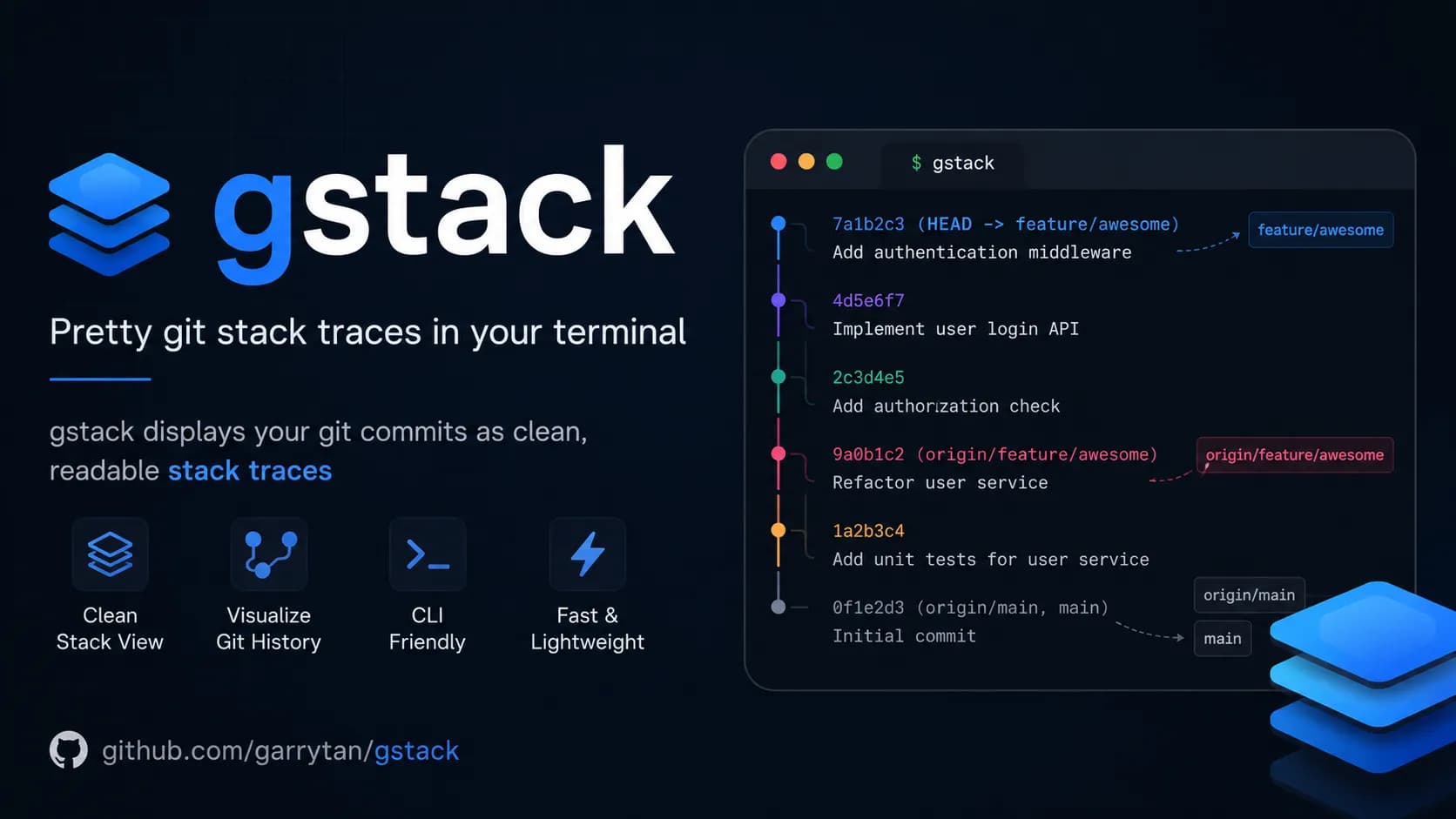
I'd heard a lot about the gstack repo from the CEO of Y Combinator, so I got curious and installed it to try. What surprised me most wasn't the polished workflows — it was the genuinely different mindset behind them. That mindset shows up in the very first command: /office-hours, with six questions that don't ask about code at all, only the things most people haven't thought through before they start building. What is gstack and why did Garry Tan build it gstack is an open-source toolkit by Garry Tan, CEO of Y Combinator, built primarily for Claude Code. The core idea: instead of using AI as a plain code writer, Garry Tan wanted to turn Claude into a small AI agent team, where each member handles a different role — from product direction and security review to testing and release. The entire workflow runs in an ordered loop: Think → Plan → Build → Review → Test → Ship → Reflect. More specifically, gstack splits Claude Code into 23 specialized roles, and the output of each step is automatically passed to the next — no manual handoff needed. Some of the standout commands: /office-hours 6 questions that force you to rethink your feature before writing a single line of code /plan-ceo-review checks whether you're overbuilding or underbuilding relative to what's actually needed /review catches serious bugs that standard automated checks miss /qa opens a real browser, performs real interactions, finds real bugs /cso runs an automated security audit against international standards /ship syncs, tests, pushes code and opens a pull request in a single command How effective is gstack? Garry Tan says his working speed in 2026 is roughly 810 times faster than in 2013, measured by lines of completed code per day (11,417 vs 14). In 60 days, he shipped 3 production services and over 40 features — all while running Y Combinator full-time. Andrej Karpathy, co-founder of OpenAI, confirmed a similar trend, sharing that he hasn't typed a single line of code himself since December 2025 thanks to AI agents. But among all those commands, /office-hours stands out for the opposite reason from the rest, it doesn't help you work faster and it helps you avoid building the wrong thing from the start. Why Garry Tan puts /office-hours first Garry Tan placed /office-hours at the top of the workflow based on a simple observation: most products fail not because of poor code, but because they build the wrong thing. Teams spend weeks on a feature nobody needs, or build the right feature for the wrong audience, or solve a problem users already handle better another way. The command has two modes: Startup mode for founders and people building real products with real users, and Builder mode for side projects, hackathons, and open source. This article focuses on Startup mode, where the 6 questions are most directly applicable. 6 questions that stop you from building the wrong thing These aren't 6 questions to answer quickly and move on. They're designed to make you think honestly, because the more truthful your answers, the more accurately Claude can match what you actually need — saving you a significant amount of time later. You can read the full original prompts at office-hours/SKILL.md.tmpl. Demand reality: Is there a real need? Original question: "Who specifically has this problem? How are they solving it today?" Not "users in general" or "the marketing team" — the goal is to name one real person, ideally by name, who is actively struggling with a specific problem. If you can't name someone like that, you don't yet understand what they actually need. Concrete example: Instead of "users want better task management," it should be: "Minh, a project manager at a 20-person company, copy-pastes between Notion and Google Sheets every Monday morning because the two tools don't sync." Apply this to your own situation accordingly. Status quo: What are they using instead? Original question: "What is their current workaround? How much better do you need to be for them to switch?" Everyone is already solving their problem somehow — whether with Excel, sticky notes, or a WhatsApp group. If their current solution is good enough, they have no reason to migrate their data and learn an entirely new platform. Your solution needs to be meaningfully better before they'll even consider switching. Desperate specificity: Who needs this badly enough? Original question: "Who needs a solution badly enough to use your ugly beta version today?" This is the question that separates nice-to-have from must-have. If you can't find anyone willing to use an incomplete, rough, buggy version right now, the problem you're solving isn't urgent enough. Real early users are people who need a solution badly enough to tolerate an unpolished product — as long as it's moving in the right direction. Narrowest wedge: What is the smallest possible piece? Original question: "What is the smallest thing you could launch tomorrow? Not the full vision — the smallest piece." Not the first full-featured version — something even smaller than that. This question typically cuts 80% of the scope people add because they think "might as well do it while I'm here." It's a trap many builders fall into, including myself. Launch the smallest meaningful piece first, listen to real users, then decide whether to expand. Common mistake: Many people confuse "smallest piece" with "first full-featured version." The narrowest wedge truly means one small thing that solves one specific problem for one specific group of users — nothing more. Observation and surprise: Have you watched real people use it? Original question: "Have you watched real people use your product? Did they use it in ways you didn't expect?" This question is best saved for the second iteration onward, once you have something to test. Rather than asking for feedback through messages or surveys, sit and watch directly — or review screen recordings. The most valuable insights usually don't come from what users say, but from what they do that you didn't design for, or what they skip that you thought was important. Note: If you're in your first iteration and don't have a product yet, you can skip this question and come back after launching the smallest piece in step 4. Future-fit: The 2 to 3 year view Original question: "In 2-3 years, will what you're building still be relevant — or is the trend moving against you?" This isn't about predicting the future precisely. It's about avoiding building something that's already fading. If the trend is making your problem less urgent over the next two years, that's a clear signal to reconsider from the start. That said, if your goal is to move fast and capture the market before big tech ships something similar, this question can reasonably be set aside. A real example: a simple idea completely flipped In the gstack documentation, Garry Tan walks through a practical example. You open /office-hours and say: "I want to build an app that summarizes my daily work calendar." Claude doesn't agree and start executing. Instead, it pushes back: what you just described isn't a calendar summary app — it's actually a full personal AI chief of staff. These are entirely different in scope, technical complexity, and user expectations. From that single opening description, /office-hours helps you see: 5 features you were describing without realizing it 4 assumptions that need to be validated before building 3 different implementation directions with varying levels of complexity 1 recommendation: launch the smallest piece first, treat the rest as a long-term roadmap All of this happens before you write a single line of code. The output is saved as a document that subsequent steps in the workflow automatically pick up and continue from. These 6 questions work even without gstack The 6 questions from /office-hours don't require Claude Code or a gstack installation. They're a way of thinking — the same framework YC partners use to evaluate startups — and you can apply them right now with any AI tool you already have. The difference when using them through gstack is that Claude won't let you give vague answers. It pushes for specifics and won't move forward until your response is grounded enough to be useful. That's why /office-hours tends to be the most uncomfortable command in the entire toolkit — not because it's difficult to use, but because it asks exactly what you've been avoiding. Try it today: Before starting your next project, paste these 6 questions into Claude, Gemini, or ChatGPT along with your idea. Ask it to go through each question one at a time and not let you skip any. The results are often more surprising than you'd expect — even for ideas you've already thought through carefully. gstack currently has over 117k stars on GitHub and is still growing. For me, the most valuable part isn't the technical commands like /review or /ship — it's /office-hours, because it's the only command in the entire toolkit that forces you to stop and think before doing anything else.

Nam
27 Jun, 2026