Liên
AI writer specializing in next-gen solutions at 4AIVN
All articles by Liên
The Model Context Protocol (MCP) standard developed by Anthropic has rapidly expanded into health wearables and smart sports watches. Strava launched the first official MCP connector for runners and cyclists, followed less than a month later by COROS releasing an official beta connector. Meanwhile, although Garmin has yet to release an official response, open-source community solutions like garmin_mcp demonstrate that full AI integration across fitness hardware is becoming mainstream.What is MCP and Why Fitness Brands are Racing to IntegrateMCP (Model Context Protocol) is an open protocol that allows Large Language Models (LLMs) like Claude, ChatGPT, and Gemini to directly interface with external real-time data sources and tools. Instead of providing generic advice based on manual text inputs, AI can read your entire personal activity history.For athletes, instead of opening apps, filtering heart rate graphs, and comparing metrics manually, you can simply ask AI: "Did my training load increase or decrease this week compared to last week?" or "Was my Easy Run pace optimal for recovery?". AI provides precise feedback backed by personal metrics, acting like a 24/7 personal coach.Strava MCP: Ecosystem Pioneer and API TighteningThe wearable MCP race escalated on June 1, 2026, when Strava debuted its official read-only MCP connector for paid subscribers. Secured by OAuth authentication, AI models can inspect workouts, GPS tracks, elevation, and power meter data.Thanks to open MCP standards, Strava MCP integrates seamlessly with Anthropic tools like Claude Cowork and Claude Code. Concurrently, Strava tightened third-party API terms by implementing monthly fees and 90-day limits on select endpoints to prevent uncompensated AI scraping.Strava MCP currently operates strictly in Read-Only mode for maximum security. AI can analyze numbers but cannot edit, delete, or create workouts inside your Strava account.Coros MCP Beta: Fast Setup with Data LimitationsJoining the movement, COROS launched an official MCP Beta in May 2026, linking COROS accounts directly to Claude and ChatGPT. Setup is simple: copy your regional MCP URL (e.g., https://mcp.coros.com/mcp), paste it into Claude Connectors or ChatGPT Developer Mode, and authorize.However, Coros MCP has key limitations:Data Granularity: Provides workout-level summaries only, lacking lap-by-lap or second-by-second telemetry.Permissions: Strictly Read-Only, unable to push workouts or schedules to watches.Platform Compatibility: Requires paid ChatGPT accounts, while Web Gemini lacks custom MCP connector support (requiring Gemini CLI).Garmin garmin_mcp: Powerful 110-Tool Community SolutionGarmin — the market leader in sports watches — has not released an official MCP connector. However, open-source developers filled this gap with the garmin_mcp project by Taxuspt on GitHub.With over 1,000 stars and 324 forks, garmin_mcp on GitHub packs over 110 tools covering 90% of python-garminconnect. It enables features unsupported by official read-only connectors:Analyze power zone distribution from your latest ride.Compare CTL (Chronic Training Load), ATL (Acute Training Load), and TSB (Training Stress Balance) over 6 weeks.Generate walk-run interval workouts and automatically sync schedules straight into Garmin Connect.Because garmin_mcp is community-built, users authenticate with Garmin Connect credentials via third-party libraries. Exercise caution before sharing account credentials.In March 2026, Garmin updated API authentication, temporarily breaking garth and python-garminconnect. This highlights the risk of unofficial MCP tools: reliance on unannounced endpoints means service can break whenever Garmin updates system APIs.Side-by-Side Comparison: Strava vs Coros vs Garmin MCPHere is a concise comparison of current MCP integration paths:Strava MCP (Official): Read-Only | Paid Subscriber | Activity, GPS, Power | High OAuth Security | No sleep, HRV, or recovery metrics.Coros MCP (Official Beta): Read-Only | Paid AI Account | Workout Summaries | Easy URL Setup | No lap or second-by-second data.Garmin garmin_mcp (Community): Read & Write | Open Source | 110+ Tools, CTL/ATL/TSB, Workout Builder | Most Feature-Rich | Uncertified, risk of broken APIs and credential storage.How to Get Started with Your Current Fitness WearableIf you use Strava or Coros, setup is effortless: navigate to Connector Settings in Claude.ai (or ChatGPT Developer Mode), paste the official MCP link, and authenticate.For Garmin users eager for AI features, install Taxuspt's garmin-mcp.dxt extension in Claude Desktop. Authenticate once via garmin-mcp-auth to store an OAuth Token, allowing seamless AI chats without re-entering passwords. This provides a powerful interim solution until Garmin releases an official MCP server.
You hand an AI agent your invoice folder, ask it to draft emails, and let it cross-check your calendar, and the whole thing runs locally, start to finish. That's what Meta's Muse Glimmer promises, though there's a lot worth looking into once you get past that promise and into real-world use cases. Setup and the first run Meta Superintelligence Labs announced Muse Glimmer on August 10, 2026, an open 30-billion-parameter model released under the Apache 2.0 license. According to the official announcement, the weights were posted directly to Hugging Face, so the first step is simply downloading the file, no API key or account sign-up required. From download to typing the first prompt, the experience feels closer to installing an offline app than calling a cloud service. Running it through Ollama or LM Studio, you just point to the model file and open a terminal or a local chat interface. There's no loading screen waiting on a server response, no request-limit notice, because everything happens right on the machine's GPU. If you're new to running models locally, try LM Studio first since its interface is friendlier than a pure command line. Once you're comfortable, move to vLLM or SGLang if you need to serve multiple requests at once. Muse Glimmer isn't as picky about GPUs as it was at launch Meta's initial recommended setup was a GPU with 24GB VRAM or more, meaning you'd need an RTX 4090 or RTX 5090 just to get it running. For most everyday users, that's still a steep bar, since those cards sit in the high-end tier usually bought for gaming, not for the average user. What changed things was the dynamic quantized build Unsloth released shortly after, which brought the combined memory requirement down to around 18GB of RAM and VRAM. That's just enough for a 16GB RTX 5060 Ti, a mid-range card far more affordable than an RTX 4090 or 5090, to run Muse Glimmer with some help from system memory. For newcomers who aren't ready to invest in a pricey rig, this is a much more realistic entry point. The trade-off with the compressed build for RTX 5060 There's no free lunch. Unsloth's dynamic quantized version enables lighter hardware to run the model, but in exchange, accuracy drops slightly compared to the full version on a 24GB-or-higher GPU, and token generation is also slower since part of the workload spills over into system RAM. For simple tasks like summarizing text or answering short questions, the difference is hard to notice. But for long agentic task chains involving repeated tool calls, a 24GB-plus setup still delivers a more stable experience. Putting it to real work What sets Muse Glimmer apart from an ordinary chatbot is its ability to sustain a long chain of actions instead of just answering isolated questions one at a time. The three scenarios below are the clearest way to picture what that means for everyday work. The first scenario is clearing out an inbox. Hand the agent a folder of unread emails, and it can sort them by urgency, draft replies for recurring, familiar messages, and leave them for you to review before sending. Since the model runs locally, sensitive inbox content never leaves the machine during that process. The second scenario involves fixing code. Give the agent a screenshot of an error traceback, and thanks to its dedicated perception encoder, Muse Glimmer reads both the image and the text without needing the error retyped by hand. It finds the relevant files, proposes a fix, runs tests, and reviews the results itself, and if the first fix doesn't work, it tries a different approach instead of stopping to wait for further instructions. The third scenario is pairing it with Hermes Agent or a custom-built agent pipeline. Because Muse Glimmer exposes OpenAI- and Anthropic-compatible endpoints when run through LM Studio, swapping a cloud model for a locally running Muse Glimmer is just a matter of changing a few configuration lines, not rewriting the entire agent logic. Speed that's genuinely fast Raw numbers are easy to skim past, but they mean something different in real context. Meta measured token generation speed on an RTX 5090 rising from 74.9 to 233.4 tokens per second thanks to the speculative decoding mechanism in the DFlash drafter, a 3.1x increase. For a user, that gap is the difference between watching a long answer appear one character at a time and seeing almost the entire paragraph render right after finishing the prompt. On MacBook, the gains are more modest but still meaningful: the M5 Max goes from 26.6 to 50.2 tokens per second, and the M4 Max from 23.7 to 37.8. In other words, even on a laptop rather than a gaming desktop, users can still clearly feel the difference between the drafter switched on and off. On the MCP Atlas benchmark, which measures agentic task performance, Muse Glimmer scores 75.5, ahead of Gemma4-31B (54.2) and Qwen3.6-27B (62.5). This measures "intelligence" in planning and tool-calling, not speed. Downsides that still aren't optimized The smooth experience described above mainly comes down to strong hardware and integrations that are already running stably. In reality, at launch, not everything was ready right away. Meta only stated that optimized integrations with llama.cpp, MLX, and ExecuTorch would arrive "in the coming days," meaning early testers had to piece things together through unofficial builds, which are prone to runtime bugs or performance that doesn't match the published benchmarks. The speculative decoding mechanism with the DFlash drafter also isn't guaranteed to deliver the same speed gains seen on an RTX 5090 or the MacBook Max line across every setup. For mid-range GPUs or the quantized build running on an RTX 5060 Ti, neither Meta nor Unsloth has published official speed figures, so users need to measure performance on their own machine rather than trust numbers advertised for flagship hardware. Another less-discussed issue is memory management during long agentic task chains. Because the model has to hold context across many tool calls, some early testers have reported slowdowns or growing VRAM usage as sessions run longer, a contrast to the smooth feel of the first few prompts. This is the kind of problem mature cloud services have optimized over years of operation, while the local ecosystem built specifically around Muse Glimmer is still too new to call stable. Before letting the agent touch real work Running locally doesn't automatically mean absolute safety. An agent with permission to read files, send emails, or call internal systems still needs clear access limits, complete activity logs, and a human confirmation step before taking any irreversible action. Don't let the agent auto-send emails or delete files on the very first run. Keep it in suggestion-only mode, with manual review, until you trust how it makes decisions. The safest way to test it is to pick a narrow task, such as searching documents in a sample folder or drafting from a test calendar, rather than handing over real work data right away. Measure speed, output quality, and memory usage on your own hardware before expanding the scope of what the agent is allowed to do. Muse Glimmer and the wave of running local AI Muse Glimmer isn't the only name in the trend of bringing LLMs onto personal machines. Meta's own Llama, Alibaba's Qwen, and Google's Gemma all have similar open releases, and communities like Unsloth keep shipping quantized builds for each new model. What makes Muse Glimmer stand out in this group is that it was trained specifically for agentic tasks, rather than just optimized for ordinary question answering. Running LLMs locally in general offers three clear advantages over calling the cloud. First, data never leaves the machine, which suits work touching sensitive information like contracts, customer records, or internal source code. Second, there's no per-token cost, once you have the hardware, using it more doesn't cost extra. Third, it keeps working even when the network is spotty or completely down, something no cloud service can match. In exchange, users have to manage the work a cloud provider used to handle: updating the model when new versions ship, tuning configuration for each type of GPU, and troubleshooting it themselves instead of relying on a support team behind an API. That's why running locally suits technical users or teams with time to experiment better than it suits someone who needs a ready-to-use solution with no tinkering, who should think carefully before moving away from the cloud entirely. For newcomers, a sensible order is to check the available VRAM, pick a tool that matches skill level such as LM Studio for beginners or Ollama for those comfortable with the command line, and then try a narrow, low-stakes task before handing over real work. This approach applies not just to Muse Glimmer but to most other open models on the market today.
Just two weeks after Kimi K3 launched, OpenAI cut GPT-5.6 Luna API pricing by as much as 80%. This is not proof that OpenAI reacted directly to Kimi K3, but it is a clear sign that the 2026 AI race is shifting from "who is smarter" to "who delivers comparable performance for less". OpenAI cuts API prices sharply, with Luna down 80% Beginning July 30, OpenAI adjusted API pricing across the GPT-5.6 lineup. GPT-5.6 Luna, the fastest and lowest-priced tier of the three, fell by 80% to $0.20 per million input tokens and $1.20 per million output tokens. Terra, the balanced tier for everyday work, fell by 20% to $2/$12 per million input/output tokens. GPT-5.6 Sol, the family flagship, keeps the same price but adds Fast mode in place of Priority Processing. OpenAI says Fast mode is up to 2.5 times faster than Standard at twice the price, with no change in model intelligence. The new pricing is also reflected in credit usage for ChatGPT Work and Codex. Terra and Luna users on those plans consume fewer credits for the same workload, although subscription prices do not change. See the details in OpenAI's official pricing announcement. Is OpenAI under pressure from Kimi K3? OpenAI does not mention Kimi K3 in its announcement, so the price cuts cannot be attributed to that model alone. Still, the timing of the two events makes the market-pressure argument worth examining. On July 16, Moonshot AI launched Kimi K3, an open-weight model with a one-million-token context window. Within days, Kimi K3 drew attention from developers for competitive API pricing and performance that exceeded expectations for an open-weight release. Where does Kimi K3 approach GPT-5.6 Sol? On several benchmarks, Kimi K3 comes close to the max version of GPT-5.6 Sol. The overall gap remains, but it is far smaller than many expected from an open-weight model. Kimi K3 also leads on several specific measurements, including FrontierSWE, BrowseComp, and Frontend Code Arena, while its API is priced at $3/$15 per million input/output tokens, below Sol. Sol still leads on many aggregate benchmarks and its Ultra multi-agent mode scored 91.9% on Terminal-Bench 2.1. Even so, an open-weight model approaching OpenAI's closed flagship at a lower price creates real competitive pressure, especially for enterprises and developers sensitive to long-term operating costs. Compare current models in the 4AIVN rankings. Linking the price cuts to Kimi K3 is an interpretation based on timing and market context, not an official confirmation from OpenAI. AI pricing across the industry is changing Kimi K3 is not the only source of pressure. DeepSeek continues to pursue a low-price strategy: DeepSeek V4 Flash is listed at $0.14/$0.28 per million tokens, while DeepSeek V4 Pro is listed at $0.435/$0.87; both have one-million-token context windows. Even after an 80% cut, GPT-5.6 Luna at $0.20/$1.20 remains more expensive than DeepSeek V4 Flash on output tokens, although the gap has narrowed substantially. OpenAI's change therefore fits a broader trend rather than a one-off response to Kimi K3. Chinese labs are pushing prices lower while maintaining competitive performance, forcing US companies to optimize pricing strategies faster than before. How do users benefit? For ChatGPT users who do not use the API, there is little direct impact because subscription prices are unchanged. For teams building applications, chatbots, or automated agents on GPT-5.6, however, the difference is meaningful. Tools such as Hermes Agent, which lets users choose GPT-5.6 Sol, Terra, or Luna as the base model, can reduce operating costs when each tier is matched to the right task. Luna suits repetitive, high-volume work that does not need complex reasoning.Terra is the balanced choice for everyday work and general-purpose assistants.Sol remains the better choice when accuracy and deeper reasoning are the priority. 4AIVN's view The capability gap among leading models is narrowing faster than the price gap. When an open-weight model such as Kimi K3 can approach a top closed model, major companies must choose between protecting margins and retaining enterprise customers. OpenAI's move suggests it is prioritizing stronger performance per dollar, at least for Luna and Terra. If you operate an application or agent on the GPT-5.6 API, this is a good time to redistribute work across Sol, Terra, and Luna rather than using one model for every task. The price difference between the three tiers is now large enough that matching the model to the task is a genuine cost-optimization decision, not merely a technical preference.

More than 300 million people ask ChatGPT health-related questions every week, from decoding lab results to preparing for a doctor's appointment. The catch is that over 70% of those conversations happened outside the dedicated Health space OpenAI built for exactly that purpose. That's why OpenAI just expanded Health in ChatGPT to all eligible users in the US, letting people connect Apple Health and medical records so the AI can draw on personal data in any conversation, not just inside a separate tab. ChatGPT Health isn't a brand-new feature OpenAI first introduced ChatGPT Health on January 7, 2026, as a limited, waitlist-based pilot for a small group of users. At that stage, health conversations had to happen inside a dedicated Health space, and the friction of switching tabs was enough that most users kept asking health questions in the regular chat window instead of opening Health. The rollout on July 23 is actually a full-scale expansion, not a first launch. OpenAI brought Health to all eligible US users across the Free, Go, Plus, and Pro plans, and dropped the separate-space requirement entirely: once permission is granted, ChatGPT can use connected health data anywhere in the app, even when a user is simply asking about a meal plan or a workout schedule. What can ChatGPT Health actually do? Users can connect Apple Health along with medical records from supported hospital systems, One Medical, or Function Health. With permission, ChatGPT can use that information to compare new lab results with previous ones, summarize what's changed since the last visit, or spot connections between sleep, activity, and daily habits. The goal is to cut down on how often users have to re-collect, re-upload, and re-explain the same information every time they talk to the AI. How does health data actually enter a conversation? Health remains the place where users connect and manage their data, view recent trends, browse synced records, and return to past health conversations. But unlike the original pilot, once data is synced, relevant information can now be used in regular conversations if the user allows it, instead of being confined to a separate space. Typing @Health into a message is also a way to explicitly pull health context into a response. What data can ChatGPT use? That data can include current medications, lab results, recent visits, sleep, activity levels, and workouts. If a wearable or nutrition app already feeds into Apple Health, ChatGPT can use whatever gets passed through once permission is granted, though OpenAI notes that some proprietary third-party metrics may not carry over. Users still decide when to grant access By default, ChatGPT asks for permission before using medical records or Apple Health to personalize a response. Users can allow access once, always allow it, or change that setting later, and can disconnect at any time under Health > Accounts. Privacy is the biggest selling point, but it isn't absolute According to OpenAI's official announcement, connected medical records, Apple Health data, and conversations that use them are not used to train foundation models or target ads, regardless of a user's general training settings. Connected data gets additional layers of encryption on top of standard encryption at rest and in transit. When a data source is disconnected, synced information from that source is deleted from OpenAI's systems within 30 days, though anything already in a conversation history stays until the user deletes that conversation. What gets less attention is that once health data leaves a hospital or clinic's system and enters ChatGPT, it's no longer covered by HIPAA, the US medical privacy law. Every privacy commitment and no-training promise now rests on OpenAI's voluntary terms of service, not the legal obligations that apply to health records inside a traditional hospital system. Health data can be missing or outdated, such as a medication still listed after a patient has stopped taking it. Verify anything important against the original source and a healthcare professional, and think carefully before connecting genuinely sensitive information. GPT-5.6 Sol handles the harder health questions OpenAI says GPT-5.5 Instant brings health-question capability to free users, while GPT-5.6 Sol is the company's strongest option for questions that require reasoning across multiple details, reserved for paid users. The scenarios OpenAI highlights include explaining visit notes in plain language, tracking how lab results change over time, and preparing questions for a follow-up appointment. OpenAI worked with more than 260 physicians across 60 countries to build scenarios and scoring criteria, with over 600,000 evaluations of model outputs across 30 health domains. The criteria include accuracy, safety, communication, context awareness, completeness, and knowing when to escalate to professional care. Even so, the company still warns that ChatGPT can produce inaccurate information, a weakness that remains common across AI models in fields that demand near-perfect precision. ChatGPT Health is useful, but it's not a replacement for a doctor Health's clearest benefit is pulling together data that's normally scattered across patient portals, apps, and wearables into context the AI can actually use. That can help users understand their own health history, prepare better for appointments, and have clearer conversations with their doctor. The stakes are also higher than an ordinary conversation, since the answers touch directly on sensitive data and health decisions. Users shouldn't change medications on their own, delay emergency care, or make treatment decisions based solely on an AI's response, and should still follow guidance from an actual doctor. What should users outside the US make of this? Both rollouts of ChatGPT Health, from January's pilot to July's expansion, remain limited to the US. Medical record integration has been US-only from the start, while the EU, UK, and Switzerland were excluded from both phases due to stricter data protection rules and the possibility that this kind of feature would be classified as high-risk under the EU AI Act. OpenAI hasn't announced any timeline for expanding beyond the US, including into Asian markets. For ChatGPT users in regions where Health isn't available yet, a few things are worth keeping in mind. First, not being able to connect medical records doesn't mean you can't ask ChatGPT about health at all, it just means the answer will rely on what you describe yourself rather than automatically synced data. Second, even without the feature, it's worth being cautious about pasting raw lab results or medical records into a regular chat, since the level of data protection differs from the additional encryption used inside the Health space. Finally, how valuable Health becomes in other markets will depend on how many local healthcare systems support the integration, since US hospital record formats don't map directly onto other countries' healthcare infrastructure. This is a notable step in personalizing ChatGPT, but whether it actually works out will come down to data quality, how much control users retain, and whether the AI knows when to step back and hand things off to a medical professional instead of drawing its own conclusions.

Muse Image is Meta’s latest effort to turn Meta AI into a creative studio embedded directly in social media. The model can not only generate or edit images, but also search, write code, reason, and check its own results. Compared with Nano Banana 2 and GPT Image 2.0, Muse Image does not try to win on a single metric. Instead, it relies on deep integration with Meta AI, Instagram, and WhatsApp, together with an agentic approach to image creation. How does Muse Image work? Meta Superintelligence Labs announced Muse Image in July 2026 alongside a preview of Muse Video. This is Meta AI’s first image generation model intended to compete with major players such as Google and OpenAI. Meta says Muse Image follows instructions well, performs precise edits, and can combine multiple reference images in a single request. The difference lies in the process before an image is produced. Instead of receiving a prompt and immediately rendering an image, Muse Image can plan, call tools, and evaluate its own drafts. The system works with Muse Spark to share tools and plan together, bringing the reasoning capabilities of language models into the visual content creation process. Search and code help improve image accuracy Muse Image has two notable groups of tools. Web search helps the model obtain real-time context and visual references for topics that require up-to-date knowledge. The coding tool is used when an image requires structured details such as charts, formulas, or scannable QR codes. Rather than merely “drawing something close,” the system can generate data with code, render the result, and then use it as a condition for the final image. In principle, this approach is quite similar to the techniques used by GPT Image 2.0 and Nano Banana 2: all three go beyond the initial prompt by using context, reasoning, or supporting information to improve image accuracy. According to Meta, the difference with Muse Image is its emphasis on an agentic workflow that combines web search, code rewriting, and draft evaluation. If a small detail is wrong, Muse Image can edit it locally; if the overall composition is significantly wrong, the model can regenerate the image or change tactics by calling additional tools. Meta says quality improves when the model receives more inference budget and additional self-refinement steps at runtime.Note: Current claims about Muse Image’s capabilities and rankings come primarily from Meta. Actual results also depend on the prompt, reference images, supported region, and whether the features have been fully rolled out to a given account. What stands out about the image generation and editing experience? In Meta AI, users can of course describe their requests conversationally, start from a blank image, or upload an existing one. This is now almost a minimum requirement when interacting with an image generation tool; lacking it would be considered a step backward from the current standard. Meta’s examples include removing an unwanted person from the background, placing the user at a landmark, restoring old photos, trying different hairstyles, creating infographics, and generating QR codes. Suggested presets help beginners get started without writing long prompts.Edit directly with sketches while preserving multi-turn contextMuse Image lets users circle, draw, or annotate directly on the area they want to edit. Because Meta AI retains conversational context, users can change styles, add objects, or refine details over multiple turns without starting over. This interaction is well suited to phone and social media users, for whom direct manipulation matters more than a panel of technical parameters.The ability to combine multiple references is also a major advantage. A single prompt can bring together a person from a portrait, clothing from another image, a background from a third, and a style from a separate reference in one composition. Muse Image supports interleaving text and images within a prompt, making complex requests easier to describe.Meta integration sends images directly where they need to be sharedMuse Image is available in the Meta AI app and on the Meta AI website. It also provides effects for Instagram Stories and image generation in WhatsApp conversations in selected countries. Meta plans to expand it to Facebook and Messenger, additional surfaces on Instagram and WhatsApp, and Advantage+ creative for advertising.This significantly shortens the path from an idea to a published post. Users do not need to create an image in one app, download it, and then import it into a social network. The trade-off is that availability and workflows depend more heavily on Meta’s ecosystem than on models with clearly established public APIs. Muse Image compared with Nano Banana 2 and GPT Image 2.0 All three tools generate and edit high-quality images, but they are optimized around three different starting points. Muse Image begins with Meta AI and social media. Nano Banana 2, the name of the Gemini 3.1 Flash Image model, emphasizes speed, cost, and deployment volume. GPT Image 2.0 connects the ChatGPT Images 2.0 experience with the `gpt-image-2` API model for high-quality image generation and editing.CriterionMuse ImageNano Banana 2GPT Image 2.0ApproachAgentic image creation using search, code, and self-refinementFlash model optimized for speed, cost, and throughputHigh-quality model in ChatGPT and the OpenAI APIKey strengthsMultiple reference images, direct editing, and Meta integrationWeb and image grounding, text localization, and multiple resolutionsHigh fidelity, high-quality image inputs, and diverse stylesResolution and aspect ratiosMeta has not widely published a standardized set of API specifications0.5K, 1K, 2K, and 4K, plus very wide aspect ratios such as 8:1Flexible sizes through ChatGPT and the APIAccess channelsMeta AI, meta.ai, Instagram, WhatsApp, with further expansion underwayGemini, Google AI Studio, and the Gemini APIChatGPT, Playground, and the OpenAI APIBest suited forFast creation and sharing within Meta’s ecosystemApplications that need speed, cost efficiency, and high-volume image generationDesign, editing, and pipelines that require high quality and controlNano Banana 2 focuses on speed and scaleNano Banana 2 is positioned by Google as a highly efficient Flash model. It supports web and image search to obtain fresh context, improves text in images, and offers multilingual localization. Developers can select reasoning levels, many aspect ratios, and resolutions ranging from 0.5K to 4K.The most appealing aspect of Nano Banana 2 is its suitability for production workflows. Google publishes resolution-based pricing and offers a cheaper batch mode, making it appropriate for e-commerce applications, market-specific advertising, or tools that need to generate a large number of variations. If the task demands speed, predictable costs, and API access, Nano Banana 2 has a clear advantage. GPT Image 2.0 focuses on quality and a broad creative space ChatGPT Images 2.0 demonstrates strengths in multilingual typography, visual styles, photorealism, posters, comics, infographics, and multi-panel designs. The `gpt-image-2` model is also available through the OpenAI API, offering fast generation, editing, flexible sizes, and high-fidelity image inputs.The ChatGPT experience is well suited to extended idea development: users can provide documents and reference images, then request changes conversationally. For developers, separate image generation and editing APIs make it easier to integrate the model into products. GPT Image 2.0 therefore strikes a good balance between an end-user tool and programmable infrastructure.Which tool should you choose for each type of work?No model wins in every situation. If the final result is a Story, post, message, or advertisement within Meta’s ecosystem, Muse Image offers the shortest workflow. Sketch-based editing and presets also help users who are unfamiliar with prompting get started quickly.Choose Muse Image when you need to combine multiple personal images, create social content, edit on a phone, or share directly within Meta.Choose Nano Banana 2 when building a large-scale image generation application that requires multiple resolutions, localization, and optimized API costs.Choose GPT Image 2.0 when you need diverse styles, conversational editing, faithful image inputs, or integration with the OpenAI API.A production team can also use multiple models. Nano Banana 2 can generate large numbers of variants, GPT Image 2.0 can handle assets that require careful art direction, and Muse Image can serve personalized content intended for distribution on Instagram, WhatsApp, or Facebook.Can Muse Image become a major competitor?Meta says Muse Image ranks second on the Arena leaderboard for text-to-image, single-image editing, and multi-image editing based on user preference. This indicates that the model offers competitive quality, but Meta’s more durable advantage may lie in distribution rather than leaderboard position.Muse Image is entering products where billions of people already chat, post Stories, share images, and buy advertising. If its reasoning, search, and self-refinement capabilities work reliably, Meta could turn AI image generation into a default feature of everyday communication rather than a specialized tool.Conversely, Nano Banana 2 and GPT Image 2.0 still maintain clearer API ecosystems for developers, while Muse Image needs broader regional availability, greater transparency about usage limits, and sufficiently powerful integration options if it wants to compete beyond Meta’s apps. At present, it is the most noteworthy tool for social media creativity, even though Meta AI has long had a reputation for lagging behind in model quality. This time, the gap appears to have narrowed considerably, but whether Meta has truly caught up will still need to be judged by users over time through real-world use.
OpenAI has brought GPT-Live to ChatGPT Voice, turning voice conversations from a speak-then-wait exchange into a continuous stream of interaction. The model can listen while speaking, notice when a user wants to interrupt, wait while they think, and delegate difficult work to GPT-5.5 in the background. The result feels closer to a real conversation, although there are important limitations to understand before using it.How is GPT-Live different from earlier ChatGPT Voice?OpenAI introduced GPT-Live on July 8, 2026, as a new generation of voice models consisting of GPT-Live-1 and GPT-Live-1 mini. Both are rolling out inside ChatGPT rather than as standalone products with separate interfaces. Users simply open the familiar Voice button to receive the new experience once their account is updated.[VIDEO:EAN5Cj347PY|OpenAI introduces GPT-Live|Introducing the new ChatGPT Voice powered by GPT-Live]The biggest difference is the full-duplex architecture. Earlier cascaded voice systems had to convert speech into text, send the text to a language model, and then read the response through synthesized speech. That process introduced delay and could lose nuance. Advanced Voice Mode handled audio more directly, but conversations still operated in discrete turns: the AI generally waited for the user to stop completely before responding.GPT-Live processes input continuously while generating output. Many times per second, the model can decide whether to speak, keep listening, pause, accept an interruption, or call a tool. A short silence therefore does not necessarily mean the user has finished speaking.How does listening and speaking at once change a conversation?When both sides can react continuously, users no longer need to package every request into a complete turn. You can add context midway, ask the AI to slow down, or correct an assumption before the response ends. GPT-Live can also offer brief acknowledgements to show it is following along or remain quiet when asked to listen.Full duplex is also useful for live translation, language practice, and fast-moving exchanges. However, more natural interaction does not mean the AI understands every signal like a person. Regional accents, heavy background noise, unstable connectivity, or underspecified requests can still send a conversation in the wrong direction.What does using GPT-Live actually feel like?The clearest difference comes from conversational rhythm rather than one isolated feature. If you hesitate while remembering a number, GPT-Live is designed to wait instead of jumping in. If you change the question while it is explaining something, the model can stop and redirect more quickly. OpenAI also says it is better at focusing on the user’s voice when traffic or nearby conversations create background noise.More natural dialogue still needs a clear goalGPT-Live fits tasks such as planning while walking, practicing interviews, improving pronunciation, asking for help while cooking, or exploring an idea without typing. Users can start with an objective, add constraints while speaking, and ask the model to summarize decisions at the end.For a more reliable session, state the role and desired outcome. Instead of saying only “help me practice English,” ask GPT-Live to act as an interviewer, speak slowly, correct each answer, and provide feedback at the end. Continuous listening makes the exchange flexible, but a specific goal still determines output quality.Difficult work is delegated to GPT-5.5 in the backgroundGPT-Live separates immediate interaction from deeper reasoning. When a request requires web search, complex analysis, or multi-step processing, the voice model can delegate it to GPT-5.5 and bring the result back into the conversation. GPT-Live can keep talking and preserve context while that work runs instead of leaving the user in a long silence.At launch, Instant mode and GPT-Live-1 mini use GPT-5.5 Instant in the background, while Medium and High use GPT-5.5 Thinking with corresponding reasoning effort. Users can choose Instant for everyday questions or Medium and High when they want the model to spend more time on a difficult problem.Important: Delegating work to a stronger model does not eliminate mistakes. For important information, users should still verify sources, calculations, and conclusions rather than treating a spoken answer as the final result.What else does GPT-Live add?OpenAI remastered the nine voices available in ChatGPT for GPT-Live. The goal is not only clear pronunciation but also more natural pacing, expression, and short acknowledgements. Users still choose from predefined voices; GPT-Live is not designed to imitate a real person’s voice.During a conversation, ChatGPT can display rich visual cards for weather, stocks, sports, and other topics. Voice continues to work with search, memory, images, and file uploads. The experience is therefore no longer limited to audio: users can hear an explanation while viewing figures or details that need checking.Everyday work: ask quick questions, plan, create lists, and summarize decisions when typing is inconvenient.Learning: practice languages, simulate interviews, explain concepts, and test knowledge through conversation.Creative work: develop ideas, explore alternatives, and ask the AI to record the final direction.Search: ask follow-up questions while GPT-5.5 processes more complex information in the background.Two versions for two user groupsGPT-Live-1 becomes the default ChatGPT Voice model for Go, Plus, and Pro plans. Free users receive GPT-Live-1 mini. OpenAI is rolling out both versions across iOS, Android, and ChatGPT.com in stages, so some accounts may not see the change immediately.For developers, GPT-Live was not broadly available through the API at announcement time. OpenAI says API access will come later and is accepting notification sign-ups from developers and enterprises. GPT-Live is currently primarily a ChatGPT Voice experience rather than an immediate replacement for every voice agent built on the Realtime API.Which limitations are most noticeable?At launch, GPT-Live does not support voice together with video or screen sharing. Users who need those capabilities can switch to legacy Standard Voice or Advanced Voice Mode. This matters for remote-support workflows that depend on the AI seeing a camera feed or screen content.OpenAI also acknowledges that the model was initially optimized for some of ChatGPT’s most popular languages. In other languages, it may have a non-native accent or gaps in fluency. The Vietnamese experience may therefore vary with voice, speaking speed, environment, and rollout stage.Safety during continuous conversationVoice can feel more personal than text, making emotional reliance a more significant concern. OpenAI added evaluations for self-harm, psychosis and mania, violence, sexual content, and emotional attachment to AI. The system can steer a response, surface appropriate support, or end a conversation in higher-risk situations.The GPT-Live System Card also describes protections for teen users and parental controls. Even so, GPT-Live is not a medical professional or a replacement for human relationships. It should be treated as a support tool, with qualified help sought for sensitive issues.Does GPT-Live really change ChatGPT Voice?GPT-Live addresses the most frustrating parts of AI voice interaction: waiting for turns, being interrupted while thinking, and sitting through silence while the system handles difficult work. Full-duplex interaction combined with delegation to GPT-5.5 makes the experience fast at the conversational layer while retaining stronger intelligence for complex questions.Its greatest value may not be a voice that sounds more human, but the ability to maintain a workflow through conversation. Users can think aloud, revise requests while speaking, and receive both spoken responses and visual information. That opens the door to longer sessions for practice, idea development, and coordinating multiple tasks.GPT-Live is still in its first rollout stage. The API is not broadly available, language support is uneven, and video or screen sharing is temporarily absent. For hands-free conversation, practice, and continuous questions, it is a compelling upgrade. For work that requires screen observation, absolute accuracy, or immediate enterprise integration, users will still need to combine it with other modes and tools. If you need to build a voice application through the API today, consider gpt-realtime while waiting for GPT-Live developer access.
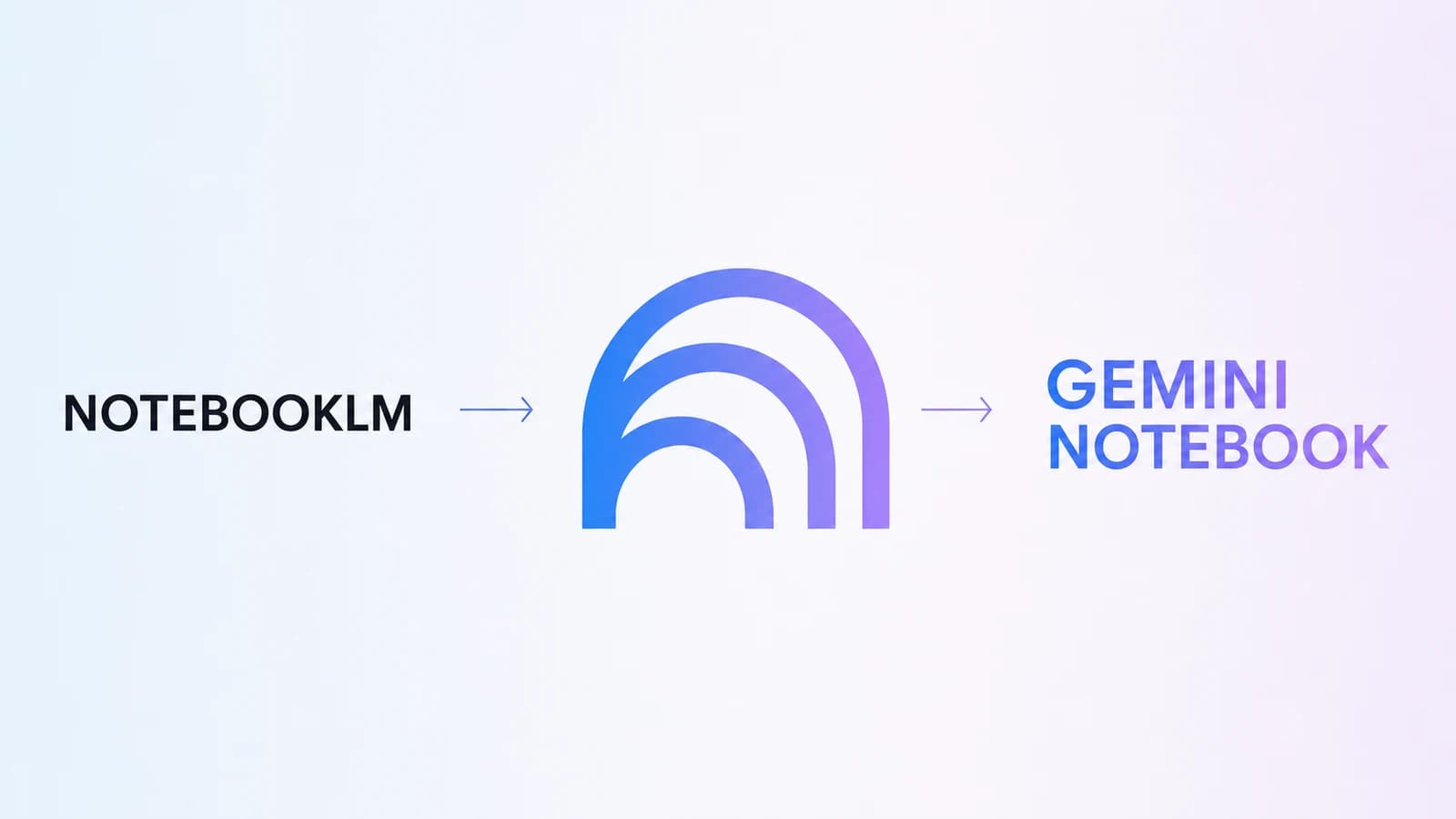
NotebookLM officially became Gemini Notebook on July 16, 2026. The new name marks its evolution from a document Q&A tool into an AI research workspace that can run code, analyze data, create reports in multiple formats, and follow users into Gemini and Google Search. This article explains what has actually changed, which features remain, and who can use the new upgrades. Gemini Notebook is still the familiar NotebookLM Google confirms that Gemini Notebook remains a standalone product focused on research and learning. Existing users do not need to move their data to another service. Notebooks, sources, notes, and generated content remain within the same experience, while the new name makes the product a more recognizable part of the Gemini ecosystem. The core of the tool is unchanged. Users collect PDFs, websites, YouTube videos, audio files, Google Docs, or Google Slides in individual notebooks. When asked a question, Gemini Notebook responds based on the selected sources and provides citations that take readers to the relevant passage. This approach is especially useful when a claim needs to be verified instead of accepting an unsupported answer from a chatbot. The rename follows a journey that began with Project Tailwind at Google I/O 2023. According to Google, the product now has more than 30 million users and is used by over 600,000 organizations. The Gemini Notebook name therefore reflects a new stage of maturity in which a notebook is no longer simply a place to read documents but a workspace for research, analysis, and complete deliverables. How does Gemini Notebook run code? The most notable technical change is that each notebook can be equipped with a secure cloud computer. Put simply, Gemini Notebook has its own environment for writing and running code for research tasks. The tool can clean data, perform calculations, compare multiple datasets, build charts, or test a hypothesis instead of only summarizing text. From document Q&A to actionable analysis Previously, NotebookLM stood out for its ability to read multiple sources and provide citation-backed answers. With a code execution environment, Gemini Notebook goes one step further: it can manipulate data to produce new results. An analyst can import data from several countries with inconsistent formats, ask the tool to standardize it, run calculations, and then create charts and a report. Google says the system also includes more than 100 curated software skills. Even so, it is still an AI system that can make mistakes. Users should review the code, calculations, input data, and conclusions, especially when the results are used for financial, legal, medical, or business decisions. Note: Agentic capabilities and code execution are not yet available to every account at once. Google AI Ultra and selected Workspace plans receive access first; Google says the feature will continue rolling out to Pro users on the web. Which output formats can Gemini Notebook create? Gemini Notebook is no longer limited to text reports. From the data and documents in a notebook, users can request PNG or SVG charts, PDF reports, Word files, Markdown, plain text, CSV, JSON, Excel, and PowerPoint. The system also supports images, data tables, infographics, and slides, while allowing users to revise generated versions. One source collection, many ways to present it The same training material can be turned into a management report, presentation slides, a spreadsheet for an operations team, and an Audio Overview for people who prefer listening. Students can create flashcards, quizzes, mind maps, or a Video Overview. Content teams can build comparison tables and infographics without copying the same data through too many tools. Research: find sources, cross-read documents, cite evidence, and create reports with charts. Data analysis: standardize tables, run code, export CSV or XLSX files, and visualize results. Learning: create study guides, flashcards, quizzes, audio, video, and mind maps. Teamwork: build a knowledge base, share viewer or editor access, and track usage. The real value does not lie in the number of formats but in the fact that they are created from the same source collection. When users want to change the perspective or target audience, they can adjust the request without rebuilding the entire context. Where does Gemini Notebook appear in Google’s ecosystem? Gemini Notebook has started appearing in the Gemini app. Notebooks created in the standalone product can appear in Gemini’s navigation, while notebook name changes, added sources, and updated custom instructions are synchronized across apps. Users can therefore continue chatting with their knowledge base without always returning to a separate tab. Google also plans to bring notebooks into AI Mode in Search. Once completed, this direction could turn a notebook into a personal context layer that follows users from web research to conversations with Gemini. However, shared notebooks and conversations in Gemini have separate rules for visibility, sharing, and data retention; organizational users should review the policies for their Workspace plan. How to get started with the new name Open Gemini Notebook with a Google account and create a notebook for one specific goal. Add trustworthy sources, then check how the tool categorizes and cites them. Start with narrow questions before requesting deep research, data analysis, or output files. Review citations, calculations, and the final version before sharing. Existing users can continue visiting the familiar NotebookLM address during the transition. The tool slug on 4AIVN also remains unchanged so old links do not break, while the name and content have been updated to Gemini Notebook. Does the rename make Gemini Notebook more useful? A name alone does not change research quality. What makes this rename notable is that Google is combining three layers of capability in one product: citation-backed sources, a code execution environment, and the ability to bring notebooks into Gemini and Search. If rolled out reliably, Gemini Notebook can shorten the path from reading documents to analysis and finished deliverables. However, not every feature is immediately available to everyone, and AI-generated output still needs to be checked. The most effective approach is still to choose strong sources, separate notebooks by clear goals, request specific outputs, and keep a person in the final approval step.
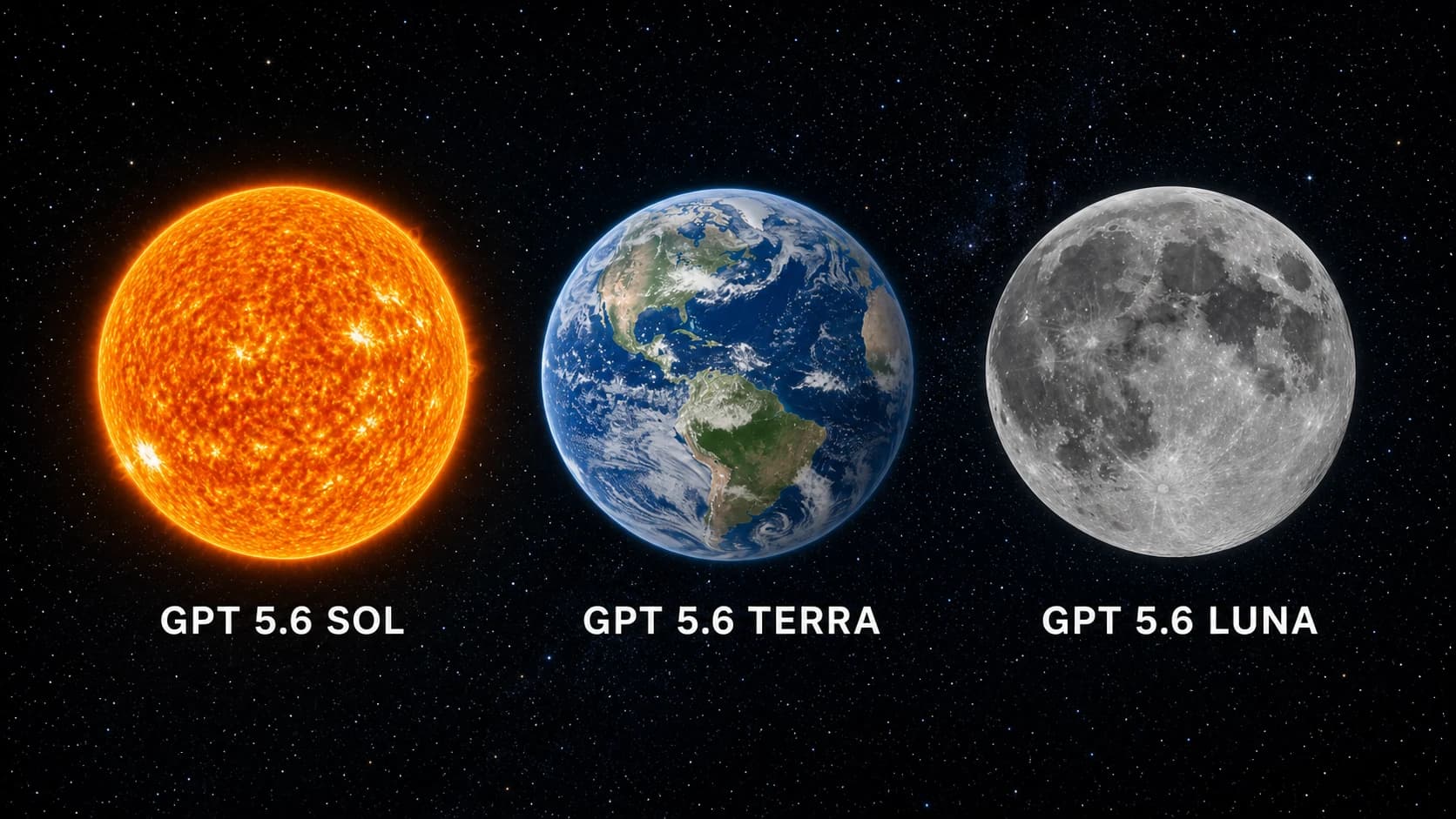
Sol, Terra, and Luna make GPT-5.6 look more like a product family than a single model. The naming also signals what OpenAI is trying to change: users no longer have to choose only between an expensive flagship and a much smaller model. Instead, they get three capability tiers designed for different workloads. The important caveat is that GPT-5.6 is currently in limited preview, and OpenAI says it is not available in ChatGPT during this preview period.On the other side, Anthropic positions Claude Fable 5 as a frontier model for reasoning, software engineering, scientific research, and long horizon agentic work. The useful question is therefore not simply which model is smarter. It is which product architecture helps a team complete real work with predictable quality, latency, and cost.What GPT-5.6 actually isAccording to OpenAI's preview announcement, GPT-5.6 consists of Sol, Terra, and Luna. Sol is the flagship and most capable option, Terra is a strong lower cost model, and Luna is the fastest and most cost efficient member of the family.The important change is how OpenAI divides demand into three tiers. A research team might use Sol for a difficult reasoning problem, a product team might run most daily work on Terra, and a high volume system might use Luna for thousands of short requests. This looks more like an infrastructure strategy than the launch of a single new chatbot.Availability matters: OpenAI says GPT-5.6 is not available in ChatGPT during the preview. An experience in an API, developer tool, or partner platform should not be treated as the final ChatGPT experience.Sol is designed for difficult, extended workSol is positioned as the strongest GPT-5.6 model for deep reasoning, complex coding, and long multi step tasks. A software team might ask it to understand a repository, identify the cause of a bug, propose a minimal patch, and write regression tests. Sol's value is not answering a short question quickly. It is maintaining the objective while working through a longer chain of decisions.OpenAI also highlights stronger cyber capability as reasoning increases. That can be useful for authorized security testing and vulnerability analysis, but it also makes access controls, logging, sandboxing, and human approval more important.Terra aims for the practical middleTerra targets the broadest category of work: document analysis, content production, application development, research synthesis, and operational support. If Sol is the specialist called for the hardest problem, Terra is the strong team member expected to work throughout the day without making every request unnecessarily expensive.A marketing team could use Terra to read market reports, extract insights, build an outline, and draft several content variants. A development team could use it for code review, test generation, and tickets with a clear scope. This tier could become the default if its real world quality remains consistent.Luna prioritizes speed and scaleLuna is designed for low latency and lower cost. Classification, conversation summaries, field extraction, drafting, and ticket routing do not always require the strongest model. In these cases, response time and total operating cost matter more than maximum reasoning capability.Fast does not mean suitable for everything. If a task requires source verification, a long plan, or a code change with a large blast radius, a team should move it to Terra or Sol instead of forcing Luna beyond its intended role.Claude Fable 5 takes a different routeAnthropic presents Claude Fable 5 as a frontier model for reasoning, software engineering, vision, scientific research, and long horizon agentic work. Instead of emphasizing three product tiers in one generation, Anthropic's message focuses on the capability of a powerful model working inside the Claude ecosystem.This difference changes deployment decisions. With GPT-5.6, an engineering team might build a router that sends each request to Sol, Terra, or Luna. With Fable 5, the focus may be on optimizing prompts, tools, context, and reasoning budgets around one primary model. Neither approach is universally better because the answer depends on workload and operational maturity.A fair comparison: Do not run one prompt and declare a winner. Build a test set covering short tasks, long reasoning, coding, extraction, and recovery from errors. Measure accuracy, latency, the number of human corrections, and the total cost of a completed task.Coding and agentic work depend on the surrounding toolsBoth GPT-5.6 Sol and Claude Fable 5 target complex software work, but the practical experience depends heavily on the system around the model. The ability to read a repository, execute commands, observe results, and correct mistakes can matter as much as a benchmark score. For OpenAI workflows, the Codex page is a useful starting point for understanding how a model participates in coding work.Fable 5 may be attractive to teams already invested in Claude and long running agentic workflows. Read our Claude Fable 5 coverage for more context on Anthropic's positioning and the types of work it targets.What early forum experience tells usEarly discussions on Reddit and developer communities focus on how different Sol, Terra, and Luna feel in real work. Some users describe Sol as the better fit for multi step tasks, Terra as the practical option for routine work, and Luna as the interesting choice for speed. These observations match OpenAI's positioning, but they do not establish a precise quality gap.Forum reports are useful because they reveal the questions real users care about. However, they are self selected evidence. People may use different prompts, access levels, integrations, and preview versions. A result from a developer platform does not guarantee the same result when a model eventually appears in ChatGPT.Early positivesThe three tiers make it easier to understand which model belongs to which workload.Luna creates a clear expectation of low latency for high volume systems.Terra could become a default if it delivers stable quality at a practical cost.Sol is expected to be stronger for coding, long reasoning, and tasks with several verification steps.Open questionsHow large the practical quality gap between Sol and Terra will be on common workloads.The total cost after retries, corrections, and human review are included.How Luna behaves with long prompts and many constraints.Whether performance remains stable as GPT-5.6 expands beyond preview access.Forum reports are not benchmarks: Community experience should help you choose test cases, not make a production purchasing decision by itself.Comparing GPT-5.6 and Fable 5 by workloadWriting and document analysisTerra appears positioned for most document work because it balances capability and cost. Fable 5 may be attractive when documents are long, questions are complex, and the model must maintain an argument across a large context. A useful evaluation should score citation accuracy, structural consistency, and how much editing is required before publication.Software development and debuggingSol and Fable 5 are both candidates for difficult coding tasks. A representative test should include reading existing code, identifying the root cause, producing a minimal fix, writing tests, and explaining risk. Asking a model to create an isolated function from scratch does not reflect how well it works in a real repository.High volume processingLuna has the clearest positioning advantage when speed and cost dominate. At thousands of extraction or classification requests per day, a small difference in price and latency can have a large effect. Fable 5 may be unnecessarily expensive for a workload that only needs short, structured outputs.Research and long reasoningSol and Fable 5 should be compared with tasks that have verifiable outcomes rather than open questions that merely sound impressive. Give both models the same research material and ask them to identify assumptions, detect contradictions, propose an experiment, and explain what evidence is missing. The better model is the one that helps users discover errors faster, not the one that writes the longest answer.Should you choose Sol, Terra, Luna, or Fable 5?If you want maximum capability inside the OpenAI ecosystem, Sol is the first model to test. If you need a strong model for regular use, Terra has the more practical position. If your workload contains many short and repetitive tasks, Luna could reduce operating cost. Fable 5 remains relevant for teams invested in Claude or focused on long reasoning and agentic work.Because GPT-5.6 is still in preview, replacing an entire production workload would be premature. Run the models in parallel on real but sanitized data, record failures, and use the same criteria for every candidate.A test plan you can use nowSelect 20 tasks that represent real work, including easy and difficult cases.Run each task on Sol, Terra, Luna, and Fable 5 when access allows.Score accuracy, response time, total cost, and required human correction.Track severe failures separately instead of relying only on averages.Choose a model for each workload category rather than forcing one model to do everything.Is GPT-5.6 worth switching to now?The most important change in GPT-5.6 may not be Sol's raw capability. It is OpenAI's decision to turn one model generation into three operational tiers. That could help organizations control cost, but only if they can classify workloads and route requests intelligently.The practical next step is to build a small benchmark from your own data. If Sol wins difficult tasks, Terra is good enough for routine work, and Luna handles high volume requests reliably, the three tier architecture has real value. If Fable 5 remains more consistent on long reasoning, a multi model strategy may still be better than committing to one provider.

In a move considered a 'game-changer' in the AI industry, Anthropic has just announced a revolutionary upgrade: offering a 1 million token context window for Claude Opus 4.6 and Sonnet 4.6 at standard pricing. Notably, there are absolutely no surcharges for long context, a policy completely opposite to most other AI providers, including Google and OpenAI, who typically increase prices for larger context limits.How much does Claude with a one million token context window cost?This is a massive shift brought by Anthropic. One million tokens is equivalent to about 750,000 words, enough to process 10 to 15 full novels in a single run. This number has immense significance in real-world workflows:Instead of having to chunk codebases or documents into parts, users can input an entire project into a single session, allowing the AI to work with it as a unified whole.Claude can retain all information from start to finish when analyzing thousands of pages of legal contracts, eliminating the risk of losing context halfway.Complex long-context processing techniques previously required, such as document chunking, lossy summarization, or clearing context to free up memory, are now no longer necessary.New pricing structure with no surcharge for one million tokensThe most surprising aspect is the new pricing structure, which completely lacks any long-context surcharge. The standard pricing applies to the entire range from 1 to 1 million tokens:Opus 4.6: $5 input and $25 output per 1 million tokens.Sonnet 4.6: $3 input and $15 output per 1 million tokens.For perspective, previously, when using a context window exceeding 200,000 tokens, many providers typically charged 2 to 4 times more. Particularly, Claude Code users with Pro ($20), Max ($100), Team, and Enterprise plans automatically receive the 1 million token context window when using Opus 4.6 without needing extra usage credits.Does Claude Opus 4.6 really remember all 1 million tokens?A common question when increasing the context window size is whether reasoning quality is compromised. Anthropic addressed this concern with impressive benchmark results.Claude Opus 4.6 scores 78.3% on MRCR v2 – a test measuring the ability to retrieve hidden information within a massive amount of text. This is the highest score among all current advanced models at the same context length. For comparison:GPT's accuracy drops significantly, reaching only 36% at 1 million context.Gemini performs even worse, at just 26%, showing that these models 'forget' up to ⅓ of what was provided previously when reaching long context.With Sonnet 4.6, the ability to remember over ⅔ of a long context further proves Anthropic's leading position in processing complex information. Claude's media limit increases 6x to 600 images per requestAlongside the context window, another upgrade that received less attention but is extremely important is the media limit. This limit has increased to 600 images or PDF pages per request, 6 times higher than the previous 100. This is especially meaningful for those working intensively with tasks requiring the processing of many visual documents or PDFs, which is truly significant for Claude Pro and Max users who constantly hit token limits and have to wait.Significantly reducing usage costs for businessesThis breakthrough feature is available immediately on the Claude Platform, Microsoft Azure Foundry, and Google Cloud Vertex AI. For Claude Code users on Max, Team, and Enterprise plans using Opus 4.6, the 1 million token context window is enabled by default without additional setup. This not only improves performance but also significantly reduces costs for AI systems that frequently call Claude's API, bringing major economic benefits to businesses and developers.
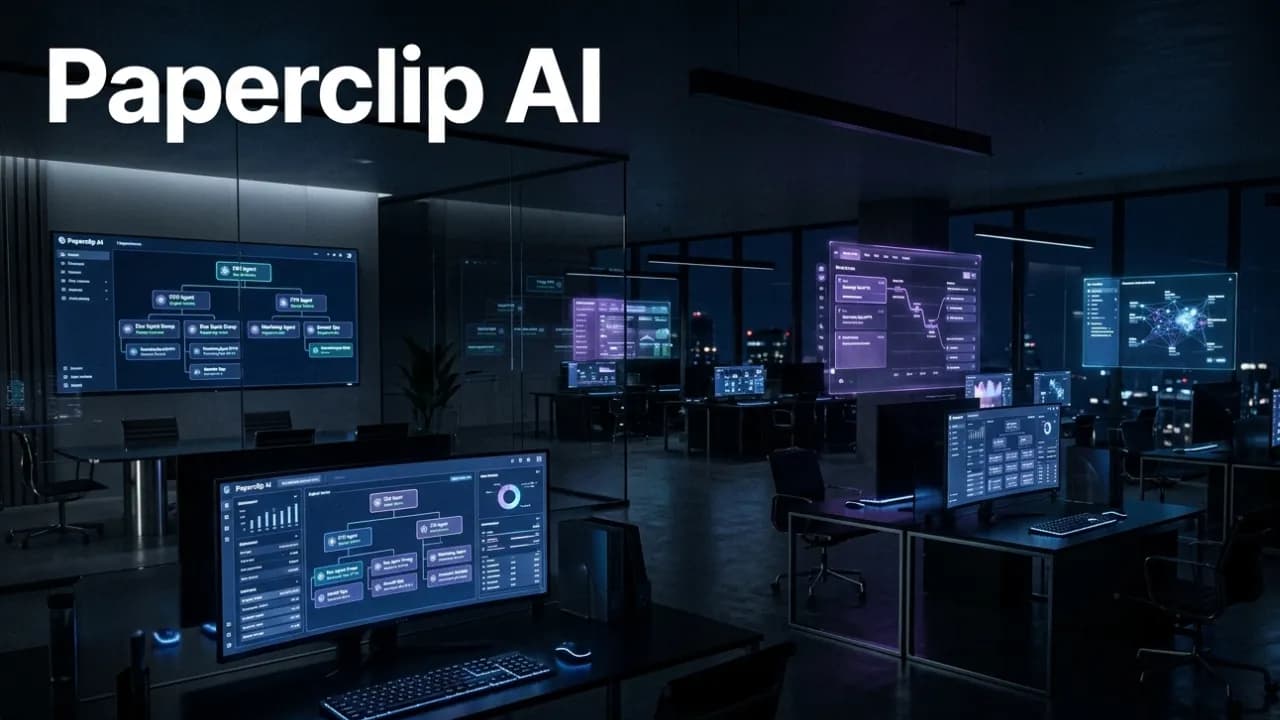
What is Paperclip AI and why is it generating so much excitement? In its first week alone, Paperclip AI shook the developer community with 14,200 GitHub stars and 1,600 forks. By now those numbers have climbed to 19,700 stars, 2,500 forks, and more than 230 open pull requests, the majority coming from developers outside the original team. This is not the outcome of a small experimental project. It is clear evidence that Paperclip is solving a very specific pain point in the world of AI agents. What is that pain point exactly? Imagine running 20 Claude Code windows simultaneously with no way to manage them, no visibility into what each one is doing, and no mechanism for preserving long-term context. An agent loop that runs unchecked can cost you hundreds of dollars before you even realize it. Paperclip's creator, @dotta, put it plainly: "You can only manage a mess of scripts up to a point before you realize there has to be a better way to work." What is Paperclip and why has it attracted such a following? Paperclip is a powerful combination of a Node.js server and React UI, designed to coordinate a team of AI agents running a miniature business. Rather than being a standard task management tool, Paperclip lets you organize agents into a company with a clear structure. You can set a large objective like "Build an AI note-taking app and reach one million dollars in monthly revenue," and Paperclip helps you "hire" specialized agents to pursue it: CEO agent: Sets the overall strategy. CTO agent: Makes architecture decisions. Engineer agent: Writes and deploys code. Marketer agent: Runs content campaigns. Each agent has a defined role, a reporting line, a monthly budget, and specific goals tied to the company's shared vision. Paperclip provides a comprehensive dashboard where you can monitor the full picture, approve strategies, adjust budgets, and intervene when needed, without opening each agent tab one by one. The core differentiator is that Paperclip doesn't replace AI reasoning. It helps you organize and operate that reasoning through a controlled process. If you want to understand how modern AI models reason before putting them to work in Paperclip, the OpenAI reasoning guide for GPT 5.4 is a useful reference. Paperclip also stands out for broad compatibility. It is not selective about agent runtimes. Claude Code, OpenClaw, Python scripts, shell commands, HTTP webhooks — anything that can receive a periodic heartbeat signal can be "hired." Paperclip models the entire company as the unit of coordination, complete with an org chart, reporting structure, budgets, and goals cascading from the company level down to individual tasks. This is not a workflow builder. It is a real miniature company running on AI. The real excitement from the developer community GitHub star velocity is only part of the story. What is more notable is the quality and volume of community contributions. More than 230 open pull requests coming from external developers rather than the core team signals that Paperclip is a tool people are genuinely using and invested in improving. The v0.3.0 release on March 9, 2026 only reinforced this momentum, adding adapters for Cursor, OpenCode, and Pi, along with PWA support, a database backup CLI, and a range of mobile interface improvements. Notably, the community is contributing in exactly the areas a new project needs most: cost tracking to catch runaway agent loops, session persistence across restarts, and coordination when multiple agents receive the same task simultaneously. The volume of these issues in the tracker indicates that users are deploying Paperclip in real production environments, not just running local experiments. What does Paperclip actually solve in practice? Looking at the contribution list and bug reports, the community is focused on very concrete problems that real users encounter when deploying AI agents. The two most frequently mentioned capabilities are budget control and activity logging. Budget control: Each agent has its own monthly spending limit. When it reaches 80% of the budget, the system sends a warning. At 100%, the agent automatically pauses and stops accepting new tasks. This eliminates surprise invoices and runaway loops entirely. Activity logging: Every instruction, response, action, and decision made by an agent is recorded in an append-only log that cannot be edited or deleted. This is a significant advantage for anyone who needs to explain what their AI system was doing, adding transparency and auditability that most agent setups lack. Paperclip and CrewAI represent two different schools of AI agent management Comparing Paperclip to CrewAI, the most widely used AI agent coordination tool available today, makes its unique value clearer. CrewAI is designed to complete a specific task, with a manager agent overseeing executor agents, supporting self-correction and context persistence. It is strong at quick setup and suits workflows with a clear start and end. Its limitation is that it offers less control over individual execution steps and requires users to work within its own structure. Paperclip takes a completely different approach. Instead of defining a workflow, you define an organization, with a headcount structure, budgets, cascading goals, and approval processes. Agents don't run through a workflow but operate continuously on a schedule, functioning more like actual employees than automated scripts. If CrewAI is a tool for completing a project, Paperclip is a system for running an entire company. Who should use it and who should wait? Paperclip says it plainly in their own README: "If you only have one agent, you don't need Paperclip. But if you have 20 agents, you definitely do." People who have actually deployed AI agents in real operations recommend starting with a specific use case that has high task volume and recoverable errors, then expanding once you have real data to work from. This is far more practical advice than trying to build a fully staffed "AI company" from day one. That said, Paperclip is still in early development. The roadmap has significant gaps to fill, from cloud agent support to a plugin extension system. If you need to deploy for a large enterprise with high stability requirements, waiting a few more months for the product to mature is the more prudent choice. Should you try Paperclip now? The question Paperclip is asking isn't "skip your SaaS vendors." It's "could you build your own AI company?" With an MIT license, self-hosted architecture, and a single command — npx paperclipai onboard --yes — you can run the entire system on your local machine at localhost:3100. [VIDEO:XXplTbQR9to|How to install Paperclip AI on a VPS|How to install Paperclip AI on a VPS] If you are already running more than three AI agents simultaneously and feel like you're losing control, now is exactly the right time to try Paperclip. If you are just getting started with AI agents, get one agent running reliably first and come back to this later.

Google đã công bố một yêu cầu nội bộ đầy tham vọng nhằm tăng công suất AI lên gấp 1.000 lần trong vòng 4 đến 5 năm tới. Động thái này diễn ra trong bối cảnh cuộc đua AI toàn cầu đang nóng lên và đòi hỏi các công ty công nghệ phải đầu tư khổng lồ vào cơ sở hạ tầng tính toán, bất chấp những lo ngại về bong bóng AI. Phó chủ tịch phụ trách cơ sở hạ tầng AI của Google Cloud, ông Amin Vahdat đã trình bày lộ trình này tại một cuộc họp toàn công ty vào đầu tháng 11, nhấn mạnh rằng Google phải tăng gấp đôi năng lực phục vụ AI sau mỗi sáu tháng để đáp ứng nhu cầu bùng nổ. Kỷ nguyên suy luận là gì và tại sao nó lại quan trọng với các mô hình AI Sự phát triển của AI đang bùng nổ chưa từng thấy, lý do là vì chúng ta đã chuyển từ việc chủ yếu huấn luyện các mô hình AI sang một giai đoạn mới gọi là kỷ nguyên suy luận (Inference Era) tức là để AI tự suy luận, tự quyết định. Trước đây, giai đoạn tốn kém và ngốn tài nguyên nhất là lúc AI đang học hỏi. Nhưng giờ đây thì khác, đối với những mô hình siêu xịn mới nhất như Gemini 3 Pro lại cần một lượng sức mạnh máy tính khổng lồ và liên tục để làm những việc như: suy nghĩ, lập luận và viết code. Ông Vahdat đã cảnh báo thẳng thắn rằng: Hiện tại, cuộc đua xây dựng cơ sở hạ tầng cho AI mới chính là phần quan trọng nhất và đắt đỏ nhất của toàn bộ cuộc chơi AI này! Ưu thế của Google đi kèm với thách thức Để đạt được mức tăng trưởng hạ tầng AI gấp 1.000 lần mà không làm chi phí vượt tầm kiểm soát, Google tiếp tục đặt cược vào hiệu suất và hiệu quả năng lượng. Tối ưu hóa hiệu suất và chi phí Google đã đặt ra mục tiêu với quá nhiều thách thức: cần cung cấp năng lực tính toán, lưu trữ và kết nối gấp 1.000 lần so với hiện nay, nhưng phải duy trì chi phí và mức tiêu thụ điện năng ở mức tương đương. Để thực hiện điều này, Google áp dụng triết lý thiết kế đồng bộ rất giống của Nvidia. Đây là việc tích hợp chặt chẽ phần mềm, thuật toán (do DeepMind tự phát triển) với kiến trúc phần cứng “cây nhà lá vườn” của Google đó là TPU Ironwood và CPU Axion. Vai trò của TPU Ironwood và CPU Axion là gì Chip TPU Ironwood thế hệ thứ 7 (ra mắt vào tháng 4/2025) là trung tâm của chiến lược mở rộng này. Ironwood được thiết kế cho mục đích suy luận mô hình ngôn ngữ lớn (LLM inferencing). Google tuyên bố Ironwood cung cấp hiệu suất đỉnh cao gấp 10 lần so với TPU v5p ra mắt 2018 và hiệu suất trên mỗi watt gấp 2 lần so với thế hệ Trillium trước đó. Mỗi chip TPU v7 Ironwood được làm mát bằng chất lỏng có khả năng đạt 4.6 petaFLOPS (FP8 dense). Để hiểu rõ, chúng ta so sánh ngay với Blackwell B200 mới nhất của Nvidia cũng chỉ đạt 4.5 petaFLOPS (FP8 dense). Bên cạnh đó, Google sử dụng CPU tự phát triển Axion (dựa trên Arm). Các khối lượng công việc đa năng đang được chuyển sang các bộ xử lý hiệu quả hơn này để giải phóng năng lượng và không gian nhiệt cho các TPU ngốn điện để phục vụ tác vụ AI chuyên dụng. Thách thức hạ tầng và năng lượng Việc tăng công suất tính toán lên mức siêu lớn tất nhiên cũng phải đòi hỏi phải vượt qua các rào cản vật lý lớn về điện năng và làm mát. Hiện tại, các con chip AI đang mạnh mẽ đến mức chúng trở thành những "lò sưởi tí hon". Dù kích thước chip rất nhỏ, nhưng nhiệt độ và sức nóng mà chúng tạo ra lại cực kỳ khủng khiếp. Để giải quyết vấn đề này, Google đang thực hiện hai giải pháp chính: Làm mát bằng chất lỏng: Họ đã chuyển sang dùng nước hoặc chất lỏng chuyên dụng để làm mát trực tiếp các chip. Cách này hiệu quả hơn rất nhiều so với quạt gió. Hệ thống điện 48V: Google đang triển khai hệ thống phân phối điện 48V. Đây là một giải pháp giúp truyền tải điện hiệu quả hơn và giảm thiểu việc lãng phí điện năng bị biến thành nhiệt. Trong tương lai, khi các tủ máy (rack) chứa chip mạnh đến mức cần công suất hàng trăm kilowatt, Google đang nghiên cứu đến một bước đột phá lớn hơn: chuyển sang dùng nguồn điện một chiều DC 400 V. Điều này sẽ giúp họ khai thác toàn bộ sức mạnh của các hệ thống học máy khổng lồ mà không sợ bị quá tải về điện. Cam kết môi trường và khủng hoảng năng lượng Theo Alphabet (công ty mẹ của Google) luôn đặt mục tiêu Net Zero (phát thải ròng bằng 0) vào năm 2030 giống như chính phủ Việt Nam ta. Tuy nhiên, nhu cầu năng lượng cho mảng AI đang bị cảnh báo là rất lớn và có thể ảnh hưởng đến các mục tiêu khí hậu của Alphabet. Để giải quyết tình trạng thiếu hụt năng lượng trên toàn cầu, Google đang tìm kiếm các nguồn cung cấp năng lượng tại chỗ đáng tin cậy, sạch sẽ và có chi phí thấp. Google đã công bố đầu tư vào năng lượng hạt nhân (Kyros), sử dụng các lò phản ứng mô-đun nhỏ (SMRs) 500 megawatt. Bong bóng và rủi ro tài chính của AI sẽ diễn biến thế nào Mặc dù Google đang dốc hết tiền đầu tư vào công nghệ AI nhưng trên thị trường tài chính, ai cũng đang lo lắng về một bong bóng AI sắp vỡ. Bản thân Sundar Pichai (CEO Alphabet) cũng phải thẳng thắn thừa nhận: "Có những yếu tố hơi phi lý trong cách thị trường đang định giá các công ty AI hiện nay." Bằng chứng là Alphabet đã nâng dự báo chi tiêu cho xây dựng cơ sở hạ tầng (CapEx) cho năm 2025 lên đến 93 tỷ USD một con số khổng lồ! Tuy nhiên, ông Pichai có một lập luận rất chắc chắn” Rủi ro lớn nhất không phải là đầu tư quá nhiều, mà là không đầu tư đủ.” Ông đưa ra ví dụ: Mảng Google Cloud đang tăng trưởng rất ấn tượng, nhưng đáng lẽ doanh thu còn phải cao hơn nữa nếu như họ có đủ năng lực tính toán để phục vụ khách hàng. Nói cách khác, Google chấp nhận rủi ro đầu tư lớn để không bỏ lỡ cơ hội kiếm tiền khủng trong tương lai. Google có đang thách thức sự thống trị của Nvidia Google đang tăng tốc đầu tư vào hệ thống TPU (chip xử lý AI riêng của họ) và theo đuổi chiến lược tự làm từ A đến Z (từ thiết kế đến sản xuất chip). Điều này đang tạo ra một giải pháp thay thế rất tiềm năng cho chip GPU của Nvidia vị vua đang thống trị thị trường hạ tầng AI hiện nay. Chip TPU của Google là một loại mạch điện tử (ASIC) được sinh ra chỉ để làm một việc: tính toán cho AI. Nó không giống như GPU của Nvidia. GPU của Nvidia giống như một vận động viên đa năng, rất linh hoạt và làm được nhiều việc hơn. TPU của Google giống như một vận động viên chuyên biệt, có thể làm một số tác vụ huấn luyện và suy luận AI khối lượng lớn hiệu quả hơn và ít tốn điện hơn đối thủ. Canh bạc đặt cược vào TPU của Google đang bắt đầu có hiệu quả khi Meta Platforms đang đàm phán để sử dụng TPU của Google với mục đích là đa dạng hóa nhà cung cấp và giảm bớt sự phụ thuộc vào Nvidia. Dự kiến, Meta có thể bắt đầu thuê năng lực TPU từ năm 2026 và mua chip số lượng lớn từ năm 2027. Tóm lại, kế hoạch tăng tốc hạ tầng AI lên gấp 1.000 lần của Google không chỉ là một mục tiêu về số lượng mà là là sự thay đổi về cách thiết kế hệ thống. Google đang biến trung tâm dữ liệu thành một cỗ máy thống nhất và cực kỳ hiệu quả. Họ tập trung vào việc đồng bộ thiết kế giúp phần cứng bắt tay với phần mềm để cùng xử lý tác vụ cùng tiết kiệm điện năng, hơn nữa là dùng chip nhà làm giống như điều Apple đã và đang làm để bảo đảm vị thế dẫn đầu trong cuộc đua với tốc độ chóng mặt!
The launch of Nano Banana Pro (officially named Gemini 3 Pro Image), built on the Gemini 3 Pro foundation, is truly an outstanding upgrade. Personally, I am still amazed that Gemini 3 now features Nano Banana Pro. It not only brings a massive leap forward compared to Nano Banana, but it might also make many people forget about other image generation models and platforms like Midjourney, GPT Image 1, or even to some extent, Photoshop. What is the hands-on experience with Nano Banana Pro like? Nano Banana Pro is designed to leverage Gemini 3's advanced reasoning and deep real-world understanding. This Pro version doesn't just create purely aesthetic images; it also helps generate more useful content, such as accurate illustrative diagrams or infographics based on real-world information or user-provided data. During testing, four major upgrades stood out, creating a distinct difference compared to the standard Nano Banana (Gemini 2.5 Flash Image): In-image text accuracy reaches nearly 99%: We all know that a common weakness among AI image generators is very poor text rendering, whether in English or Vietnamese. But with the help of Gemini 3, the story has changed. We can now convert documents, books, or images from English to Vietnamese or colorize them with extreme precision. This was previously an impossible task. Ultra-high resolution (4K): Previously, getting AI images to 4K for printing or advertising was a nightmare, often requiring tedious upscaling efforts. Now, 4K quality is no longer out of reach with Nano Banana Pro, while lower resolutions like 2K are handled with ease. Reasoning capabilities and Google Search support: Powered by Gemini 3 Pro, the model is fully capable of reasoning through complex prompts. Even better, it can utilize Google Search to retrieve real-time data for image generation. For example, you can ask it to draw a celebration image based on the results of a freshly finished sports match, or create an image illustrating the damage caused by two recent typhoons in central Vietnam—and below are the results I obtained. Extremely stable facial and frame consistency: For brand builders or anyone requiring consistency, this feature is essential. The model excels at preserving character face or framing details even when changing backgrounds or outfits. As a result, you can easily create an entire cohesive brand identity. Areas where Nano Banana Pro needs improvement Despite being impressive, Nano Banana Pro still encounters a few difficulties and minor bugs that need refining: Diagram logic can occasionally be a bit off: Even with Gemini 3's support, generating diagrams or infographics can sometimes get scrambled (for example, step 2 appearing before step 1), despite the high image quality. This error is hard to fix via prompting and usually requires generating from scratch again. Spelling mistakes still occur in text: Every once in a while, the AI still outputs a typo in an image, with an error rate of about 1 in 10. This level is acceptable, but not yet 100% perfect. Image compositing isn't seamless yet: Blending faces into new frames still looks somewhat unnatural, and discerning eyes can spot a slightly fake appearance. Thus, for demanding cases requiring high precision, post-processing by human designers is still necessary. How to experience Nano Banana Pro? Nano Banana Pro is available to use completely free of charge within the Gemini app. Open the Gemini app (or access it via the web). Select the "Thinking" model. This option is recommended because Nano Banana Pro will leverage Gemini 3's reasoning power to generate images. Select "Create images" under the tools section. Free plan users receive a limited usage quota for Pro. Once this quota is exhausted, the system automatically switches back to the original Nano Banana model. Subscribers of higher tier plans (Google AI Plus, Pro, and Ultra) receive significantly higher usage limits for Nano Banana Pro. Ultimately, Nano Banana Pro feels like a professional photographer equipped with a 4K camera and a smart processor. It can craft hyper-realistic photos, though it still needs clear instructions regarding logic and intent to ensure the output is not only beautiful, but also makes sense.
On November 19, 2025, Google officially introduced Gemini 3, its most advanced and intelligent AI model, designed to help users realize every idea. CEO Sundar Pichai declared Gemini 3 as "the best model in the world for multimodal understanding." This model marks an upgrade in the journey towards Artificial General Intelligence (AGI). How is it upgraded compared to Gemini 2.5? Thus, 8 months after the launch of Gemini 2.5, Google has returned with Gemini 3 Pro, featuring upgrades in reasoning and context understanding abilities—it brings together all the capabilities of previous Gemini generations. Sweeping the leaderboards The launch of Gemini 3 Pro, though relatively quiet, was not a giant leap forward yet carried significant weight as it topped numerous LLM leaderboards (such as LMArena, etc.). Of course, compared to Gemini 2.5, Gemini 3 completely surpasses it across all AI benchmarks, such as in identifying the context and intent behind user requests, allowing users to get desired results with fewer prompts. While Gemini 3 outperforming previous-generation Gemini models is expected, its scores also surpassed both Claude 4.5 Sonnet and GPT 5.1. For instance, Gemini 3 demonstrated PhD-level reasoning with a high score of 37.5% on Humanity’s Last Exam without tools—significantly outperforming Claude Sonnet 4.5 (13.7%) and GPT 5.1 (26.5%). Similarly, its GPQA Diamond score (91.9%) continued to lead over Claude Sonnet 4.5 (83.4%) and GPT 5.1 (88.1%). [GEMINI_3_BENCHMARK_CHART] Multimodal power (Multimodality) Gemini 3 continues from Gemini 2.5 with its ability to seamlessly synthesize information across multiple modalities, including text, images, video, audio, and code. Naturally, it performed better on tests than Gemini 2.5, achieving 81% on MMMU-Pro (compared to 68% for Gemini 2.5) and 87.6% on Video-MMMU (compared to 83.6% for Gemini 2.5, according to Google). How is it used in real-world scenarios? In study and research: Gemini 3 can analyze academic papers or long video lectures and generate code for interactive visual diagrams or flashcards. However, when I tested it with a 4-hour video, Gemini 3 in Fast mode couldn't remember everything and either made mistakes or missed details. Therefore, you shouldn't fully rely on the information provided by Gemini 3 just yet; instead, use Notebook LM for those tasks. In creativity and planning: Gemini 3 can translate and convert handwritten recipes in multiple languages into cookbooks perfect for sharing. According to Google, it can even write a poem capturing the physics of nuclear fusion or write code to create visualizations of plasma flow in a tokamak. In sports video analysis: Gemini 3 can analyze sports match videos (such as pickleball, tennis, etc.), identify skills that need improvement, and create training plans. Does Gemini 3 Deep Think have an enhanced reasoning mode? Google also introduced Deep Think mode, an enhanced reasoning mode designed to help solve more complex problems similar to Gemini 2.5, though it actually takes quite a long time to output results. Deep Think mode is currently being tested and is expected to be available soon for Google AI Ultra subscribers in the coming weeks. Therefore, I haven't had the chance to experience it yet, but for regular users, Thinking mode is quite suitable. Developer capabilities and deployment speed How good are Gemini 3's coding capabilities? Gemini 3 performs very well in code generation and handling complex prompts to build richer, interactive web interfaces. However, for coding capabilities, I still trust Claude Sonnet 4.5 more. When Gemini 3 encounters an issue with code, it doesn't stay focused on resolving that specific issue and tends to make more errors as it tries to fix it—unlike Claude Sonnet 4.5, which creates difficulties for people who don't know much about code. In terms of speed, Gemini 3 is significantly faster than Claude Sonnet 4.5 and GPT 5.1 when coding, being twice as fast as Gemini 2.5 for small to medium tasks. To support agent development, Google also released a new agentic development platform called Google Antigravity. It leverages Gemini 3's reasoning and tools to turn AI into a new agent capable of operating independently and proactively. When can you use Gemini 3? Gemini 3 is being rolled out across the entire Google ecosystem starting November 19. In the Gemini chat interface, Google now lets users select Fast, Thinking, and Pro modes instead of selecting LLMs as in Gemini 2.5. This shows that Google is automating the LLM selection process for tasks ranging from simple to complex, similar to what OpenAI did with GPT-5.1. Gemini 3 is also integrated for the first time directly into Google Search via AI Mode. This AI mode uses Gemini 3 to enable new generative user interface (generative UI) experiences, such as vivid image layouts and interactive tools generated based on user queries—a move that, in my personal opinion, is aimed at competing with Open Atlas ChatGPT Atlas and Perplexity Comet.
Have you ever played games with an AI teammate (bot) or NPC that only followed rigid commands? Forget about that! Google DeepMind has just announced SIMA 2 (short for Scalable Instructable Multiworld Agent), a successor to SIMA 1, a new generation, versatile AI agent designed not only to play games but also to think, reason, and self-learn in complex 3D virtual worlds. The launch of SIMA 2 can be considered a significant milestone, bringing us closer to Artificial General Intelligence (AGI). AGI has always been the ultimate goal for all tech giants like Google, OpenAI, and Microsoft: to create AI systems capable of performing various types of intellectual tasks, just like humans. A Smarter Core Powered by Gemini 2.5 Flash-Lite SIMA 2 has received a major intelligence update thanks to the integration of the Gemini 2.5 Flash Lite large language model as its reasoning core. This has helped transform SIMA from an AI agent that merely "follows instructions" into more of a companion. [SIMA2_BENCHMARK_CHART] How SIMA 2 Compares With SIMA 1 and Human Players SIMA 1 (launched in 2024) achieved only about a 31% completion rate for complex tasks. SIMA 2 has doubled its performance, reaching an average of 65% task completion rate on the main evaluation set, approaching human capabilities (approximately 76%). Reasoning Instead of Repeating Actions Thanks to Gemini, SIMA 2 possesses abstract reasoning capabilities that previous bots lacked. It doesn't just follow commands but also forms internal plans and explains its action steps. Consider the reasoning example below: If you are playing a game and say: "Go to the house that is the color of a ripe tomato." An old bot would "freeze" because you didn't specify the color, but for SIMA 2, it will use its Gemini core to reason: "A ripe tomato is red. So I need to find and go to the red house." SIMA 2 performs these actions by observing on-screen visuals and using a virtual keyboard/mouse to control characters or tools, simulating behavior exactly like a normal player. This is why it is called an embodied agent—an interactive system that allows AI to perceive in virtual (or real) worlds, and of course, comes with a performance score afterward. Understanding Instructions From Language to Emojis With Gemini's support, SIMA 2 can understand far beyond the limits of mere text language, allowing users to communicate with it in various ways: Multimodal Instructions: It can follow commands via text, voice, on-screen sketches, and even emojis. For example: You just need to type the combination 🪓🌲 (axe and pine tree), and SIMA 2 will understand it as the command "go chop wood." Multilingual: Of course, SIMA 2 also has the ability to understand and execute commands in various natural languages such as French, Chinese, German, and Spanish. Generalization: SIMA 2 can transfer abstract concepts learned from one game to an entirely different game. For example: If it learns how to "mine" ore in a survival game, it can immediately apply that concept to execute the "mine" command in a Minecraft game. Or it can also extend to popular titles like PUBG for automatic looting, or LoL for automatically farming monsters to gain experience and level up. Learning Through Trial and Error One of SIMA 2's most significant research contributions is its self-improvement mechanism. Instead of solely relying on player-provided data, after the initial training phase, SIMA 2 can autonomously switch to a trial-and-error learning mode. Self-Learning Process: A separate Gemini model generates new tasks for SIMA 2 in the virtual environment, and a reward model scores its performance. Results: Its own experiences, which is colloquially known as "its own fat fries itself" (a Vietnamese idiom meaning self-reliance or self-improvement), will be stored and used to train subsequent SIMA 2 versions, helping the agent improve its performance without additional input data or human assistance. Google's DeepMind division tested SIMA 2 in entirely new 3D worlds, procedurally generated by the Genie 3 model (a model that creates interactive virtual worlds from text or images). SIMA 2 successfully navigated, identified objects (such as benches, flowers, or even airplanes), and performed requested actions in these completely unfamiliar worlds. [VIDEO:https://www.youtube.com/watch?v=Zphax4f6Rls|Video about SIMA|DeepMind Video on SIMA 2] Beyond Games: A Path Toward AGI and Robotics Google DeepMind's goal is not just to create a new Faker AI in the gaming world; rather, they view video games as a sufficiently safe and complex environment to build and test AI adaptability. The high-level skills SIMA 2 learns in virtual environments, such as spatial navigation, tool use, and self-cooperation to solve problems, are fundamental components necessary for real-world robotics and autonomous vehicle applications. Just as you need to understand what a "refrigerator" and "dishes" are and how to move around the house to retrieve them, robots also need to learn a great deal about this, especially when precision is paramount. Currently, such robots are entirely human-controlled, so SIMA 2 will certainly focus on learning these high-precision behaviors. Thus, SIMA 2 is proof that tech giants like Google have certainly not changed their AGI goals, thereby ensuring the creation of an AI future that can interact with and support us in many more fields.

Thế giới đang chứng kiến một sự chuyển đổi lao động số hóa đáng kinh ngạc: những kỹ sư trẻ tuổi ngồi tại trung tâm tài chính Manila, Philippines, lại đang điều khiển những con robot sắp xếp hàng hóa tại các cửa hàng tiện lợi ở Tokyo, Nhật Bản, cách đó hơn 3.000 km. Xu hướng này không chỉ giải quyết cuộc khủng hoảng thiếu hụt lao động mà Nhật Bản đang đối mặt mà còn định hình lại bản chất của công việc thủ công trong kỷ nguyên tự động hóa. Khủng hoảng lao động Nhật Bản và giải pháp robot thay thế Là một trong những nền kinh tế lớn nhất thế giới, Nhật Bản đang phải đối mặt với thách thức dân số già hóa và lực lượng lao động sụt giảm. Tình trạng thiếu hụt nhân sự này đặc biệt nghiêm trọng trong các ngành dịch vụ, bao gồm cả chuỗi cửa hàng tiện lợi (konbini). Với hơn 56.000 cửa hàng trên khắp cả nước, các konbini như FamilyMart và Lawson là một phần thiết yếu của đời sống hàng ngày ở Nhật Bản. Để giải quyết vấn đề này, các chuỗi cửa hàng tiện lợi đã chuyển sang sử dụng công nghệ. Công ty khởi nghiệp robotics Telexistence (TX), có trụ sở tại Tokyo, đã phát triển một giải pháp robot từ xa. Telexistence đã hợp tác với FamilyMart để triển khai robot TX SCARA. Mẫu robot này, chạy trên nền tảng AI Jetson của Nvidia, được thiết kế để thay thế công việc bổ sung sản phẩm lặp đi lặp lại trong các cửa hàng bán lẻ. Cụ thể, robot TX SCARA có khả năng xử lý tất cả chai PET và lon nước đóng hộp có kích cỡ khác nhau trong tủ mát. Cầu nối 3.000km từ Manila đến Tokyo Telexistence đã cung cấp robot cho hơn 300 cửa hàng tiện lợi trên khắp Nhật Bản (bao gồm FamilyMart và Lawson, và sắp tới là 7-Eleven). Điều độc đáo là những robot này được giám sát và điều khiển từ xa bởi đội ngũ nhân viên của Astro Robotics – một công ty khởi nghiệp tại Philippines. Mô hình này xuất hiện do việc tìm kiếm nhân công sắp xếp hàng hóa ở Nhật Bản đang ngày càng khó khăn và tốn kém, mặc dù mức lương tối thiểu khá cao. Ngược lại, Philippines là một trung tâm gia công toàn cầu với lực lượng lao động trẻ hơn, am hiểu công nghệ hơn và đặc biệt là chi phí thấp hơn nhiều so với ở Nhật Bản. Tại văn phòng ở Manila, khoảng 60 nhân viên trẻ tuổi sử dụng kính thực tế ảo (VR) và cần điều khiển để giám sát và vận hành robot. Công nghệ này cho phép các cửa hàng ở Nhật Bản thuê nhân viên từ bất cứ nơi nào trên thế giới, qua đó giải quyết tình trạng thiếu hụt lao động. Vai trò của con người Hệ thống của Telexistence sử dụng AI độc quyền tên là Gordon để thực hiện hầu hết các thao tác sắp xếp hàng hóa một cách tự động. Tuy nhiên, tự động hóa hoàn toàn trong trường hợp này vẫn chưa thể áp dụng mà vẫn cần đến con người. [HUMAN_ROBOT_COLLABORATION_CHART] Phần lớn thời gian, robot TX SCARA hoạt động tự động, nhưng khi xảy ra các sự cố ngoài dự kiến, ví dụ như làm rơi chai nước hoặc sắp xếp sai vị trí, người điều khiển từ xa sẽ bắt buộc phải can thiệp. Việc can thiệp thủ công này (khoảng 4% các trường hợp) đòi hỏi người điều khiển phải sử dụng kính VR để nhập vào robot và điều khiển nó nhặt vật thể bị rơi. Quá trình này được các nhà nghiên cứu gọi là hòa thân kỹ thuật số (Digital Embodiment). Về cơ bản, người lao động đang vận hành cơ thể máy móc thông qua giao diện truyền hình ảnh để cung cấp khả năng cảm biến và vận động mà robot và AI hiện tại vẫn còn thiếu. Người lao động từ xa đóng vai trò là người giám sát cho máy móc khi hệ thống tự động gặp thất bại. Những đánh đổi và nỗi lo mới xuất hiện Mô hình lao động robot từ xa này, dù mang tính tiên tiến, lại bộc lộ những mâu thuẫn phức tạp của chủ nghĩa tư bản toàn cầu trong lĩnh vực tự động hóa. 1. Chi phí lao động thấp: Các công ty toàn cầu chắc chắn sẽ tìm kiếm nguồn lao động rẻ, ngay cả trong những công việc đòi hỏi kỹ năng cao như vận hành robot. Mặc dù công việc được xem là hiện đại, kỹ sư và cử nhân công nghệ thông tin tại Philippines thường chỉ được trả mức lương thấp hơn nhiều so với đồng nghiệp tại các quốc gia phát triển. 2. Sức khỏe và áp lực: Những người điều khiển robot phải đối mặt với áp lực lớn trong việc xử lý lỗi nhanh chóng để không làm gián đoạn hệ thống. Hơn nữa, họ thường xuyên cảm thấy chóng mặt và hoa mắt do say mạng đây là một dạng say tàu xe liên quan đến việc sử dụng kính thực tế ảo (VR) trong thời gian dài. 3. Nguy cơ con người bị thay thế: Đằng sau cơ hội việc làm là nỗi lo bị chính công nghệ nuốt chửng vì toàn bộ thao tác của người điều khiển robot đang được ghi lại để huấn luyện AI. Mục đích của việc thu thập dữ liệu này là để phát triển thế hệ robot tương lai có thể tự hoạt động mà không cần sự hỗ trợ của con người. Giáo sư Lionel Robert (Đại học Michigan, Mỹ) nhận định người lao động đang trở nên không khác gì phiên bản dự phòng của robot. Tương lai của lực lượng lao động sắp tới chắc chắn sẽ là sự kết hợp lai giữa robot, AI, tự động hóa và con người. Trong khi mô hình robot từ xa ở FamilyMart chứng minh rằng công nghệ có thể vượt qua khoảng cách địa lý để giải quyết vấn đề logistics, nó cũng đặt ra câu hỏi về việc giá trị của sức lao động thủ công được số hóa này sẽ được định nghĩa như thế nào trong một thế giới ngày càng tự động hóa.
The latest report from Decision Lab has painted a vivid and potential-rich picture of the artificial intelligence (AI) market in Vietnam. According to data published in July 2025, nearly 80% of online users in Vietnam have used AI in the past 3 months, demonstrating the rapid adaptation of Vietnamese people to AI. AI Penetration and Market Landscape in Vietnam Vietnam's consumer AI market is witnessing a very high penetration rate. Decision Lab's online survey, conducted from July 20-28 with 600 participants, shows that nearly 80% of online users have accessed AI tools in the last 3 months, and 33% of them have integrated AI into their daily activities, with 55% paying for services. This indicates that AI is not just a useful tool but is gradually becoming an indispensable part of Vietnamese life. Regarding market share, ChatGPT holds a dominant position with 81% of users choosing it. This is followed by competition from Gemini (51%) and Meta AI (36%). Notably, two Vietnamese platforms have made it into the top 10 in terms of usage: AI Hay (9%) and Kiki (3%). Vietnamese users tend to use multiple tools concurrently, with each user averaging about 2 different AI platforms for diverse purposes ranging from learning, research, and translation to entertainment and content creation.[BENCHMARK_CHART] Furthermore, not only users but also the government is participating in the AI race with policies aimed at promoting national digital transformation, such as Resolution 57-NQ/TW, the National AI Strategy under Decision 127/QD-TTg, or the “Digital Literacy for All” movement. What Do Vietnamese People Use AI For? Of course, the need for confiding and chatting is very normal for us Vietnamese people, but now we are shifting that role to AI with a 40% AI adoption rate. Activities such as updating information, learning new skills and knowledge, and practicing communication are basic things that AI users aim for. However, according to Decision Lab's report, it is surprising that users also use AI for drug and health information retrieval, demonstrating the trust of Vietnamese people in AI tools for issues requiring high accuracy.[ACTIVITIES_CHART] Opportunities for AI Developers in Vietnam Decision Lab's report indicates that Vietnam's consumer AI market still holds significant potential for domestic developers. Evidence of this is the two local platforms, Kiki and AI Hay, which have entered the top 10 most used AI tools, competing directly with international giants. AI Hay: This purely Vietnamese AI Q&A platform has become very popular, perhaps the largest purely Vietnamese AI Q&A social network in Vietnam, attracting over 15 million downloads since its launch in 2023. Even in the user satisfaction report, AI Hay achieved 47%, closely trailing ChatGPT (51%) and surpassing many major players like Gemini (36%), Meta (27%), Copilot (26%)...[SATISFACTION_CHART] Kiki: Developed by 100% Vietnamese engineers and backed by the giant VNG, Kiki has been deeply integrated with Zalo via Kiki Info, facilitating access to nearly 80 million Zalo users. The platform has also launched Kiki Auto, the first purely Vietnamese driving assistant to reach 1 million installations, offering smart features such as navigation, music playback, traffic alerts, and cold penalty reports, all by voice. Factors Influencing AI Choice Among Vietnamese Users Decision Lab's report also highlights three main factors that Vietnamese users prioritize when choosing an AI platform: Affordability: The most important aspect is access to many useful features without cost. Ease of Use: Convenient, versatile features that are easy to integrate with other platforms. Accuracy: Information from reliable sources, updated in real-time. Additionally, localization plays a crucial role. Users desire AI platforms that better support Vietnamese, with natural intonation and contextual accuracy. However, Vietnamese users also express significant concerns when using AI: Personal Data Privacy: This is the biggest concern, with 52% of respondents expressing worry about how AI collects and uses personal information. Inaccurate Responses: The issue of platforms providing inaccurate or irrelevant responses is also a major challenge. Job Displacement: Approximately 48% of survey participants fear being replaced by AI in their jobs. Misinformation: 36% express concern about misinformation such as deepfakes or manipulation of public opinion. AI Landscape in Vietnam: Potential and Challenges Vietnam is demonstrating a prominent role on the global AI map. According to the World AI Index 2025 published by WIN (Worldwide Independent Network of Market Research), Vietnam ranks 6th out of 40 countries, surpassing many developed economies such as South Korea, Australia, and Japan. This shows that Vietnamese people are not only open but also ready to actively participate in the era of artificial intelligence. Specifically, Vietnam ranks 3rd in AI trust (65.6 points) and 5th in AI acceptance (71.6 points), indicating the high level of AI adoption among Vietnamese people. With high levels of trust and a positive attitude, Vietnam has many advantages to break through in the global AI race. Therefore, the question for young Vietnamese people is not when to use AI, but how to effectively apply AI to their work.