
4AIVN
Back to Rankings
Gemini 3 Pro Preview (high) logo

Gemini 3 Pro Preview (high)

Google

Gemini 3 Pro Preview (high) is one of the leading models in intelligence, but has a relatively high cost compared to models in the same price range. This model is also very fast but tends to be quite verbose. It supports text, image, audio, and video input, while outputting text.

Rate this model

Your rating: Not rated yet

Average: 3.0 stars (1 reviews)

Model Specifications

Technical information and release details.

Developer

Google

Multimodal Support

Yes

Context Window

1m

$4.50

Speed (tokens/s)

111.0

Latency (s)

29.30

Release Date

11/20/2025

Performance Statistics

The model's intelligence score is the average of these benchmark scores

Detailed Benchmarks

Compare Gemini 3 Pro Preview (high) with other top models in specific domains.

Other models from Google

Gemini 3.7 Flash (high) is a proprietary AI model from Google, distinguished by top-tier intelligence and fast processing speed, reaching 340.1 tokens per second. It supports a diverse range of input types including text, image, audio, and video, with text output. The model is designed to solve complex problems through extended reasoning capability. Pricing is quite reasonable at $0.75/1M input tokens (cached: $0.075/1M tokens) and $3.75/1M output tokens.

Gemini 3.1 Pro Preview is Google's most advanced reasoning Gemini model, designed to solve complex problems. It improves upon the performance and reliability of the Gemini 3 Pro line, delivering better thinking capabilities, enhanced token efficiency, and a more practical and consistent experience. This model can understand large datasets and difficult problems from diverse sources of information, including text, audio, images, video, PDFs, and even entire code repositories.

Gemini 3 Flash (Reasoning) is Google's high-speed AI model, optimized for fast logical reasoning and instant responses. The model balances performance, cost, and reasoning capability, making it suitable for chatbots, agents, and real-time applications. Gemini 3 Flash (Reasoning) is particularly effective for multi-step tasks, concise analysis, and continuous context processing.

Gemini 3.6 Flash (high) is one of Google's new models that comes with a reasonable price compared to similar models. It stands out for its fast processing speed and ability to generate concise responses. This model supports various input types such as text, images, voice, and video, while outputting results in text format. The pricing is quite reasonable at $1.5/1M input tokens ($0.15/1M cached tokens) and $7.5/1M output tokens.

Gemini 3.5 Flash is Google DeepMind's latest efficiency-focused language model, announced at Google I/O 2026. It is the next iteration in the Gemini 3 series, outperforming Gemini 3.1 Pro on coding and agentic tasks. Gemini 3.5 Flash delivers impressive speed, though it comes at a relatively high price point — $1.5 per 1M input tokens and $9 per 1M output tokens.

Gemini 3 Pro Preview (low) is the speed- and cost-optimized variant of the premium Gemini 3 Pro model during the Preview phase. It is designed to handle everyday tasks and high-volume workloads, prioritizing fast response times and low latency over deep reasoning. However, this version still maintains core multimodal capabilities, able to efficiently process and understand data from text, images, and audio. It is an ideal choice for applications requiring rapid interaction and cost efficiency.

Related Articles

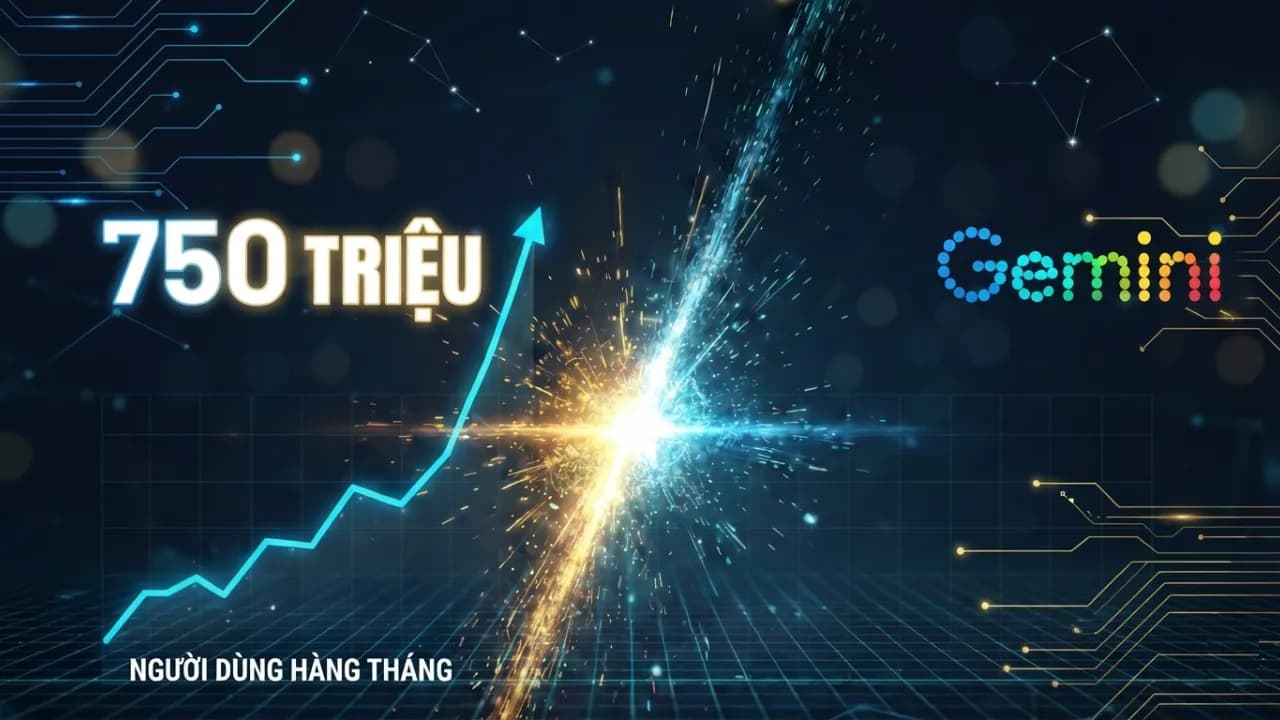
Gemini App Surpasses 750 Million Monthly Users as Google Challenges OpenAI

Gemini App Surpasses 750 Million Monthly Users as Google Challenges OpenAI

In its Q4 2025 financial report, Alphabet (Google's parent company) announced a historic milestone: the Gemini artificial intelligence application officially surpassed 750 million monthly active users (MAU). This figure is not only a testament to Google's rapid development but also signals a comprehensive restructuring of the global AI market.Rapid Growth and Gemini Position in the AI MarketIn just a short period, Gemini has achieved astonishing breakthroughs. In October 2024, the application had only about 90 million users, but by March 2025, it reached 350 million, and currently stands at 750 million. Compared to Q3 2025 (which saw 650 million MAU), Gemini added 100 million users in just one quarter.Currently, Gemini is closely trailing its biggest competitor, ChatGPT (estimated to reach approximately 810 million users by the end of 2025), and has far surpassed Meta AI (currently recording nearly 500 million monthly users). Sources indicate that Gemini's web traffic market share has quadrupled in one year, from 5.7% to 21.5%, while ChatGPT's has decreased from 86% to approximately 64%.[CHART_1]What Is Driving Gemini GrowthGemini's success is not accidental; it is the result of a strategy of deep integration and continuous technological innovation:Power of Gemini 3: The launch of the Gemini 3 model is considered a significant milestone, bringing profound reasoning capabilities and superior multimodal understanding. CEO Sundar Pichai emphasized that Gemini 3 Pro has a daily token processing speed three times higher than its predecessor.Massive Google Ecosystem: Gemini's biggest advantage is its distribution capability. Gemini is directly integrated into over 3 billion Android devices, the Chrome browser (accounting for 65% of the web market share), Gmail, and Google Workspace. This allows users to access AI naturally in daily tasks without needing to download a separate application.Strategic Partnerships: Google has become Apple's preferred cloud provider for developing foundational models for Siri and integrating Gemini technology. Additionally, an agreement with Reliance Jio in India has provided 500 million customers with access to a free 18-month Gemini trial package.Cost Optimization: Alphabet reduced operational costs per Gemini unit by 78% in 2025 through model optimization and the use of specialized hardware such as the Ironwood TPU chip (7th generation).A Broader Commercial StrategyTo attract cost-sensitive users, Google has launched the Google AI Plus service package at a fee of just $7.99 per month. Concurrently, the enterprise segment has also seen remarkable success with over 8 million paid users for the Gemini Enterprise package, serving more than 2,800 large companies such as BNY and Virgin Voyages.A notable point is that Google is developing an "Import AI chats" feature, allowing users to transfer their entire chat history from ChatGPT or Claude to Gemini. This is considered a "boost" to entice users to migrate to Google's ecosystem without worrying about losing previously "trained" data.Google 2026 Vision: Major Investment in AI InfrastructureGiven the current growth momentum, Alphabet expects to spend between $175 billion and $185 billion on capital expenditures (CapEx) in 2026. This amount will primarily be allocated to technical infrastructure, including servers (accounting for 60%) and data centers along with network equipment (accounting for 40%).According to sources, Google's goal is to maintain continuous innovation amidst soaring demand for AI. However, CEO Sundar Pichai also warned about challenges related to computing capacity, energy supply, and land for building new data centers.ConclusionThe milestone of 750 million users for the Gemini application is not just a dry number, but an affirmation of Google's strong comeback in the AI race. By leveraging its existing ecosystem and continuously improving model performance, Gemini is gradually eroding ChatGPT's monopoly, creating a more competitive and diverse AI market for global consumers.
Na
Nam
5 Feb, 2026
Google Gemini 3 Released: Next-Gen AI with Advanced Reasoning

Google Gemini 3 Released: Next-Gen AI with Advanced Reasoning

On November 19, 2025, Google officially introduced Gemini 3, its most advanced and intelligent AI model, designed to help users realize every idea. CEO Sundar Pichai declared Gemini 3 as "the best model in the world for multimodal understanding." This model marks an upgrade in the journey towards Artificial General Intelligence (AGI). How is it upgraded compared to Gemini 2.5? Thus, 8 months after the launch of Gemini 2.5, Google has returned with Gemini 3 Pro, featuring upgrades in reasoning and context understanding abilities—it brings together all the capabilities of previous Gemini generations. Sweeping the leaderboards The launch of Gemini 3 Pro, though relatively quiet, was not a giant leap forward yet carried significant weight as it topped numerous LLM leaderboards (such as LMArena, etc.). Of course, compared to Gemini 2.5, Gemini 3 completely surpasses it across all AI benchmarks, such as in identifying the context and intent behind user requests, allowing users to get desired results with fewer prompts. While Gemini 3 outperforming previous-generation Gemini models is expected, its scores also surpassed both Claude 4.5 Sonnet and GPT 5.1. For instance, Gemini 3 demonstrated PhD-level reasoning with a high score of 37.5% on Humanity’s Last Exam without tools—significantly outperforming Claude Sonnet 4.5 (13.7%) and GPT 5.1 (26.5%). Similarly, its GPQA Diamond score (91.9%) continued to lead over Claude Sonnet 4.5 (83.4%) and GPT 5.1 (88.1%). [GEMINI_3_BENCHMARK_CHART] Multimodal power (Multimodality) Gemini 3 continues from Gemini 2.5 with its ability to seamlessly synthesize information across multiple modalities, including text, images, video, audio, and code. Naturally, it performed better on tests than Gemini 2.5, achieving 81% on MMMU-Pro (compared to 68% for Gemini 2.5) and 87.6% on Video-MMMU (compared to 83.6% for Gemini 2.5, according to Google). How is it used in real-world scenarios? In study and research: Gemini 3 can analyze academic papers or long video lectures and generate code for interactive visual diagrams or flashcards. However, when I tested it with a 4-hour video, Gemini 3 in Fast mode couldn't remember everything and either made mistakes or missed details. Therefore, you shouldn't fully rely on the information provided by Gemini 3 just yet; instead, use Notebook LM for those tasks. In creativity and planning: Gemini 3 can translate and convert handwritten recipes in multiple languages into cookbooks perfect for sharing. According to Google, it can even write a poem capturing the physics of nuclear fusion or write code to create visualizations of plasma flow in a tokamak. In sports video analysis: Gemini 3 can analyze sports match videos (such as pickleball, tennis, etc.), identify skills that need improvement, and create training plans. Does Gemini 3 Deep Think have an enhanced reasoning mode? Google also introduced Deep Think mode, an enhanced reasoning mode designed to help solve more complex problems similar to Gemini 2.5, though it actually takes quite a long time to output results. Deep Think mode is currently being tested and is expected to be available soon for Google AI Ultra subscribers in the coming weeks. Therefore, I haven't had the chance to experience it yet, but for regular users, Thinking mode is quite suitable. Developer capabilities and deployment speed How good are Gemini 3's coding capabilities? Gemini 3 performs very well in code generation and handling complex prompts to build richer, interactive web interfaces. However, for coding capabilities, I still trust Claude Sonnet 4.5 more. When Gemini 3 encounters an issue with code, it doesn't stay focused on resolving that specific issue and tends to make more errors as it tries to fix it—unlike Claude Sonnet 4.5, which creates difficulties for people who don't know much about code. In terms of speed, Gemini 3 is significantly faster than Claude Sonnet 4.5 and GPT 5.1 when coding, being twice as fast as Gemini 2.5 for small to medium tasks. To support agent development, Google also released a new agentic development platform called Google Antigravity. It leverages Gemini 3's reasoning and tools to turn AI into a new agent capable of operating independently and proactively. When can you use Gemini 3? Gemini 3 is being rolled out across the entire Google ecosystem starting November 19. In the Gemini chat interface, Google now lets users select Fast, Thinking, and Pro modes instead of selecting LLMs as in Gemini 2.5. This shows that Google is automating the LLM selection process for tasks ranging from simple to complex, similar to what OpenAI did with GPT-5.1. Gemini 3 is also integrated for the first time directly into Google Search via AI Mode. This AI mode uses Gemini 3 to enable new generative user interface (generative UI) experiences, such as vivid image layouts and interactive tools generated based on user queries—a move that, in my personal opinion, is aimed at competing with Open Atlas ChatGPT Atlas and Perplexity Comet.

Li
Liên
19 Nov, 2025